
Tagged: 1936
How to Win Friends & Influence People
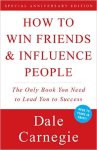
How to Win Friends & Influence People: The Only Book You Need to Lead You to Success by Dale Carnegie, 3/5
In today’s saturated self-help market, it takes a little imagination to understand just how novel and influential this first-of-its-kind work must have been, back in 1936. Carnegie’s “principles” are practical and based on a commonsense understanding of psychology that, though now well-worn, have stood the test of time. Charming anecdotes illustrate the following principles:
Three Fundamental Techniques in Handling People
Principle 1: Don’t criticize, condemn or complain.
Principle 2: Give honest and sincere appreciation.
Principle 3: Arouse in the other person an eager want.
Six Ways to Make People Like You
Principle 1: Become genuinely interested in other people.
Principle 2: Smile
Principle 3: Remember that a person’s name is to that person the sweetest and most important sound in any language.
Principle 4: Be a good listener. Encourage others to talk about themselves.
Principle 5: Talk in terms of the other person’s interests.
Principle 6: Make the other person feel important–and do it sincerely.
Win People to Your Way of Thinking
Principle 1: The only way to get the best of an argument is to avoid it.
Principle 2: Show respect for the other person’s opinions. Never say, “You’re wrong.”
Principle 3: If you are wrong, admit it quickly and emphatically.
Principle 4: Begin in a friendly way.
Principle 5: Get the other person saying “yes, yes” immediately.
Principle 6: Let the other person do a great deal of the talking.
Principle 7: Let the other person feel that the idea is his or hers.
Principle 8: Try honestly to see things from the other person’s point of view.
Principle 9: Be sympathetic with the other person’s ideas and desires.
Principle 10: Appeal to the nobler motives.
Principle 11: Dramatize your ideas.
Principle 12: Throw down a challenge.
Be a Leader
Principle 1: Begin with praise and honest appreciation.
Principle 2: Call attention to people’s mistakes indirectly.
Principle 3: Talk about your own mistakes before criticizing the other person.
Principle 4: Ask questions instead of giving direct orders.
Principle 5: Let the other person save face.
Principle 6: Praise the slightest improvement and praise every improvement. Be “hearty in your approbation and lavish in your praise.”
Principle 7: Give the other person a fine reputation to live up to.
Principle 8: Use encouragement. Make the fault seem easy to correct.
Principle 9: Make the other person happy about doing the thing you suggest.
Why I read it: a recommendation from my sister.
The Island of Sheep
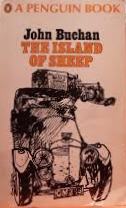 The Island of Sheep by John Buchan, 3/5
This charming little story about a simple Norlander who, persecuted by a gang of ruthless criminals, enlists the aid of Richard Hannay and Co. is the last in the series, though why it was not included in The Four Adventures of Richard Hannay collection beats me. There was much to like about the tale, but it was noticeably rife with clumsy references to Buchan’s other works and suffered from an extremely contrived plot.
[Why I read it: I meant to read it ever since reading the first four books in the Hannay series last year, but we didn’t own a copy then. My sister got her hands on one somehow, but I wasn’t motivated to read it until she pulled it out recently for my mom, who enjoyed it a lot.]
Laughing Gas
 Laughing Gas by P.G. Wodehouse, 5/5
Definitely the most bizarre Wodehouse story I’ve encountered, this tale of an English Earl who inadvertently swaps bodies with a Hollywood child star during a routine tooth extraction is told with a rate of quips and quibbles quaint per paragraph that your average author would be thrilled to achieve per chapter.
[Why I read it: Wodehouse is one of my favourite authors, so I was pleased to find a title I didn’t recognize in the rather impressive selection of Wodehouse books at Michael’s Books in Bellingham, WA.]
 OmniRambles