
Tagged: 1/5
Tomorrowmind
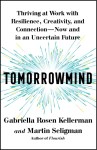
Tomorrowmind: Thriving at Work with Resilience, Creativity, and Connection–Now and in an Uncertain Future by Gabriella Rosen Kellerman and Martin Seligman, 1/5
This book not only represents everything that is classically hateable about pop psychology and the self-help genre, it plumbs new depths of dystopian deception. To be fair, there were warning signs, starting with the point in the introduction at which the authors straight-facedly suggest PRISM as a “handy (if out of order) acronym” to remember the concepts of resilience and cognitive agility (R), meaning and mattering (M), rapid rapport to build social support (S), prospection (P), and creativity and innovation (I). That peculiarly unhelpful scrambled egg of an acronym should have been my clue to close the covers and move on down my to-read list. Unfortunately, I decided to wade through a repetitive, half-baked, jargon-laden mess that ultimately morphed into a sales pitch for BetterUp, written by its chief product officer (Kellerman) and, as a little further research quickly revealed, the namesake of BetterUp’s foray into artificial intelligence–MartyAI.

How dark is that? Not only does Tomorrowmind fail to provide anything of value to readers struggling to cope with the stress of an increasingly volatile, technology-driven, future-oriented work environment, the authors actually manage to leverage that same audience in support of their own contribution to the dystopian future they pretend to address–offering the life coaching services of a lifeless, ai-powered chatbot. Ironically, Kellerman and Seligman have achieved more success by pivoting their psychology careers to address modern times than many of the people they use as positive examples in their book. Needless to say, their success hasn’t come from subscribing to life coaching services, buying self-help books, or applying the muddled concepts on view in this embarrassment of a contribution to literature.
Why I read it: The topic sounded interesting and I had respect for Seligman based on his book Learned Optimism.
Winterset Hollow

Winterset Hollow: A Novel by Jonathan Edward Durham, 1/5
I respect the hard work and courage required of first-time novelists, but…this was so bad. At the heart of this fantasy story is an imaginary work of poetry, supposedly written in the early 1900s and of enduring popularity and influence. Unfortunately, the poetry excerpts throughout the book are not convincing at all: for no apparent reason, the introductory verses and a handful of other snippets are in a different rhyme scheme than all the rest, and the overall effect is not consistent with the work’s era of origin. As a lover of poetry, it was hard to maintain suspension of disbelief in the face of verses like the following (21-22):
You know I love it here, said Runny, you know I am a happy bunny
But still I wish to spread my wings and fly beyond the trees
I promise you that I’ll be back, I promise I’m not lying, Flack
I promise I just need to go see what I need to see
And with those words, his shoulders dropped, and Runny hopped a might hop
And turned to face the hedgerow that he’d known for all this time
And jump, he did, as rabbits do, for this was sad for Runny too
It was no treat to go and leave his bestest frog behind
Poetry aside, the descriptive passages are self-indulgently tedious, like someone telling you every detail of a dream they had the other night. The author’s word choices are often contrived in their novelty, trampling across the line between “inventive” and “incorrect.” Words used in unexpected ways are usually a sign of excellent writing, but not when they fail to enhance the effect of the text and merely serve as a distraction. I was particularly baffled by the appearance of the word “ingrace” in three different contexts, none of which were consistent with the solitary dictionary definition (from 1913) that exists online. Adding to my annoyance were petty complaints like an increasingly repetitive use of “well” as an intensifier towards the end of the book (I guess you could say I was well annoyed by it), multiple instances of comparing things to lanterns, and more than one reference to “serendipity.” Scenes of gruesome violence and a somewhat banal plot twist work feverish overtime to cover for characters lacking in depth and development. The cover blurb by Diana Gabaldon (author of the Outlander series) describing Winterset Hollow as “astonishingly powerful and multilayered” is so ridiculous in light of the book’s crucial shortcomings that I have to assume she was treating the review as a creative writing exercise.
Why I read it: The author is absolutely hilarious on Instagram.
The Code. The Evaluation. The Protocols.

The Code. The Evaluation. The Protocols. Striving to Become an Eminently Qualified Human by Jocko Willink, with Dave Berke and Sarah Armstrong, 1/5
I have a ton of respect for Jocko Willink…BUT…this book is so absolutely ridiculous that I’m not even sure if his advice to “Set physical goals like running a 5K or deadlifting 8000 pounds” (2.4) is a typo or not. Overlooking the trademark typewriter font (which is borderline unbearable), awkward formatting, and repetitive language, I still cannot imagine many scenarios in which a rigorous, score-based method of evaluating one’s progress towards godhood would be necessary or useful. The “Protocols” are a one-size-fits-all series of steps for addressing each of life’s little problems (such as death, trauma, and addiction) in a style that can only be described as bizarrely confident and obliviously motivational.
Why I read it: my husband bought several of Jocko’s books.
“Cause Unknown”

“Cause Unknown:” The Epidemic of Sudden Deaths in 2021 and 2022 by Edward Dowd, 1/5
This is the type of publication (I can’t even bring myself to call it a “book”) that gives conspiracy theorists a bad reputation and rewards critical analysis with an avalanche of cascading shortcomings. Under the guise of objectivity, Dowd boldly refuses to forge a more than coincidental connection between COVID vaccines and the excess deaths he charts so exhaustively. Ironically, despite his data-centered approach, he ultimately relies on confirmation bias and emotional appeals to encourage the reader in making the final jump to an inadequately-supported conclusion.
Why I read it: I think RFK Jr. might have mentioned it in an interview.
A Hunter-Gatherer’s Guide to the 21st Century

A Hunter-Gatherer’s Guide to the 21st Century: Evolution and the Challenges of Modern Life by Heather Heying and Bret Weinstein, 1/5
I found this book to be profoundly and unrelentingly irritating. The authors are clearly well-educated and well-spoken, yet they seem more concerned with sounding impressive and achieving “guru” status than presenting a rational argument. Each chapter is a hodgepodge of facts, references to the work of others, opinions, and anecdotes, concluding with a short bullet point list of generic lifestyle recommendations that, in most cases, feels completely unsupported by the previous content. This would be annoying enough, but the thing that really made me furious was how the authors use a self-satisfied, scholarly tone and liberal endnote references (which somehow never supported the claims that I was actually interested in verifying) to mask under-developed theories and bad writing. Obviously, I feel under-qualified to criticize the work of two experienced academics, but it doesn’t take a PhD in Biology to recognize their consistent failure to present convincing points in a logical manner that supports bigger ideas.
Why I read it: a birthday present from my dad.
The Purpose Driven Life

The Purpose Driven Life by Rick Warren, 1/5
Reading this, one could be forgiven for mistaking Christianity for a pyramid scheme and this book for its investment pitch.
Why I read it (or at least, the first 84 pages): it was included in a bunch of books passed along to me by a friend. I remembered it being really popular for a while, so thought I’d check it out.
The Ultimate Gift

The Ultimate Gift: A Novel by Jim Stovall, 1/5
Sometimes, you can judge a book by its cover. Preachy, predictable, and poorly written, this novel is pretty much rock bottom in terms of literary quality.
Why I read it: trying to stay open-minded and this was passed along in a box of random books from a friend.
Mind Gym
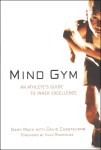
Mind Gym: An Athlete’s Guide to Inner Excellence by Gary Mack with David Casstevens, 1/5
Determined to develop a healthier mental approach to martial arts competition, I started this book with an optimistic attitude and pencil in hand, committed to completing every exercise and buying into the inevitable inspirational cliché or few. How unprepared I was for the relentless barrage of banalities I would encounter! Every exercise (and they were exceptionally few) was eye-rollingly familiar and the text was a hodgepodge of quotes and borrowed anecdotes that descended into the utter madness that can be found on page 198…
So what happens on page 198? Well, firstly, the author states that “His [Kurt Warner’s] bags-to-riches story is as inspiring as the song I play for athletes at the end of every training session. The song, by Mariah Carey, is titled Hero.” … Let’s take a moment to process that statement. A legitimate counselor of sports psychology habitually inflicts a Mariah Carey song on his clients for its raw motivational power? Really? Every training session? That song? Do they sit there with eyes closed for the full 4 minutes, absorbing all that sweet 1990s inspiration, or does it play on his phone as a sort of alarm to mark the end of a session, or is it background music for a hasty exit? The more you think about it, the less sense it makes. And the less sense it makes, the more it starts to throw into doubt literally everything else the author has to offer.
Just two sentences later, the unfortunate reader encounters this clunker of a paragraph: “Competitive sports can bring out the best in people. Instead of playing small, they overcome their self-doubts and fears. They let their light shine. They find courage, which is the opposite of discourage, and tap into their reservoir of potential. Reflect a moment.” The author means for us to reflect on moments of personal heroism, but instead, let’s focus on the much more interesting question of how the phrase “courage, which is the opposite of discourage” made it into print.
By the end of this book, I had lost so much faith in author Gary Mack that I became curious about his academic qualifications (conspicuously absent from the author bio). From his obituary, I learned that he did earn a Masters of Counseling Psychology, but what I find far more impressive is that he built a credible career in that field without have a single original thought! Perhaps it is a common failing, though. The next sports psychology book in my to-read pile (Champion’s Mind) was written by a PhD, yet peeking out from under the dust jacket flap is a note from a fellow, disillusioned library user: “Terrible–a bunch of slogans strung together by poor writing. Skip this.” Thank you, kind stranger. I shall.
Why I read it: lent to me by a gym friend.
Shakespeare’s Fingerprints
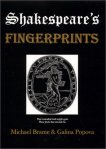
Shakespeare’s Fingerprints by Michael Brame & Galina Popova, 1/5
This is one of the most ludicrous books I have ever read and I could not stop talking about it to my poor husband, who also had to listen to a soundtrack of shocked snorts, giggles, gasps and groans as each page revealed some new absurdity.
The authors disagree with the scholarly consensus that William Shakespeare was a common actor from Stratford-upon-Avon, instead believing that his name was used as a pseudonym by Edward de Vere, 17th Earl of Oxford. The most convincing basis for this belief is a timeline of biographical events from de Vere’s life that seem to be referenced in Shakespeare’s plays and poems (assuming these works are semi-biographical, which the authors in no way prove).
Unfortunately, any reasonable and interesting points are obscured by inane literary analysis using criteria so broad that it soon loses all meaning. The authors start by claiming that Shakespeare’s use of certain common letters and combinations (e.g. o, vo, wo, vvo, eo, ver, fer, fair, etc.) should be interpreted as a purposeful play on the letters and sounds in de Vere’s name and title–a “fingerprint” clue to the author’s real identity. Not satisfied with co-opting such a large number of very common words to support their hypothesis, they then proceed to compare Shakespeare’s writing with other literary works of the time, identifying any similar metaphors, phrases, topics, rhyming word choices, poetic forms, even basic grammatical structure, as “proof” that de Vere was the real author. Ultimately, their tortured reasoning forces them to conclude that de Vere used no less than 37 pseudonyms (many representing real people who were alive at the time) and was single-handedly responsible for the development of 16th-century English literature.
Frustratingly, the authors focus on fluffing up ridiculous arguments with academic terminology in an effort to sound erudite, meanwhile studiously avoiding the performance of any real research that would prove or disprove their hypothesis. I really can’t emphasize enough how absolutely embarrassing and ridiculous the end result is. It’s difficult to write a review because the more detail I try to include, the more we fall down the rabbit hole of insanity. By keeping my analysis fairly short, I am not over-simplifying their arguments, but portraying them in a better light than they appear after closer examination. Still, I can’t resist giving two specific examples of what the amused reader will encounter. At one point the authors analyze the adjective “sweet” thus: “sweet ≡ sv veet ≡ seventeenth Vere” (99). Even the title Much Ado About Nothing is proof of Edward de Vere’s authorship in their eyes, since “Ad is most plausibly a play on Ed, the nickname of the genius lurking behind the Shakespeare pseudonym” (8). Insanity!
Oh, and if you are wondering, as I did, how not just one but TWO academics from the University of Washington could be behind this book, it might help clear things up to know that they were married at the time…
Why I read it: I bought it greatly discounted at a used bookstore many years ago.
Convoluted Universe
 Convoluted Universe: Book One by Dolores Cannon, 1/5
In retrospect, I should have known better than to attempt to read a book on any topic written by a self-proclaimed “investigator into the paranormal through the use of hypnosis.” However, I succumbed to the back cover’s tantalizing promise of “metaphysical ideas that border on quantum physics,” thinking that perhaps the old saying it’s the message, not the messenger, was applicable. Alas, I was too optimistic.
In the interest of fairness, I persevered through 113 punishing pages of unmitigated nonsense, presented in the form of interview transcripts with two hypnotized women. The first woman claims to have been a medieval prince in a past life, who was taught the “real” history of earth by an extraterrestrial being. Her story focuses on intergalactic political intrigue and alien visits to earth throughout history, during which they supposedly imparted knowledge and intermingled with humans. There is nothing remotely plausible about these outlandish ideas, which read like standard sci-fi fare, presented in a tedious Q&A format.
Even poorly written sci-fi was more bearable than the interviews with the second woman, who does an absolutely terrible job of pretending to channel alien beings. Her acting is cringe-worthy and she artlessly strings the author along in an attempt to obscure the fact that she has nothing of value to communicate. Here’s an example from pages 99 and 100:
D: Are you listening to someone?
J: (Her voice sounded more normal.) Yes. It’s somebody that wants to speak to you, but they can’t talk English, and I can’t talk that. And we’re trying to figure out how to do it.
D: Can they have someone else communicate it?
J: They’re looking. They’re talking. They’re having a little discussion. They’re in the corner. It’s like they’re trying to decide.
D: Tell them we’re running out of time here. I really want to get the message, because they were giving me instructions. (Confusion) Maybe they can relay it to someone else who can give me the message.
J: That’s what they’re doing. (Softly, as though talking to someone else.) Okay. (Big sigh.)
D: Are they ready now?
J: (Another louder voice.) Perhaps.
D: Because I have no way of knowing if I’m breaking any regulations, if they don’t instruct me.
J: (She started to talk, then cleared her throat, as though the being had to adjust to her vocal cords. The next voice was definitely feminine and softer.) There have been no regulation violations. But we would caution you to be extremely careful in your casual discussions of the phenomenon. You must be careful with whom you share casual information. There are sensitive areas. It is important, I repeat, just casual information and sharing is not allowed. You have done well, and we are thankful. One of the problems could be the nature of the information, and the timing. It is not a matter for everyone to know everything. You are very good at being able to determine who should know what. That is a level of your expertise that allows us to work with you well. It is not a matter of trusting or not trusting you, as much as it is a matter of timing. Time to know, time not to know. So, whenever you are given information in the future there will sometimes be instructions not to divulge it, until you are given further instructions. Perhaps you can find a way if it is necessarily crucial to something on which others are working, to advise them. But do not divulge your source. We will be orchestrating their knowledge, so that anything that is shared with others will be of a nature that it is preapproved.
Throughout, the author does not seem concerned with establishing even the pretense of plausibility and her interview techniques are atrocious, clearly meant to assist her subjects in their inventions. The so-called secrets of the universe that these women are meant to possess are nothing but sci-fi cliches and it is telling that, in both cases, the women made great efforts to get in contact with and work with Cannon, who made herself available to them only sporadically. If, as she claims, Cannon was receiving “lost knowledge” and “allowed to have the answers to any questions [she] wished to ask” from these women, it is odd that she was unwilling to go out of her way to meet with them, and prioritized speaking engagements and mundane entrepreneurial activities over receiving information that, if true, would be of infinite value.
All of this might lead you to wonder, as I did, how such a ridiculous book could come to be published. It turns out that the author literally started her own company (Ozark Mountain Publishing) because no one else would touch her work. The fact that she was forced to go to such lengths would be an encouraging statement about the survival of common sense amongst readers, if it weren’t for the fact that, for some inexplicable reason, Cannon managed to develop a following of people who took her seriously and continue to propagate her bat-shit crazy legacy even after her death.
Why I read it: It came up in conversation with my massage therapist.
 OmniRambles