
Category: Reviews
The Man in the Corner
The 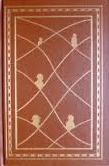 Man in the Corner by Baroness Orczy, 3/5
I was extremely excited to come across this collection of mystery stories written by the authoress of the Scarlet Pimpernel books, but ended up disappointed to find The Man in the Corner neither so unique, engaging nor memorable as I had been led to expect from Orczy’s other works. The two main characters aren’t very likeable and the mysteries feel somewhat formulaic – lacking subtlety and sureness of touch.
[Why I read it: random thrift store find.]
Candide
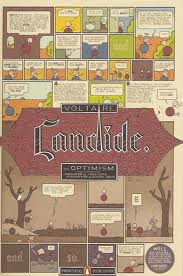 Candide: or, Optimism, by Voltaire, trans. and ed. by Theo Cuffe, 3/5
I was expecting a classy, clever satire, not such a crass tale. While entertaining, witty and devastatingly sarcastic in parts, I felt that its overall tone was tasteless and shallow; there is something off-putting and ignoble about a writer putting warped versions of his opponents’ beliefs into the mouths of fools, creating too-easy targets for snide and immature insults. It seemed more the bawdy tale of a sea captain than that of a writer with any pretensions to philosophic depth.
[Why I read it: can’t remember where I actually got the book from, but I was interested in reading it because a friend had me watch the operetta version starring soprano Kristan Chenoweth.]
The Story of English
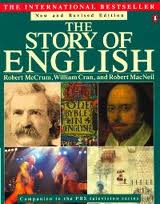 The Story of English (New and Revised Edition) by Robert McCrum, William Cran, and Robert MacNeil, 5/5
Any doubts as to this book’s authoritativeness were quelled upon learning the illustrious identity of its three main consultants – the Chief Editor of the Oxford English Dictionary, the Editor-in-Chief of the Random House Dictionary and Professor Sir Randolph Quirk (who presumably has credentials as fantastic as his name). Though, at 10 years old, it could use an update, this book is readable, comprehensive, well-researched and supported by an excellent annotated bibliography.
[Why I read it: it was a birthday gift from my parents.]
17th Century Bible Concordance
I was recently lucky enough to be allowed to examine a 17th century Bible concordance. The main language is German, but it also contains a lot of Latin and Hebrew, each language having its own distinctive typeface. A paper insert states that “This book was edited by M. Friederich Lancfishen and published at Leipzig and Franchfurth by Johann Heinrich Richtern in 1688. It was printed before the invention of the cylinder type press, from a wooden press which operated on the screw principle.”
Click the photos for captions with more information.


![The patron of the book, the "most serene prince and lord, Lord Frederick, Duke of Saxony." According to the signature, this artwork was created by J. Sandrart, who actually has his own [short] Wikipedia page. http://en.wikipedia.org/wiki/Joachim_von_Sandrart](https://i0.wp.com/omnirambles.com/wp-content/uploads/2013/06/goodimg_2804.jpg?w=366&h=581&ssl=1 "goodIMG_2804")


[Why I read it: belongs to a friend of a friend.]
Fingerprints
 Fingerprints: The Origins of Crime Detection and the Murder Case that Launched Forensic Science by Colin Beavan, 3/5
This book outlines the history of fingerprinting, focusing on one of its pioneers, Henry Faulds, whose contributions were largely ignored in the inevitable squabbles for recognition which accompanied the development and implementation of the practice. Unfortunately, the author could not be bothered to provide adequate annotations for his account, which fact prevents this book from being a truly valuable and worthwhile read.
[Why I read it: random thrift store find.]
Wives and Daughters
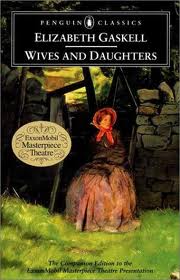 Wives and Daughters by Elizabeth Gaskell, 4/5
I approached this substantial novel from the unusual (for me) position of having previously twice watched and loved its BBC miniseries adaptation. Because of this, I was unable to view the familiar story with fresh eyes and appreciate it on a purely literary level. However, after a brief struggle, I resigned myself to the situation and, as a sort of companion to the miniseries, the novel was extremely enjoyable. It almost felt like a behind-the-scenes supplement, providing to characters and scenes additional insights that did not come across in the film version.
A lack of archetypal characters distinguishes this book from the genre of sentimental, cloyingly romantic 19th century literature to which it could easily have belonged. Instead of pronouncing overly-simplistic, moralistic judgments on all of her creations, Gaskell uses a delicate hand to portray the complicated motives and actions of a cast that is as flawed and human as it is appealing.
As my sister thoughtfully warned me beforehand, the novel ends abruptly, unfinished due to the author’s sudden death. Two completing chapters, accompanied by an overall increase of the delightful sarcasm and humour that occasionally shines through, would be the only additions needed to make this novel perfectly delightful.
[Why I read it: it’s my sister’s favourite book.]
Logic
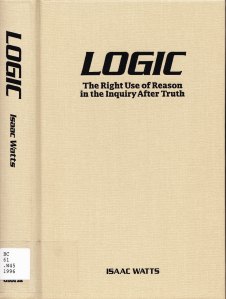 Logic: or, the Right Use of Reason in the Inquiry After Truth with a Variety of Rules to Guard Against Error in the Affairs of Religion and Human Life, as well as in the Sciences by Isaac Watts, D.D., 4/5
Watts’ optimistic attempt to break down and methodise the ideal workings of the human brain is a little too prosaic to leave much of an impression and a little too complicated to be easily applicable to everyday life. However, the text is accessible, unpretentious and impeccably organised, addressing in four parts the topics of perception and ideas, judgment and proposition, reason and syllogism, disposition and method. Watts provides common-sense categorisations of all beings (divided into possible or actual, substance or mode, simple or compound, animate or inanimate, etc.), ideas (sensible, spiritual or abstracted, simple or complex, compound or collective, universal or particular, etc.), words (negative or positive, simple or complex, common or proper, etc.), propositions (universal, particular, indefinite or singular, affirmative or negative, etc), prejudices (arising from things, words, ourselves or other persons), syllogisms (universal or particular, negative or affirmative, simple, complex, conjunctive or compound, etc.) and methods (natural or arbitrary, synthetic or analytic).
The only part that went almost completely over my head was that on syllogisms, where I would have appreciated a clearer definition of terms and perhaps some diagrams. My favourite sections were not those in which Watts laid out the reasonably obvious in painstaking detail, but rather the parts where he spoke wisely about human nature and tendencies. I never tire of rediscovering that people are just people, no matter how far back in the past they existed.
Two parts that I found particularly insightful and affecting were those on overly-emotional people and sceptics. On the first topic, Watts kindly advises that “this sort of people ought to judge of things and persons in their most sedate, peaceful, and composed hours of life, and reserve these judgments for their conduct at more unhappy seasons” (204). About scepticism (a fault towards which I tend), Watts explains:
Scepticism is a contrary prejudice. The dogmatist is sure of every thing, and the sceptic believes nothing. Perhaps he has found himself often mistaken in matters of which he thought himself well assured in his younger days, and therefore he is afraid to give assent to anything again. He sees so much show of reason for every opinion, and so many objections arising also against every doctrine, that he is ready to throw off the belief of every thing; he renounces at once the pursuit of truth, and contents himself to say, There is nothing certain. It is well if, through the influence of such a temper, he does not cast away his religion as well as his philosophy, and abandon himself to a profane course of life, regardless of hell or heaven.
Both these prejudices last mentioned [dogmatism and scepticism], though they are so opposite to each other, yet they arise from the same spring, and that is, impatience of study, and want of diligent attention in the search of truth. The dogmatist is in haste to believe something; he cannot keep himself long enough in suspense, till some bright and convincing evidence appear on one side, but throws himself casually into the sentiments of one party or another, and then he will hear no argument to the contrary. The sceptic will not take pains to search things to the bottom, but when he sees difficulties on both sides, resolves to believe neither of them. Humility of soul, patience in study, diligence in inquiry, with an honest zeal for truth would go a great way towards the cure of both these follies” (202).
[Why I read it: a PDF version (from my dad, I think) sat in my Downloads folder for years, but I never read it because I hate reading books on the computer. I was about to delete the file, when I decided it still looked pretty interesting and ordered a proper copy from the library through inter-library loan.]
Founding Mothers
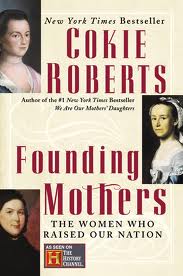 Founding Mothers: The Women Who Raised Our Nation by Cokie Roberts, 3/5
This book about the women behind the men behind the American Revolution provides an interesting historical perspective but is not very engagingly presented. Much of it felt dry and unfocused, switching dizzyingly from character to character and at times reading more like a genealogy or a college research essay than a polished product of academic research. Also, I found Roberts’ editorial interjections to be annoying and unscholarly, distracting from the main content.
Despite these issues, I was struck by two aspects of the historical period that I hadn’t considered before. One was the fact that, despite the turmoil of the times and the lack of spousal support (with husbands constantly away for business, politics and war), these women produced babies at a staggeringly high rate. You would think that people would be reluctant to bring children into lives that were so threatened by immediate violence and economic instability, but that didn’t seem to slow them down at all. The only thing more surprising than the number of children they had was the number that died – birthing and burying seemed to be the main domestic occupation.
The other aspect that almost made this book worthwhile was its portrayal of how, with independence achieved, the United States were extremely resistant to the establishment of a centralised, federal government. Many politicians of the time despaired of ever creating a stable country, much less a constitution that everyone could agree on. It seems that the extreme distrust and skepticism of the government evinced by many modern-day conservatives is a legitimate inheritance from their revolutionary forebears.
[Why I read it: passed on to me by a friend who had finished with it.]
As You Like It
 As You Like It by Shakespeare, 4/5
Low on plot but high on charm.
[Why I read it: I’m on long-term mission to read all of Shakespeare’s works.]
Infrastructure
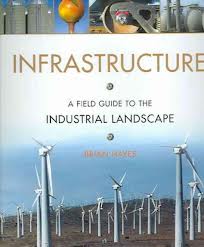 Infrastructure: A Field Guide to the Industrial Landscape by Brian Hayes, 5/5
I haven’t experienced many books that I would call “life-changing,” but this astounding work is certainly one of the few. Inexplicably, Hayes is able to take a topic that seems, at best, slightly off-putting, and turn it into 500 pages of some of the most engrossing reading material I have ever encountered. Covering everything from power plants to mining, his addictive prose entices the reader from fact to fact until it is difficult to even imagine a mindset in which a laden telephone pole does not seem a thing of beauty and a steel mill a thing of wonder. What could have been the world’s most boring textbook seems instead a labour of love and curiosity, radiating passion and good humour while communicating a staggering amount of information about the inner (and outer) workings of industry. Even the numerous photos (taken by the author) are noteworthy for their high quality and artistic composition.
So why did I find this book to be life-changing? In part, because it made me realise that there is no topic either dry or boring, but writing makes it so. This opens up worlds – no longer do I need worry about finding interesting topics, I only need to find interesting authors. Secondly, this book opened my eyes to the appeal of industrial structures and the beauty of their functionality. What was once unsightly (or at least, unseen), such as cell towers, water treatment plants, power substations, overpasses, etc. has a new fascination for me.
It’s certainly not like me to drool praise so lavishly, but there is no denying that Infrastructure transcends my measly five-point rating system and, if there was a higher score than “perfect,” would surely deserve it.
[Why I read it: it caught my eye as I wandered through the library.]
 OmniRambles