
Tagged: travel
The Traveling Photographer’s Manifesto
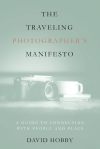
The Traveling Photographer’s Manifesto: A Guide to Connecting with People and Place by David Hobby, 5/5
When a book is written well by someone with personality who is passionate about a topic on which they have expertise, the subject becomes almost irrelevant. In these circumstances, I can and have enjoyed reading about everything from botanical art to infrastructure. But when a book checks all of these boxes and is also about two of my passions–photography and traveling–what a treat!
Though I am not (and do not aspire to be) a street photographer or photojournalist, I enjoyed absorbing the author’s practical advice, technical guidance, interesting anecdotes, and behind-the-scenes perspective. Perhaps most influential of all is the well-developed, people-first photography philosophy that permeates every page and is clearly the product of an open and enquiring mind.
I knew beforehand that this independently-published book contains no photos and, by the end, had even convinced myself that it doesn’t need any because it is so philosophical in focus. Then I came across the author’s PetaPixel article about the book, saw the accompanying photographs, and immediately changed my mind. The photos were so beautiful and, having read so much about their context, so meaningful, that I felt it was a crime that none were included in the book. Yes, there is a helpful Supplemental Visual Notes document, which the author e-mailed to me (along with a kind, personalized note) almost immediately upon request. But this book deserves to be picked up by a publisher, expanded, given a proper cover design, and filled with photographs.
Why I read it: I learned about the author through his popular website, “Strobist.”
Gulliver’s Travels and Baron Munchausen

Gulliver’s Travels by Jonathan Swift and Baron Munchausen by Rudolf Erich Raspe, 2/5
When I finally get around to reading an enduring classic, it is usually fairly obvious what timeless merits ensured its survival. In the case of Gulliver’s Travels, however, I was surprised to find it exceedingly dull and tediously obsessed with the author’s now-obscure political feuds. Perhaps the most entertaining aspect of this 1888 edition is the unfiltered disapproval evident in the editor’s preface and biography of Jonathan Swift, who apparently played rather fast and loose with the ladies (at least by the standards of the time) and did not shy away from the occasional crass flight of literary fancy. The editor baldly states that he “has not disguised his want of affection for the character of this hero” (10) and is “unable to make the biography a eulogy” (10). He continues further to claim that “The greatest difficulty in the analysis of Swift’s literary character is to discover by what depravity of intellect he acquired a taste for loathsome and filthy ideas, from which every other mind shrinks with disgust” (50). Adding further insult to injury are the numerous footnotes pettily highlighting instances of incorrect grammar in Swift’s at-that-time 162-year-old work. The whole effect was so judgy, self-righteous, uptight, and just stereotypically Victorian that, in retrospect, where I expected to find a commentary on 18th-century morals and issues, I instead encountered an unintentional commentary on 19th-century ones.
The second part of this book consists of the bafflingly ridiculous tall tales of Baron Munchausen, in two volumes. I did not enjoy this unillustrated edition as much as the other that I previously reviewed.
Why I read it: Gulliver’s Travels has been on my to-read list for ages, but I didn’t realize I owned a copy until I was searching for a boring book to combat pregnancy-induced insomnia.
Clanlands
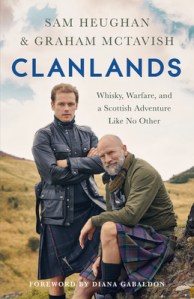
Clanlands: Whisky, Warfare, and a Scottish Adventure Like No Other by Sam Heughan and Graham McTavish, 2/5
From a literary perspective, it’s frankly shocking that something so closely resembling a shared Google Doc rough draft somehow survived the publishing process and exists in book form. Unpolished, unfocused, and overflowing with “cringe,” this book waffles between authors’ perspectives just like it waffles between travelogue, memoir, history and reality TV pitch. There were a few humorous moments and interesting historical facts, but I don’t think it has much to offer anyone outside of its target audience–Heughligans and fans of Outlander. Perhaps surprisingly, given my opinion of the book, I did enjoy its associated TV show, Men in Kilts.
Why I read it: my mother-in-law generously lent me her brand new copy while we were on a hunting trip.
The Songlines
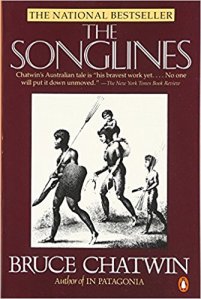 The Songlines by Bruce Chatwin, 4/5
A semi-fictitious scholar named Bruce (who, in sharing the author’s name, not-so-clearly provides literary license) explores the concept of “Songlines” or “Dreaming-tracks,” a musical interpretation of geography by which Aboriginal Australians understand the creation of the world and their place in it. Vivid characters and landscapes, described in short paragraphs with Chatwin’s succinct prose, have the power to transport the reader almost as surely as any vehicle to foreign lands.
Why I read it: I recognized the title in the thriftstore from reading Chatwin’s In Patagonia.
 OmniRambles