
Tagged: pregnancy
Birth Skills
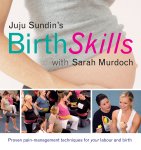
Birth Skills: Proven Pain-Management Techniques for Your Labour and Birth by Juju Sundin with Sarah Murdoch, 5/5
Juju’s approach to natural birth differs from most in that she does not encourage idealistic expectations or a skeptical view of modern medical interventions. Her focus is not on helping women achieve an unmedicated birth, per se, but on empowering them to understand the process and cope with pain the best they can, regardless of final outcomes. I believe this healthy approach might help those with perfectionist and control freak tendencies (like myself) to avoid some of the mental anguish and trauma associated with “unnatural” birth experiences that may fall far short of their expectations.
These birth skills were originally meant to be imparted through a multi-week, interactive, in-person class, so the fact that I speed-read the book shortly before my baby’s due date was clearly not ideal. However, thanks to the author’s straightforward style and intentional use of repetition, I felt like I had a decent understanding of the main principles and hoped to avoid an epidural by using movement, breathwork, mantras, visualization, and a birthing comb. Perhaps I have a very low pain tolerance or was not fully invested in the techniques–I certainly was not well-practiced–but I did not end up coping well with the pain of active labor. Vomiting from contractions that felt like being stabbed in the abdomen with a red hot poker, I was thankful for even the temporary relief a faulty epidural provided. The fact that I absolutely crumbled under what felt like unbearable and excruciating pain is humbling, but just because I literally cannot imagine how it would have been possible to endure the experience unmedicated is no reflection on this book and the positive effect it has had on numerous women’s labor and birth experiences.
Why I read it: a recommendation from an Instagram comment.
What to Expect When You’re Expecting

What to Expect When You’re Expecting by Heidi Murkoff and Sharon Mazel, 5/5
This ubiquitous book is well-deserving of its reputation as the bible of pregnancy. It contains a ton of helpful information but what makes it truly outstanding, in my opinion, is the comforting and positive tone with which the info is conveyed. Reading it feels more like having a conversation with your mom than referencing a textbook or encyclopedia. Pregnancy can be a scary experience and it’s such a relief to read that whatever bizarre symptom you are dealing with is perfectly normal. I do wish that the book ended on a happier note instead of a chapter on complications and pregnancy loss, though.
I also really like the What to Expect website’s week-to-week feature and forums.
Why I read it: I am pregnant and remember seeing this book on my parents’ shelf as a kid. I was lucky that a friend passed along this copy to me.
Expectant Motherhood
 Expectant Motherhood by Nicholson J. Eastman, M.D., 3/5
In the last eight months, since I first found out that I was expecting a baby of my own, I have learned a lot about pregnancy and childbirth from a variety of sources. This vintage book from 1957 is the oldest of all, but I was delighted to discover that a surprisingly large amount of the information and advice it gives still survives, little changed, in our modern age. To me, this is encouraging proof that the process of growing and delivering a baby to the world is natural and something most women are innately empowered to accomplish.
Of course, much has changed in the field of medicine in the 60-plus years since the third edition of this book was published, leading to some fascinating insights into the past. For example, I had never thought to wonder how pregnancy tests worked before the modern “pee stick” was invented in the 1970s. I learned that the easiest and cheapest method was simply to wait until an expected menstrual cycle was at least ten days late, at which point chances were good that you were pregnant. The downside of this approach is obviously that you do not receive positive proof of pregnancy, just an ever-increasing likelihood of it. For those requiring more certainty, a much more expensive option was to wait two weeks past the missed menstrual cycle, inject a mouse or rabbit with the woman’s urine and, forty-eight to seventy-two hours later, dissect the unfortunate creature to check its ovaries for changes! The “frog test” also involved the injection of urine, but pregnancy was confirmed by the development of frog eggs in only eight to eighteen hours and the frog would happily survive. Needless to say, peeing on a stick seems much less gross and inconvenient after learning about these alternate methods of the past!
Why I read it: a gift from my sister.
 OmniRambles