
Tagged: ancient
The New Oxford Annotated Apocrypha
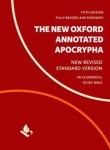
The New Oxford Annotated Apocrypha (NRSV 5th ed.), edited by Michael D. Coogan, 5/5
The Apocrypha is one of those literary works that is impossible to approach without some pre-conceived expectation, since the very name is steeped in mystery. Raised Christian, I cannot remember ever being explicitly told to avoid these noncanonical ancient writings, however they were not included in my Bible and I had a vague conception of them as useless at best, and untrustworthy at worst. At some point in my spiritual meandering, I started to suspect that the Bible may have been compiled by a bunch of card-carrying HOA Karens and maybe the Apocrypha was simply too fun and awesome to be included. At any rate, I expected to encounter bizarre prophecies, entertaining stories about Jesus as a child, and lots of enticing, controversial ideas.
Not for the first time, my preconceptions turned out to be wildly inaccurate. I was surprised to find that most of these ancient writings fit pretty clearly and uncontroversially into the categories of history, storytelling, or praise, and, while I enjoyed reading these works, the Bible feels complete to me without them. My favorite book was Sirach, with its deeply relatable and often snarky proverbs. There were a couple quotes that I wished were in the Bible, but it was clear from context that Ben Sira had a lot of his own ideas and issues to work through. Overall, I found the Apocrypha to be a fascinating and occasionally inspiring collection of historical writings, regardless of any Biblical associations.
Why I read it: My husband was listening to the Book of Enoch and it sounded so wild that I wanted to check it out for myself. I just assumed it was in the Apocrypha and didn’t realize it wasn’t until I was about 80% done. Next stop–pseudepigrapha, I guess.
Anthology of Japanese Literature
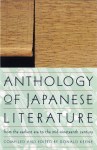
Anthology of Japanese Literature from the Earliest Era to the Mid-Nineteenth Century, compiled and edited by Donald Keene, 5/5
This collection is pleasingly varied and conveniently oriented towards a lay audience; the annotations are minimal and linguistic subtleties are simply acknowledged without being dissected. Most of the short poems are presented in side-by-side rōmaji (romanized Japanese) and English, allowing the reader to absorb a little more of the syllabic patterns, alliteration, and overall flavor of the original writings. Though the imagery, values, and cultural references felt refreshingly unfamiliar, there was an undeniable undercurrent of universal human appeal in the timeless themes of love, loss, death, and spiritual life.
Why I read it: an interesting-looking thrift store find.
 OmniRambles