Jam

jam yahtzee crowshawJam by Yahtzee Croshaw, 4/5

I was tempted to give this book full marks just for the sheer audacity and originality of its jampocalyptic plot, but ultimately felt the whole affair a bit unsatisfying at the conclusion.  I think this was because Croshaw introduced too much new stuff near the end of the book.  This would probably have been less jarring if the rest of the book had not been so tightly focused on a more limited collection of characters and locations, leading the ending to feel a bit like it belonged to a different story.  Also, I felt that, by the end, Croshaw had subtly crossed the line from mocking clichés to falling back on them.  That said, it was still very entertaining, witty and “novel” in every sense of the word.

[Why I read it: I enjoy Croshaw’s sense of humour, having become familiar with it through watching his weekly game reviews and reading his first novel, Mogworld.]

The Voyage of the Beagle

voyage of the beagle darwinThe Voyage of the Beagle by Charles Darwin, 5/5

This account of Darwin’s 5-year journey around the world is armchair traveling at its finest–every page offering the reader a shameless escape to foreign landscapes and civilisations.  The author’s scientific observations are communicated in prose that is both sensible and sensitive.  The occasional dry sections are more than compensated for by the few places where Darwin allows himself a poetical description or insightful commentary beyond what is strictly necessary or scientifically relevant.

In much the same way that reading the Seven Pillars of Wisdom completely shattered my unfavourable preconceptions of T.E. Lawrence, this book changed my opinion of Charles Darwin.  As a Christian with deeply skeptical tendencies (especially inflamed by scientists’ general attitude of infallibility), I’ve always had an ominous, hazy view of Darwin as some sort of Antichrist of Science.  The Darwin of this book was not so.  Not only was he a total badass, braving extreme weather, forbidding terrain and a multitude of terrifying insects that I would not feel comfortable viewing in a zoo, much less in my sleeping bag; he was also open to the spiritual aspects of human existence and respectful (even approving) of Christianity.  He shows a childlike eagerness to “fill up the wide gaps of knowledge” so obvious to his questioning mind,  and a thoughtful humility when identifying any “inaccurate and superficial hypotheses” he might have created in travel-induced haste and enthusiasm.  While the book’s focus is mostly on geology, zoology and botany, Darwin does provide information about the human component of his trip, displaying compassion toward the less-fortunate and a marvelling thankfulness toward the helpful.  All of which leads me to feel great respect for him, both as a man and a scientist.

A note on the book edition (Bantam Classic, 1958): it is sparsely illustrated and altogether missing a map of any kind.  I found myself in the unusual position of needing a map and not finding one, instead of the more usual scenario: seeing an unnecessary map at the beginning of the book and then feeling guilty through the rest for not referring back to it even once.  Given the geographical nature of the content and Darwin’s penchant for referring to unfamiliar animals by their Latin names only, I would suggest reading a heavily annotated version of this book, accompanied by as many illustrations and maps as possible.

[Why I read it: saw it in the thrift store for 99¢ and decided it might be a relatively painless way to challenge my preconceptions about Darwin.  I hoped it would focus more on travel observations (which it did) than on complicated scientific theories that might put me in the unenviable situation of doubting, but not being knowledgeable enough to refute.]

When Did You See Her Last?

when did you see her last lemony snicketWhen Did You See Her Last? by Lemony Snicket, 4/5

Like the first book in the series, Who Could That Be At This Hour?this is very funny and quotable, but not very memorable as far as plot is concerned.

[Why I read it: I love Snicket’s snide sense of humour and the book was handy, since the kids had already ordered it from the library.]

Welsh Legends and Folk-Tales

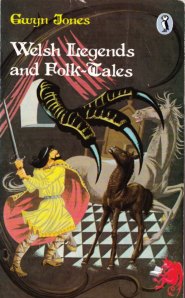
welsh legends and folk-tales gwyn jonesWelsh Legends and Folk-Tales, retold by Gwyn Jones, 5/5

These retellings are lively and witty, without pretension or rambling, and perfectly suited for reading aloud.  It was especially interesting to read stories about King Arthur told from a Welsh perspective.

N.B. The Welsh pronunciation guide is rather unfortunately located at the back of the book, where you will encounter it after some 250 pages of incorrect mental pronunciation of names such as Blodeuwedd and Lleu Llaw Gyffes.

There are charming pen and ink illustrations by Joan Kiddell-Monroe at the beginning of each chapter.  Also, fans of vintage C.S. Lewis and Tolkien books will undoubtedly recognise the name of illustrator Pauline Baynes, who did the cover art for this edition.

When I bought the book, I knew nothing about the author besides that, judging from the first name, there was a good chance she was Welsh.  It turns out HE was Welsh and, in fact, a renowned scholar, writer, and translator of the Mabinogion (a collection of mediaeval Welsh myths).  Gwyn Jones’ Wikipedia article is somewhat deficient, but I did find an interesting entry about him in Drout’s J.R.R. Tolkien Encyclopedia.

[Why I read it: I’m interested in lesser-known mythologies (especially those of the British Isles), so I picked this up at the thrift store for 99¢. The book felt like your average junky paperback and I was unfamiliar with the author, but seeing Pauline Baynes credited on the back cover really sold it to me, giving the book some class and authenticity.]

Ender’s Game

ender's game book coverEnder’s Game by Orson Scott Card, 5/5

The storyline is excellent, the characters interesting, the setting detailed and the writing skilled, but what has always struck me most favourably about this book is Card’s abnormally well-developed theories on the psychology of leadership and the natural, believable ways these theories are embodied in the characters he creates.  The actions and motivations of the characters do not seem artificial or forced–Card avoids the contrived, stilted interactions and scenarios that many less skilled writers resort to when attempting to be “psychological.”

[Why I read it: I wanted a refresher of the book before submitting myself to the shallow spectacle, the hollow shell of any meaningful narrative, that will be, if current trends in the film industry are any indication, the movie version.  I am not seeing it solely to complain, however (though that could surely be fun)–my brother is writing a short paper comparing the book to the movie and, since I teach him writing, I want to understand his thought process.]

The Poems of Dylan Thomas

The Poems of Dylan ThomasThe Poems of Dylan Thomas, edited by Daniel Jones, 2/5

Dylan Thomas has opened my eyes to the subtleties inherent to the act of reading. For example, I used to think that I enjoyed reading.  I now know better–what I actually enjoy is understanding what I read.  Things I would enjoy reading more than the poems of Dylan Thomas include bathroom graffiti, YouTube comments, Wikipedia citations, heck, even dictionaries (complete ones–not any that Thomas has already mangled with scissors and glue, in search of inspiration).

I would have saved myself a lot of boredom and frustration had I only read the end notes first, where Jones excretes this particularly repellent drivel on the topic of Thomas’ notoriously indecipherable poem “Altarwise by owl-light”:

…the poem, in spite of its length, sustains a single metaphor, and it would be vain to seek in it logic, narration or message in the usual sense of these words, though they are all present metaphorically.  Comprehension here is irrelevant, and to ‘translate’ the poetry into other words, to ‘interpret’ it in other thoughts, would be like straightening out the contours of a drawing and demonstrating its significance by measuring the result in inches (263).

I’ll tell you what else is present (and not metaphorically either)–bullshit.  Now, I don’t go around art galleries with a tape measure, but after reading straight through 191 of Thomas’ poems, I’d be more than willing to demonstrate the significance of his drinking problem by calculating the number of beers he must have drunk in order to compose such intoxicated, nonsensical ramblings.

Don’t believe me?  Please review Exhibit A–two 10-line excerpts from the book:

Excerpt 1
Because the pleasure-bird whistles after the hot wires,

Shall the blind horse sing sweeter?
Convenient bird and beast lie lodged to suffer
The supper and knives of a mood.
In the sniffed and poured snow on the tip of the tongue of the year
That clouts the spittle like bubbles with broken rooms,
An enamoured man alone by the twigs of his eyes, two fires,
Camped in the drug-white shower of nerves and food,
Savours the lick of the times through a deadly wood of hair
In a wind that plucked a goose…

Excerpt 2
His striped and noon maned tribe striding to holocaust,

Always good luck, praised the finned in the feather,
Grave men, near death who see with blinding sight
And the hewn coils of his trade perceives
Too proud to die, broken and blind he died.
And the gestures of unageing love
Flower, flower the people’s fusion,
And tells the page the empty ill.
There can be few tears left: Electra wept
Believe, believe and be saved, we cry, who have no faith…

One of these excerpts is from a single poem, the other is comprised of ten lines, drawn at random from ten different poems (with the ending punctuation changed on a few of the lines for “flow”).  I’ll tell you which is which at the end of this post, just in case you wish to go back and give all that lovely metaphorical logic, narration and message another read-through before making your guess.

After two weeks of slogging, word by painful word, through the morass that is Thomas’ oeuvre, I feel entitled to rage, rage against the dying of my brain cells.  However, I do realise that I am constitutionally unsuited to enjoy modern poetry.  It took ten years for me to learn to appreciate unrhymed poetry and five more years to learn to enjoy some of it.  Small wonder that I found little to like in this collection.  The reason I did not give this book my lowest rating is because of my own aforementioned shortcomings with regard to modern poetry, the fact that I didn’t understand most of the book (so it’s difficult to give a reasoned opinion of it) and most importantly, that I did come across a few genuinely beautiful poems and ideas, glittering like gems amongst the ravings.

[Why I read it: since I am teaching myself Welsh and hope to visit Wales next year, I kept coming across references in my reading to Thomas, Wales’ most famous and celebrated poet.]

By the way, the first excerpt is unaltered, the second excerpt is random.  Did you figure it out on your own?  Leave a comment!

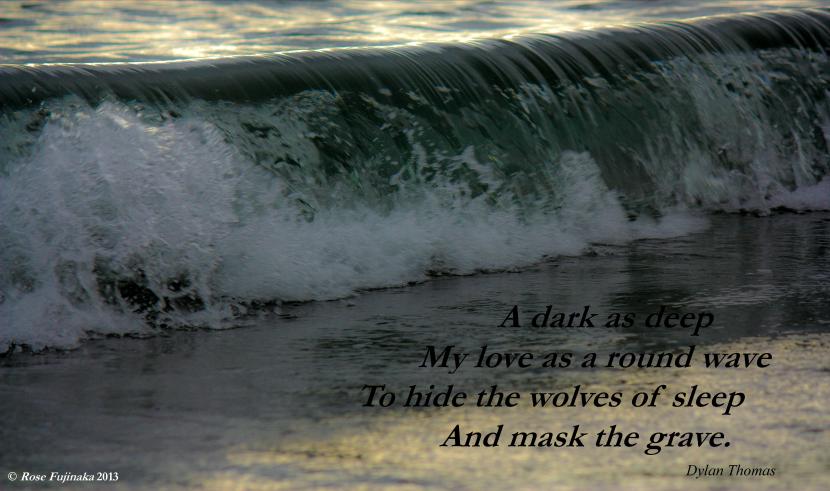
Dylan Thomas quote clown in the moon

I thought this quote from Thomas’ short poem “The Clown in the Moon” admirably suited this photograph I took a few years ago.
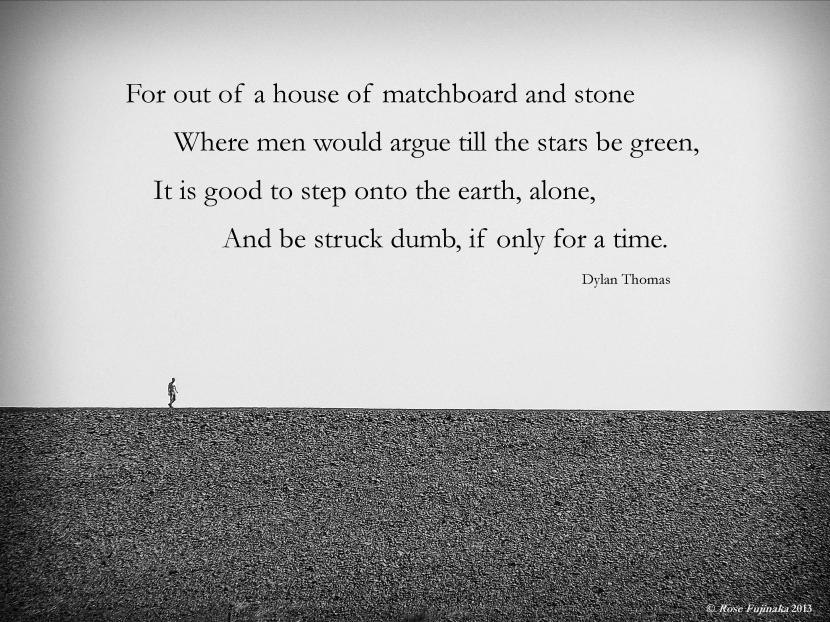
Dylan Thomas Quote Out of a War of Wits

Another quote set to one of my photographs, this time from the poem “Out of a War of Wits.”

Dylan Thomas Quote Youth Calls to Age

Quote from “Youth Calls to Age.” Photo taken at Cape Flattery.

Dylan Thomas Quote The Ploughman's Gone

From “The Ploughman’s Gone.”

Dylan Thomas Quote Poem

From the unimaginatively-titled “Poem.”

Dylan Thomas Quote Being But Men

From “Being But Men.”

The Dip

the dip seth godinThe Dip: A Little Book That Teaches You When to Quit (And When to Stick) by Seth Godin, 4/5

There’s no “I” in “Quitter,” my family has often joked…but according to Godin, there is and often should be.  In this delightfully short book (which, at <80 pages, is the size most popular self-help books would be if they cut the B.S.), Godin makes a compelling case for the use of strategic quitting in the pursuit of the ambitious goal to be the “best in the world” at something.  Godin advocates setting high goals, specialising rather than diversifying, persevering through the difficulties that weed out the competition (the Dip), and quitting dead-end/mediocre pursuits in order to avoid living the “sunk cost fallacy,” while freeing up resources for more successful endeavors.  All this advice is little more than common sense applied with guts and the book does not pretend to provide some grand, fool-proof philosophy to get rich quick.  Instead, it gives a little motivation and encouragement, while stimulating a thoughtful, courageous approach to business and career decisions.

[Why I read it: I think I came across it online or something…I can’t really remember.  Anyway, the title caught my eye because I’ve always wondered if my aversion to quitting (and even aversion to starting things that I might be forced to quit at some point) limits my potential or is in fact a healthy approach to challenges.  Godin has this to say on the subject: “Simple: If you can’t make it through the Dip, don’t start” (32), but I suspect that at that point, he’s writing more to serial quitters than to potentially over-cautious people.  So the book was not completely conclusive on the subject, though it still definitely has something to offer both types of people.]

The Best Tales of Hoffmann

best tales of hoffmannThe Best Tales of Hoffmann by E.T.A. Hoffmann, 1/5

I found these rambling tales to be deeply boring and written in an off-putting, affected style.  The first story, “The Golden Flower Pot,” (vaunted by the editor as Hoffmann’s best work) absolutely reeks of opium, full as it is of confusing dream sequences, hallucinations, inconsistent use of supernatural elements, and such oddities as a salamander exiled from “Fairyland Atlantis” to earth, in the form of an old man with daughters disguised as talking snakes.  All that, but somehow, still boring and pointless.

Each successive story disenchanted me anew and it was toilsome work to get through the entire book.  The only story I didn’t actively loathe was “Tobias Martin, Master Cooper, and His Men,” which is a sweet little tale whose lack of any real payoff or point is forgivable, given that it was inspired simply by a painting.

[Why I read it: the author’s name caught my eye as I browsed through books in the thrift store because, as a child, I had played a piano transcription of part of an opera called The Tales of Hoffmann, and I recognised his name from the song description.]

Twelfth Night

twelfth nightTwelfth Night by William Shakespeare, 5/5

This lighthearted and unrelentingly witty play is similar to As You Like It and A Midsummer’s Night Dream, but is my favourite of the three.  While I find it distracting to see the modern version of the text side-by-side with the original, in this case, it really helped me to understand a lot of humour that would otherwise have gone right over my head.

[Why I read it: part of the aforementioned long-term mission to read everything by Shakespeare.  I picked this copy up from the thriftstore.]

Tristram Shandy & A Sentimental Journey

The Life and Opinions of Tristram Shandy, Gentleman and A Sentimental Journey Through France and Italy by Laurence Sterne, 2/5tristram shandy

With its unconventionally rambling narrative and unsubtle innuendos, I am not surprised that this book created quite a stir in the 1700s.  However, stripped of its shock value by modern times, Tristram Shandy seems to me little more than the idle fantasies of a bored and not especially talented hobby writer.  There are a few quality passages (especially those involving the Widow Wadman) but overall I get the distinct feeling that Sterne just wrote whatever drivel came into his head and, if he had lived in modern times, would probably have been too busy re-watching old episodes of Lost to write at all.

[Why I read it: I’ve been meaning to read it for years, since first seeing it mentioned in C.S. Lewis’s Surprised by Joy:

For eating and reading are two pleasures that combine admirably.  Of course not all books are suitable for mealtime reading.  It would be a kind of blasphemy to read poetry at table.  What one wants is a gossipy, formless book which can be opened anywhere.  The ones I learned so to use at Bookham were Boswell, and a translation of Herodetus, and Lang’s History of English Literature.  Tristram Shandy, Elia and the Anatomy of Melancholy are all good for the same purpose (142).

Also, many actors I like are in the movie version of the book, so I recently watched it, which led to my customary feelings of obligation to read the book (and feelings of guilt for not having read the book first).]