What’s the Worst That Could Happen?

whats the worst that could happenWhat’s the Worst That Could Happen? by Donald E. Westlake, 3/5

At its best, this book reminds me of P.G. Wodehouse: witty, fun and improbable.  At its worst, it is more reminiscent of John Mortimer’s Forever Rumpole: portraying criminality as cute and victimless (even admirable, if directed against a bigger criminal), and suffering from a lightweight plot.  I would hesitate to recommend the book to non-adults because of some innuendos and because there are so many books to read that are much better.

[Why I read it: I Stumbled across a list of “50 novels to read when you need a good laugh” that included this among several books that I really like.]

Quiet

quiet susan cainQuiet: The Power of Introverts in a World That Can’t Stop Talking by Susan Cain, 5/5

As a somewhat stereotypical introvert, it’s hard to view this book objectively: how can I resist the charm of a well-written description of the introverted personality’s inherent strengths, along with an expose of the myriad ways introverts are under-appreciated and disadvantaged in modern culture?  To be fair,  the complexity of the topic requires a twin book, championing an opposing viewpoint, but as far as provoking thought, discussion, providing encouragement to the less-than-bold and making some very interesting points, this book is well rewarding.

Though it sometimes feels that Cain unfairly pits the strengths of introversion against the weaknesses of extroversion, the author generally achieves a well-researched approach to the topic, appropriate to her background and expertise.  I appreciate that she restrains herself to a more observational, journalistic point of view, instead of succumbing to the allure of pop science pomposity.

There were several times during the book when I felt a sense of “What?  Other people feel like that and do those things too? And that’s considered introversion, not some psychological problem?”  It is encouraging to hear that there are other people in the world who reserve their small talk for deep relationships, find shallow social conversations to be unbearably boring, don’t feel connected to the crowd hype at events, would rather hear a teacher’s lecture than fellow students’ ignorant opinions (aired under the guise of “class participation”), would rather be independent than either leader or follower, feel two-faced for acting extroverted in some scenarios, sometimes don’t feel like socializing even with close friends, or feel that people who talk a lot often don’t have much to say.

One of the most helpful ideas I got out of this book was that it’s ok for the same person to have introverted or extroverted reactions to different scenarios: just because I feel reserved and unsocial in one scenario doesn’t mean that I am a faker or insincere for acting outgoing and high-energy in another.  According to Cain, finding something you feel strongly enough about (such as a job, idea, or relationship) to make it bearable to sometimes act extroverted, is a positive thing and often a sign of a “core personal project” (209).  “Free Trait Theory” gives people the freedom to sometimes act out of character when it is useful to do so, without feeling guilty about the inconsistency (209).

[Why I read it: saw it in a selection of recommended books at the library]

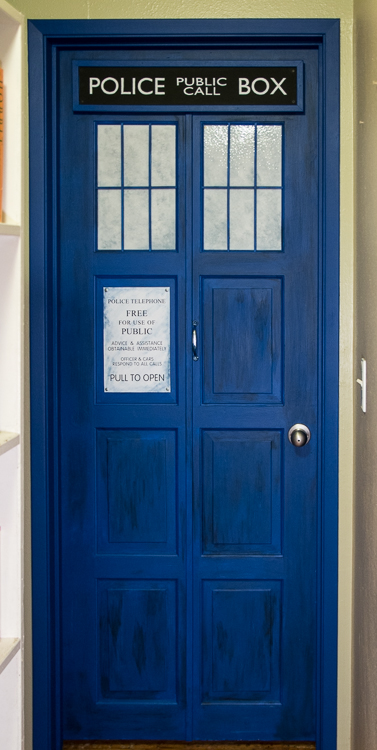
TARDIS Bedroom Door

This project is one of the main reasons I haven’t been reading as much lately and, consequently, have been posting fewer book reviews.  Happily, it is now mostly finished.  There are more pictures and info in my post on the fantastic tardisbuilders.com forum: http://tardisbuilders.com/index.php/index.php?topic=5166

Admire:

DIY TARDIS bedroom door

It’s ok to be jealous.  You know you are.

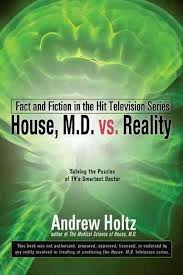
House, M.D. vs. Reality

house, md vs realityHouse, M.D. vs. Reality: Solving the Puzzles of TV’s Smartest Doctor by Andrew Holtz, 2/5

There is not a single original idea in this tedious book, which is written without wit or authority and manages to suck all the life out of an interesting topic.  Holtz, a health journalist with no medical credentials, is good at performing interviews and Googling for relevant documents, but lacks the expertise to add anything of value to the topic or even present his “research” in a unique or remotely engaging way.  The main content of the book is paragraphs of direct quotes (often several paragraphs on one page), mindless paraphrasing and TV episode synopses.  I almost didn’t even make it through.

[Why I read it: came across it while browsing in the library.]

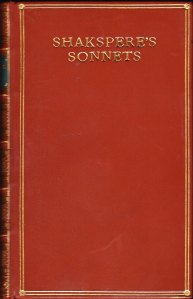
Shakspere’s Sonnets

shakspere's sonnets edward dowdenThe Sonnets of William Shakspere, edited by Edward Dowden, 5/5

*a note on spelling: according to Wikipedia, "Shakspere" was the preferred spelling in the late 18th through early 19th centuries.

In general, these sonnets are inventive, passionate and beautiful, using vivid metaphors to make new the old topic of love.  They are difficult enough to reward a second or third reading (and a quick look at the editorial notes) but not so opaque as to be frustrating.

Though I had never read the entire set of sonnets before, they had strong connotations to me as the epitome of romantic poetry, of fuzzy-around-the-edges, pastoral scenes; Willoughby reading aloud to Marianne, hopelessly romantic young girls in white sun dresses pining over small leather-bound editions or receiving love letters full of ink blots and badly paraphrased plagiarisms.  That sort of thing.  So, I was extremely surprised to discover that almost all of the sonnets were written from one dude to another.  In context, even “Shall I compare thee to a summer’s day” (Sonnet 18) was most definitely not written for/about a woman.  It’s not like I thought Shakespeare in Love was made by the History Channel, but I did kind of assume that Shakespeare was a hit with the ladies and now I’m almost as confused about his sexuality as he seemed to be.

While I found the “procreation sonnets” to be quite creepy (who writes 17 poems insisting that a male friend is robbing the world if he doesn’t pass on all his fantastic [and presumably inheritable] traits to offspring, asap?), there were many others that I loved.  My favourite has to be Sonnet 116:

Let me not to the marriage of true minds
Admit impediments.  Love is not love
Which alters when it alteration finds,
Or bends with the remover to remove:
O, no! it is an ever-fixed mark,
That looks on tempests and is never shaken;
It is the star to every wandering bark,
Whose worth’s unknown, although his height be taken.
Love’s not Time’s fool, though rosy lips and cheeks
Within his bending sickle’s compass come;
Love alters not with his brief hours and weeks,
But bears it out even to the edge of doom.
     If this be error and upon me proved,
     I never writ, nor no man ever loved.

I wish I could find more information about this book edition.  All I know is that it was bound in 1933 by renowned bookbinding firm Sangorski & Sutcliffe, for the department store Marshall Field and Company.  Sangorski & Sutcliffe are famous for their elaborate, jewel-encrusted book bindings, such as the famous edition of The Rubáiyát of Omar Khayyám that was lost with the Titanic, though I suspect cheaper, less sumptuous bindings such as mine helped the company survive the Great Depression.

[Why I read it: still on a quest to read all of Shakespeare’s works and couldn’t resist picking up this beautiful book for a few dollars at the thrift store.]

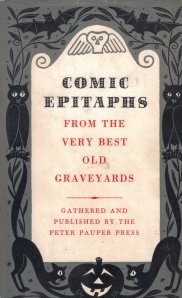
Comic Epitaphs

comic epitaphs peter pauper pressComic Epitaphs From the Very Best Old Graveyards, gathered and published by Peter Pauper Press, 2/5

A lame and lazy collection of gravestone sentiments (mostly expressing glee at the death of nagging wives) that are unhelpfully guaranteed in the intro to be “genuine,” “suspect,” or “frankly contrived.”

[Why I read it: caught my eye in the thrift store, but turned out to be an almost complete waste of three dollars and ninety-nine cents.  Oh well, swings and roundabouts…]

xkcd: volume 0

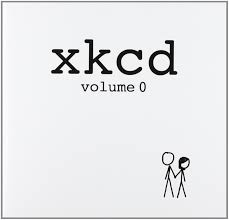
xkcd volume 0xkcd: volume 0 by Randall Munroe, 3/5

XKCD is my favourite webcomic–I visit the homepage several times a week to check for updates and, despite having a liberal-arts degree, I usually understand enough to get a good laugh (or two, because: alt text).  However, this collection of some of Munroe’s favourite strips reflects a mind that is both keener and dirtier than my own.  I did not understand much of it, and much that I did understand was pretty R-rated.  But I’m not complaining; the best part of buying this book is that it supports the webcomic.

[Why I read it: I was given it as a gift (being basically the only present I hinted for last holidays).]

Dracula

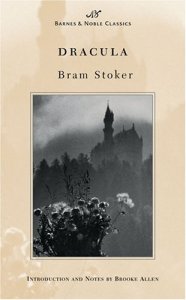
dracula bram stokerDracula by Bram Stoker, 5/5

I expected this famous Gothic horror novel to be trashy and cheap, in the fun, readable way that characterizes (in my experience) even the lowest-quality literary output of the late 19th century.  Though the characters lack depth and the book displays both offhanded sexism and instances of laughable sentimentality, it is much better written and more fun to read than I anticipated.  The creation and build-up of suspense is handled skillfully and the plot is satisfying, with a good payoff.  Stoker’s technique of telling the story through the diaries and letters of multiple characters generally works well, though he does not settle into a good rhythm in shifting between characters until Chapter 5. This chapter, with its abrupt switch from the excitement of the first four chapters, to comparatively boring and unconnected content from different characters’ points of view, marks the only dip in the book’s action.  Dracula is definitely a page-turner: with only 50 pages left to read, I was equally excited to find out how the story would end and sad that it would soon be over.

Just a little research indicates the nausea-inducing amount of literary criticism this novel has been subjected to, with tortured psychological and sexual interpretations that are, to my mind, equal parts bull and shit.  My reading of the book for pure enjoyment (surely the cause for which it was written), hinted at no undertones, overtones or, in fact, tones of any kind that would merit the overblown speculations that have been painstakingly read into the text by various scholars.

A note about this edition: the introduction, by Brooke Allen, provides a blow-by-blow synopsis of the book’s plot, a surprisingly common “sin” that I find both annoying (because SPOILERS!) and disrespectful to the author’s work.

[Why I read it: it’s one of those classics (like Shelley’s Frankenstein) that I have always meant to read.  When I saw it on the shelf at the thrift store, I knew the time was right.]

Project Planning, Scheduling, and Control

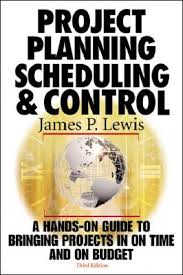
project planning scheduling and control james p lewisProject Planning, Scheduling, and Control: A Hands-On Guide to Bringing Projects in On Time and On Budget (Third Edition) by James P. Lewis, 4/5

This straight-forward book provides a lot of common sense advice and widely-applicable guidelines for project management.  It is easy to understand, even for someone with no experience in the subject (such as myself).  Since I was reading more for recreational purposes than practical, I would have enjoyed more anecdotes; the author obviously has a lot of experience and probably some wild stories to tell, but generally refrains from giving too-specific scenarios that would encourage his readers to focus on details and miss out on the larger concepts.

Probably the most interesting thing I got from this book is Lewis’ definition of the concept of “Control”:

Control is exercised by comparing where you are to where you are supposed to be so that corrective action can be taken when there is a deviation from target (526).

If there is no plan, there can, by definition, be no control.  This is a concept that I sort of came to on my own, through teaching my brother writing (you don’t know anything about control until you try to get a kid to write a paper), but I hadn’t really put it into words.

Another interesting concept is the difference between closed-ended and open-ended problems.  According to Lewis, closed-ended problems have only one possible solution, are past-oriented and benefit from an analytical, left-brained approach.  Open-ended problems, on the other hand, have more than one possible solution, are future-oriented, and respond best to a right-brained, synthetic approach (123).  This might seem very obvious to some people, but it just wasn’t on my radar.  Reading about the two types of problem made me realise that I tend to treat everything in my life like a closed-ended problem.

I would recommend this book to anyone considering project management as a career; Lewis speaks frankly about the responsibilities and challenges inherent to the work, as well as the type of person who might find success in it. I am not that type of person, apparently, since Lewis advises not to get into the career if you tend to think “Projects would be okay if you could just get people to be logical!” (35), a cry that is basically the theme song of all my social interactions…

My only complaint about the book is the large amount of space it wastes with huge, pointless illustrations of the odious “clip art + direct quote from the text” variety.  Also, I would be interested to read a more recent, updated version.

[Why I read it: Dad borrowed it from a bookshelf at his work and brought it home for me to read.]

Storm Front

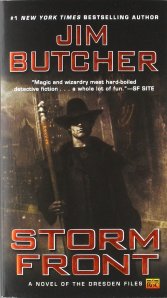
storm front jim butcherStorm Front: A Novel of the Dresden Files by Jim Butcher, 3/5

A delightful overload of classically cheesy clichés, straight from the detective fiction bible, was the only thing that made this book readable to me.  I enjoyed the supernatural take on the whole private eye thing, and Butcher included some imaginative touches, but most of it felt pretty generic.  Far more interesting than the plot was the [ultimately unanswered] question “Is Butcher purposefully mocking the detective fiction genre, or does he actually have a bona fide degree, carved in cheese, from the Nancy Drew School of Writing?”

While enjoyable, I don’t really feel any compulsion to read the rest of the books in the series.

[Why I read it: I thought the TV show looked interesting, but my books-before-movies rule required me to first give the books a try.]