
Category: Reviews
Runner’s World Complete Book of Running
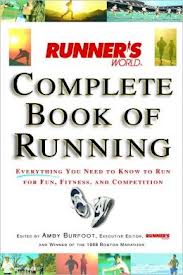 Runner’s World Complete Book of Running: Everything You Need to Know to Run for Fun, Fitness, and Competition by Amby Burfoot, 4/5
This is an encouraging book, with lots of advice for beginning to intermediate runners (like myself) – basically, anyone who hasn’t yet settled on a rigorous training program. Several concise, entertaining articles are provided on the following topics:
1. Beginning Running
2. Nutrition
3. Injury Prevention
4. Women’s Running
5. Building Strength, Endurance, and Speed
6. The Mental Side of Running
7. Cross-training
8. The Marathon.
One of the main themes of the book is training smart as opposed to just training hard. The authors point out that, in conjunction with a good training program, lowering weekly mileage can actually be beneficial to performance. There is also a lot of emphasis on taking an appropriate number of rest/recovery days. These ideas and the training concept of “Yasso 800s” (which I am looking forward to trying out soon) are the most important things I got from this book.
I would suggest reading the newest version, since several aspects of this 1997 version feel a bit outdated.
Eugene Onegin
Eugene Onegin and Other Poems by Alexander Pushkin, trans. by Charles Johnston, 3/5
This piece of literature ended up on my to-read list in a rather roundabout way. I was first motivated to watch the Ralph Fiennes/Liv Tyler movie version, Onegin, after encountering beautiful screenshots from the film used to illustrate camera techniques in the book Master Shots. The movie was captivating and I became curious about the novel-length poem behind it.
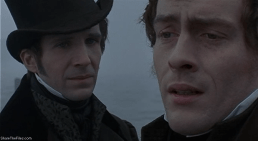
Top hats, duels, snowy landscapes…this movie has it all…
It is difficult to talk about the story without completely spoiling it; I am certain that knowing the ending would have diminished my enjoyment of the movie greatly, in which case I might not have even bothered to read the poem. Themes are safe to mention, I suppose, and Pushkin examines a variety of them, including love, flirtation, death, ennui, infatuation, the meaning of life, and the power of social norms. It’s not the cheeriest fare to start with and the treatment is very…Russian.
The Johnston translation is impressive, somehow managing to preserve the original rhyme scheme, but I still sensed something lost in translation. Though some stanzas were touching, witty and insightful, a great many more were difficult to understand and felt completely disconnected from the main story arc. Given the rambly plot, I was unsurprised to later find out that Onegin was originally published in serial form over a span of some 8 years. I found it challenging to connect with the characters and a lot of what I did get out of it was likely thanks to having seen the movie already. This worked out well for me but, because of the overwhelming visual power of the film, I would be tempted to recommend reading the novel first, if possible.
I also read the two additional poems in this collection, “Onegin’s Journey” and “The Bronze Horseman,” but they failed to interest me in the slightest and I shall leave their reviewal to a more appreciative reader than I.
Mystic River
Mystic River by Dennis Lehane, 3/5
I hope Clint Eastwood is considered a “great mind,” because I only found out that he directed a film based on this book after reading it and thinking That felt exactly like a crime/drama/thriller movie starring Sean Penn (ok, maybe not that specific). It is very well written and dramatic, but I would have enjoyed it more if it wasn’t so R-rated. On thinking it over, I guess I have different (more sensitive) standards for books than for movies, which is a new and interesting realisation.
Cloud Atlas
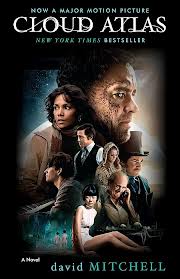
The book, not the movie.
Cloud Atlas by David Mitchell, 2/5
After the disappointing discovery that this David Mitchell is the “wrong” David Mitchell and the marginal experience of reading his first book, Ghostwritten, I had not planned to read anything else by him. However, I changed my mind when my old hold on Cloud Atlas finally came in at the library and I realised how many people were lined up, waiting to read it after me.
First, the positive: I love the opening sentence – “Beyond the Indian hamlet, upon a forlorn strand, I happened on a trail of recent footprints.” Stylistically, Mitchell’s writing has matured, with a more unique voice and a very chewy vocabulary. There are even a couple brilliantly poetic/philosophic sentences.
Unfortunately, the book’s framework relies on the same plot gimmicks as Ghostwritten, making Mitchell seem like the sort of diminutive equine that is only capable of one trick. Instead of the added depth and skill of execution that I expected from a more experienced Mitchell, Cloud Atlas seemed to compound the faults of Ghostwritten. The connections between the stories are laboured and glaring, the plot seemed ultimately pointless, the characters/scenarios preachy and the vignettes cliched.
The Hobbit
The Hobbit or There and Back Again by J.R.R. Tolkien, 5/5
I made the mistake of re-re-re-re-reading this book right before I went to see the new movie version. It’s a sad commentary on the film that I spent a good portion of the movie review praising the book and bemoaning the filmic misadventure that masquerades under its name. Since I am lazy and thinking any more about how awesome this book is will just make me sad, I’ve excerpted the relevant part from my movie review below.
The Hobbit may be a slim book, a classic adventure tale for children, but it is written skillfully, with wit and humour, character development, a sense of the epic and a mythological backbone that makes it not inconsistent with its titanic offspring, The Lord of the Rings.
The Hobbit: An Unexpected Journey
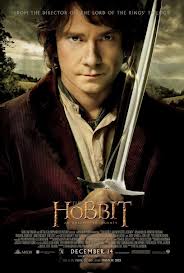 Hwæt! If you don’t want to witness me taking this movie waaaay too seriously and drowning my keyboard in tears of anger during long sentences of painfully earnest prose, skip to the end and the more easily digestible “WTF Moments” section.
Also, if I thought this movie could be spoiled, I’d be warning you about spoilers right about now…
The Hobbit may be a slim book, a classic adventure tale for children, but it is written skillfully, with wit and humour, character development, a sense of the epic and a mythological backbone that makes it not inconsistent with its titanic offspring, The Lord of the Rings. Because of this, I hoped (even expected) that it would be treated with the same respect, creativity and slavish attention to detail that J.R.R. Tolkien’s works had previously received at the hands of Peter Jackson.
The only image I could find of my beloved version of the book (Unwin Paperbacks 1966), Though mine is much more worn around the edges.
At worst, I reasoned, the first installment of a ~9 hour film treatment of a 278 page novel would suffer from additions, not deficiencies. It would allow the audience to luxuriate (perhaps even excessively) in the details of the book, brought to life with no time or budget constraints (no missing Tom Bombadils or scouring of the Shires this time), and any additions would be understandable concessions to the film medium.
Sadly, Peter Jackson removed almost as much material as he added (which was a lot), and all with a blithe senselessness that left me very, very angry. Tiny tidbits from the book, certain individual lines, props and scenes were a pittance, tossed at the audience as if they were generous concessions, a sort of shoulder nudge for the fans, “see, we read the same book as you” thing, while the larger portion of dialogue and plot details were straight from a movie trope library. There is much I could have forgiven in a shorter film from an unproven director, but this is 3 hours of Peter Jackson doing Tolkien – it has to be so bad in order to be bad. And it was.
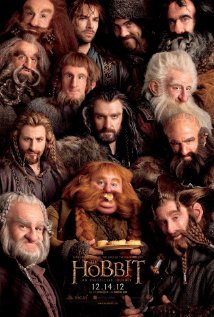
Bilbo who?
Over and over, the film disregarded actual drama and interest straight from the book in favour of tired, shallow cliches:
- For example, instead of exploring the psyche of dwarves and their dubious motivation for the quest, everything was blamed continually on the idea of “omens” and it being “the right time,” like that explains anything. Bilbo’s little Hallmark speech about how he wanted the dwarves to have a home and sense of belonging was pathetic and gratuitous. Sorry, the dwarves were totally in it for the gold and revenge and sense of belonging be damned. And Bilbo didn’t even want to be there most of the time.
- Any drama surrounding the Eagles (…was it a rescue or a take-out lunch…) was replaced with “Oh no, Thorin’s deadish, I mean, he looks kind of dead, his eyes are closed, gee, I hope he’s not dead… of course he’s not, because apparently he’s the main fekking character in this film.”
- Instead of letting Bilbo simmer in the psychological discomfort of his uncertain position in the company of adventuring dwarves, gradually proving himself as his character changes and grows (which is, indeed, the entire point of the story), the film first treats him as a bystander, then has him randomly save Thorin’s life, earning the chief dwarf’s goodwill and dispelling the drama of Bilbo’s position with one boring cliche. In fact, all the book’s little revealing psychological insights into Bilbo that make the reader love, empathise with and understand him are completely absent from the movie.
So much was needlessly and painfully spelled out:
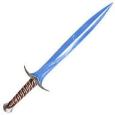
And get this, folks, it actually turns BLUE when goblins are around! Blue, blue, BLUE!
- For example, the audience supposedly couldn’t be trusted to understand the joke when Bilbo slips up, describing himself to the trolls as “a bur – a hobbit,” so it’s changed to “a burgler hobbit,” which isn’t a joke anymore at all, it’s just stupid.
- It was carefully explained that Sting burned blue in the presence of Goblins, when the few people not already aware of this could easily have been shown it, not told.
- The audience had to actually see Gollum drop the ring. This took away the sense of mystery and discovery that is so enjoyable about the original scene in the book.
Many details from the book that would have been easy to include in a movie of this length and budget were glaringly disregarded. No coloured, hooded cloaks on the dwarves, no wet and weary pony rides with Bilbo reminiscing about his cozy hobbit hole (not for the first time), few songs, no blue, red and green pine cone firebombs from Gandalf, no darkness in the Goblin tunnels, no Glamdring and Orcrist flashing about during the fights, no this, no that. But here, have some random scenes featuring Radagast hugging a hedgehog.
No review is complete without addressing positive aspects and I have to say that the riddle scene was quite brilliant. I thought that it was well-done, entertaining, funny and delightfully consistent with the portrayal of Gollum in the LotR films. It almost made it worth watching the whole film. Also, Martin Freeman did a very good job, though no doubt he was confused to see his name in the top billing, given the lack of focus on his character in the film.
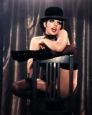
Your mom wishes.
In conclusion, sure, it was a spectacle, but then so is your mom doing a 3 hour long rendition of “Mein Heir,” complete with fishnet stockings and a chair of dubious stability. Call me a purist, but I was hoping for something spectacular instead.
Notable WTF moments:
- the first 10 minutes of the film – like a giant screensaver slideshow of New Zealand, with the picture changing before you’ve had a good chance to look at it. Then you remember what you came to your computer for but shaking the mouse doesn’t wake it up.
- every single shot that was a direct re-enactment of a shot from LotR (Gandalf glowering/dimming the lights, the Ring falling onto Bilbo’s finger, the moth-whispering, etc.). What kind of person includes homages to their movies in their own movie? The charitable assumption is that Jackson was in a rush or
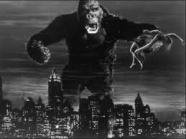
Peter Jackson’s ego, gorillafied.
suffering from amnesia or maybe just hated The Hobbit. Otherwise, he is seriously misapplying the “imitation is the sincerest form of flattery” quote and letting his ego go all King Kong on us. I’m actually having a hard time believing that Jackson directed this at all; LotR was full of clever, interesting cinematography and beautifully composed shots, while The Hobbit is full of pans and copied material.
- the moment I realised that Azog, who merits a one-sentence mention in The Hobbit (“Your grandfather Thror was killed, you remember, in the mines of Moria by Azog the Goblin” (24). That’s it. Oh, and a footnote on page 257), was destined to replace both Bilbo’s character development and the quest itself as the focus of the movie, while the Rivendell part (which occupied an entire chapter in the book) was about as long and interesting as a bathroom break.
- the shaggy fat suits that were loosely Velcroed to what were otherwise, no doubt, quite acceptably pony-like ponies.
- fart jokes in the troll scene. Really? And since when has any creature that considers sitting on dwarves to squash them into jelly an acceptable cooking method been worried about things like parasites?
- the interminable episode where Radagast leads the goblins and wargs in spirals on an open plain around Thorin & Co. in an exhibition of what has to be the worst decoy technique ever.
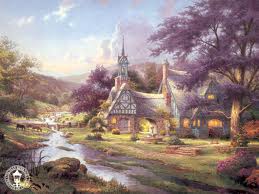
Thorin & Co arrive at Smarmdell, where gay elves go to die (or rather, live forever).
- Rivendell looking like a bad forgery of a Thomas Kinkade painting.
- Galadriel dematerialising like some sort of Cheshire cat. Also, the celestial choir gargling loudly in our ears during her first appearance.
- the Gandalf/Elrond/Galadriel/Sauruman scene – so long, boring and pointless I can only assume it was done on purpose for reasons beyond my ken.
- stone giants – pre-SFX footage from the next Transformers movie.
- the Goblin King’s high-pitched voice. Add a Cheetos-stained white tank-top and his vibe would be complete.
- the cosy, warm colour palette for all the goblin scenes, which suggested renovation not retreat as the best plan of action. Seriously, brew me a cup of tea, light a nice fire, slap on some wallpaper and I’d never leave.
- the whole goblin escape scene via rope bridges, etc., which was one Nicholas Cage look-alike away from being a very respectable remake of the last few scenes of National Treasure.
- when I realised that someone got paid to write (and someone paid to deliver) the line “You’ve got to be joking,” uttered shortly after the deceased Goblin King fell on top of the company. So many good lines from the book left unsaid and yet “You’ve got to be joking” will forever exist in this version of The Hobbit. The screenwriters literally could not have picked a more cliched, banal phrase. It just makes me want to cry.
- Gandalf “healing” Thorin by muttering some sort of shopping list in the general direction of his forehead. They both looked surprised when it worked. In fact, the only entity that was thoroughly unsurprised was the audience.
- the Azog fight at the end of the movie. What, a story containing encounters with trolls, goblins, Gollum, wargs, giant spiders, unfriendly wood elves, and a dragon, ending with the Battle of Five Frickin’ Armies, needs some extra fight scenes?
The Turn of the Screw
The Turn of the Screw and Other Short Novels by Henry James, 3/5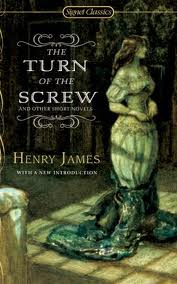
The six short novels in this collection were written over a span of 25 years (1878-1903) and the distinct progression in style and quality is startling. The first two stories, An International Episode and Daisy Miller: A Study, are notably pointless, with a relentless use of national stereotypes and leaden, tedious dialogue that is even more pathetic for so obviously aspiring to the heights of Oscar Wilde.
The Aspern Papers is much more interesting, with its portrayal of human manipulation and rationalisation. Unfortunately, an unsatisfying climax and denouement left me resentful of being tricked into thinking there was going to be much of a story.
I feel that The Altar of the Dead is the first good piece in the book – fascinating, suspenseful and deeply psychological, with just enough story to hold it together. The Beast in the Jungle is very similar in style and was probably my favourite work in the book.
Reading The Turn of the Screw was the whole point of my Henry James expedition and it was worthwhile, if unsatisfying. A Gothic thriller, many aspects of it reminded me of Jane Eyre and I could picture Northanger Abbey‘s Catherine Morland enjoying it rather more than I did. James’ devious ambiguity and slow build-up of suspense left me annoyed but grudgingly admiring.
I should also mention Fred Kaplan’s exasperating introduction to the book, which provided numerous spoilers while insisting on laboured homosexual interpretations of even the most innocuous points of the stories.
Cutting for Stone
Cutting for Stone by Abraham Verghese, 4/5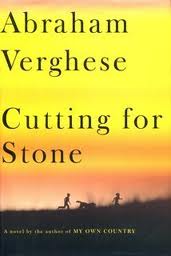
Despite my friend Alison’s positive recommendation of ages ago, I approached Cutting for Stone somewhat warily because I was unfamiliar with the author, not particularly interested in the topic (a sort of medical-themed coming of age tale, set in Ethiopia) and found the hardback sizeable enough to likely kill me if I fell asleep and dropped it on myself while reading in bed. However, these reservations quickly faded as I became interested in the dramatic scenarios and characters involved in them. I enjoyed the sense of trust I could place in Verghese’s real-life medical expertise, which was showcased often in his portrayal of the experiences of Marion Stone, who uncovers the twisted histories of his nurse/nun mother and brilliant but antisocial surgeon-father, while growing into his medical heritage and discovering what it means to live, love and work.
This book has its profound moments and emotional scenes – a well-crafted story that is communicated with a straightforward writing style that makes its 530+ pages fly by. Some people would undoubtedly find it to deserve a 5/5 rating, but my enjoyment of it (and indeed, my ability to recommend it) was marred by the sordidness of some of the more sexual scenes, the inevitable inclusion of which is one of the reasons I generally don’t tend to enjoy coming of age stories. Call me oversensitive or prudish, but if I wouldn’t want to know it about my best friend, I probably don’t want to know it about a fictional character either. Still, an impressive and meaningful read.
Who Could That Be At This Hour?
Who Could That Be At This Hour? by Lemony Snicket, 4/5
This book is so witty and fun that it took me quite a while to realize that it basically has no plot.
Master Shots
Master Shots (2nd edition) and Master Shots Vol 2 by Christopher Kenworthy, 5/5
Between them, these two books cover 200 camera shots, providing descriptions, diagrams and screen captures from famous movies. Kenworthy’s efficient and unpretentious style makes these books uniquely informative. He explains the hows and whys behind camera techniques in plain language, revealing some very interesting cinematographic nuances that I would never have noticed or guessed on my own.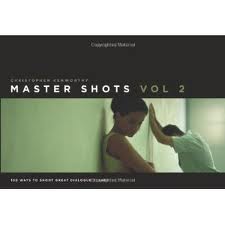
For example, in Master Shots Chapter 6.4 Kenworthy points out that “keeping the camera in place creates the sensation of the character walking into the new scene; if you dolly backward, the actor doesn’t feel like he’s moving into the scene so much as passing through.” Or, during a chase scene, he suggests using a long lens to make the goal appear nearer, whilst also more unattainable since the hero makes less apparent progress towards it during the shot (26). These are just two examples of the kind of fascinating insight provided by these excellent books. Reading them has made me a better movie-watcher and if I ever need to make a film, I will read them again in order to be a better movie-maker.
 OmniRambles