
Category: Book Reviews
Killing Floor
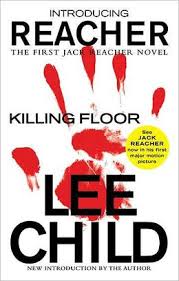 Killing Floor by Lee Child, 3/5
This has an entertaining and well-structured, though by no means unique, plot. The writing style is unintentionally hilarious, with short, macho sentences and strangely frequent occurrences of the word “graunch” (ok, maybe three times doesn’t count as “frequent,” but it definitely is strange).
Another trademark is the use of numerous minute observations and descriptions, which have no plot significance and, combined with Child’s limited and repetitious vocabulary, lead to some strange effects. One of these is “The Sucky Rubber Door Seals.” Having initially described how the police station’s “plate-glass doors…sucked against rubber seals” and “sucked shut” (7), Child proceeds to use this exact description with a frequency that can only be described as weird. For example, on page 50, the “big plate-glass door of the station house…sucked against the rubber seal.” Page 131: “…the big glass door sucked open.” Page 150: “the station house door sucked open.” Page 246: “I heard the glass door suck open.” Page 449: “Pushed open the heavy glass door against its stiff rubber seal.” Weird. I’d have to say that the doors aren’t the only thing about the book that sucks… Still it’s a fun read and, for a first novel, even impressive.
[Why I read it: I heard good things about the series from my dad and, though I hated the movie, I thought the Jack Reacher character had potential to amuse.]
Heroes of the Dawn
 Heroes of the Dawn: Stories of Fionn and the Fianna by Violet Russell, 5/5
Given the prominent “School Edition” on the cover, the large text inside and the lack of any sort of author biography, I fully expected this to be a childish retelling of Irish legends, popularised for an American audience. I was wrong. The stories are beautifully and simply told by Violet Russell, née North, wife of Irish Nationalist and writer George “AE” Russell (whose Wikipedia article is well worth a read). There is no higher qualification needed for a recorder of myths than to be able to write, without pretension, what can be found in the beginning of the dedication “to Brian and Diarmuid”:
When you were small, and could not read for yourselves, and the long winter twilights were wearisome to you – sitting by the fire while the shadows played with each other over the room I told you these stories of ancient days, when magic and mystery and the folk of the other world were part of every one’s belief.
It is because you cared for them that I have re-written some of those about Fionn and his warriors, thinking that other children might wish – as you did – to know something about the old gods so often mentioned in the legends, and about Fionn and the Fianna Eireann.
The art by Beatrice Elvery is, even in this stripped-down, black-and-white, school version of the book, exceptional. My battered copy is missing the frontispiece (and the last page, irritatingly), but I scanned in the rest of the images since a convenient collection doesn’t seem to exist elsewhere on the internet.
A little research revealed quite a bit about the book’s author and illustrator…if only I could find out something about the book’s previous owner, who scrawled name and address several times amongst the pages. Plunket Stewart of Barrack Street No. 12, I’m thinking of you!
[Why I read it: obeying my compulsion to check the contents of vintage books that have no title printed on the spine, I found this in a Missouri antique store. I’m always on the look-out for lesser-known mythologies (basically anything that’s not Greek or Roman).]


Finding Your Element
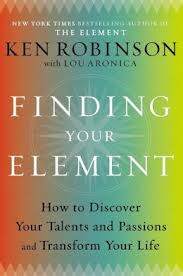 Finding Your Element: How to Discover Your Talents and Passions and Transform Your Life by Ken Robinson, 3/5
If only someone would write a self-help book for people who are too cynical and pessimistic for self-help books. Not that it would help.
Anyway, I skimmed through this but was feeling much too depressed to ponder any of the ponderous questions that lurked at the end of every chapter or to do any of the numerous thought-exercises. I know that makes this review about as legitimate as a review of a diet book that was read while eating Twinkies, but what can I say – when you’re not thinking positively, then “thinking more” (which is, practically speaking, the solution Robinson proposes) does not seem likely to help. Also, the book’s subtitle makes me want to puke. And the cover is too colourful.
[Why I read it: I ordered it from the library after watching an interesting interview with the author. However, it turned out to look a heck of a lot like your ordinary, bullshit self-help book and I was in a bad mood anyway, so I lost interest and only read it very late at night, when my brain was too tired to process the book on theoretical physics that I was also in the middle of.]
A Brief History of Time
 A Brief History of Time by Stephen Hawking, 4/5
If I learned anything from this book, it is that theoretical physics is an unfortunate area of interest for skeptical non-geniuses like myself. When the skeptic in me complains about a lack of compelling evidence in support of complicated concepts, the non-genius assures me that I wouldn’t be able to understand such evidence anyway.
This book covers much more than just the topic of time, ranging from an overview of basic physics to an in-depth analysis of black holes. I appreciate the tone of the book, which is enthusiastic without being overbearing or condescending. Hawking demonstrates the rare virtue of valuing what is right over simply being right. I especially appreciate how he expresses his doubts about the existence of God in a respectful and thought-provoking way instead of indulging in the vicious and insulting approach that has been popularised in recent years by many members of the scientific community.
My main complaint about the book is its age. It has been fifteen years since the last update, which is quite a long time in terms of scientific advancement. It killed me every time Hawking mentioned a theory that would likely be proved or disproved in “the next few years” because I know that such events have likely happened, but are too technical for me to learn about on my own.
Having established my basic inability to question or critique this book’s content and method of presentation, here is a brief sampling of some bits that made my brain really happy:
1. The strange fact that “we can measure time more accurately than length” (22).
2. Rockets have to travel more than 7 miles/second to escape earth’s gravity (42).
3. The concept that something can be both finite and without edges or boundaries (47).
4. Particles with spin 1/2 “do not look the same if one turns them through just one revolution: you have to turn them through two complete revolutions” (69).
5. If you picture real numbers on an x-axis, then imaginary numbers can be represented by the y-axis – being “in a sense numbers at right angles to ordinary real numbers” (139).
6. That Hawking’s “no-boundary” description of the universe closely matches both my own personal conception of God and God’s description of himself as “I am who I am.”
The universe would be completely self-contained and not affected by anything outside itself. It would neither be created nor destroyed. It would just BE” (141).
7. A process called “renormalization” cancels out seemingly absurd infinities by introducing other infinities (173).
8. String theory’s “strings” have length but no other dimension (174).
On four-dimensional space-time:
Einstein made the revolutionary suggestion that gravity is not a force like other forces, but is a consequence of the fact that space-time is not flat, as had been previously assumed: it is curved, or “warped,” by the distribution of mass and energy in it. Bodies like the earth are not made to move on curved orbits by a force called gravity; instead, they follow the nearest thing to a straight path in a curved space, which is called a geodesic. A geodesic is the shortest (or longest) path between two nearby points. For example, the surface of the earth is a two-dimensional curved space. A geodesic on the earth is called a great circle, and is the shortest route between two points (Fig. 2.8). As the geodesic is the shortest path between any two airports, this is the route an airline navigator will tell the pilot to fly along. In general relativity, bodies always follow straight lines in four-dimensional space-time, but they nevertheless appear to us to move along curved paths in our three-dimensional space. (This is rather like watching an airplane flying over hilly ground. Although it follows a straight line in three-dimensional space, its shadow follows a curved path on the two-dimensional ground.) The mass of the sun curves space-time in such a way that although the earth follows a straight path in four-dimensional space-time, it appears to us to move along a circular orbit in three-dimensional space” (30).
On extra dimensions:
Why don’t we notice all these extra dimensions, if they are really there? Why do we see only three space dimensions and one time dimension? The suggestion is that the other dimensions are curved up into a space of very small size, something like a million million million million millionth of an inch. This is so small that we just don’t notice it: we see only one time dimension and three space dimensions, in which space-time is fairly flat. It is like the surface of a straw. If you look at it closely, you see it is two-dimensional (the position of a point on the straw is described by two numbers, the length along the straw and the distance round the circular direction). But if you look at it from a distance, you don’t see the thickness of the straw and it looks one-dimensional (the position of a point is specified only by the length along the straw). So it is with space-time: on a very small scale it is ten-dimensional and highly curved, but on bigger scales you don’t see the curvature or the extra dimensions” (179).
On popular science:
In Newton’s time it was possible for an educated person to have a grasp of the whole of human knowledge, at least in outline. But since then, the pace of the development of science has made this impossible. Because theories are always being changed to account for new observations, they are never properly digested or simplified so that ordinary people can understand them. You have to be a specialist, and even then you can only hope to have a proper grasp of a small proportion of the scientific theories. Further, the rate of progress is so rapid that what one learns at school or university is always a bit out of date. Only a few people can keep up with the rapidly advancing frontier of knowledge, and they have to devote their whole time to it and specialize in a small area. The rest of the population has little idea of the advances that are being made or the excitement they are generating” (185).
[Why I read it (twice): the Internet loves Stephen Hawking and I grew tired of being constantly reminded that I’d never actually read anything by him. My enthusiasm during the first reading was a little diminished by feelings of mental inadequacy, so I read it through again, hoping to clarify the difficult bits. I was certainly less bothered the second time around, but I think that was more because of a shallow familiarity with the content than from any mental breakthroughs.]
Ragged Dick
 Ragged Dick: Or, Street Life in New York with the Boot Blacks by Horatio Alger, Jr., 2/5
Surprisingly, being a paedophile is not the fault that most disqualifies Alger from being an author of children’s books; he is also a terrible writer. The story is unbearably preachy and contrived. Its only merits are historical – documenting old time speech patterns and providing a interesting glimpse of a young New York City. I wanted to give it 1/5, but decided to be more generous since some of its failings are simply common characteristics of 19th century literature and it was written for children, after all.
[Why I read it: the rest of my family read it and I had never come across anything by the author, though I recognised his name.]
The Man Who Never Was
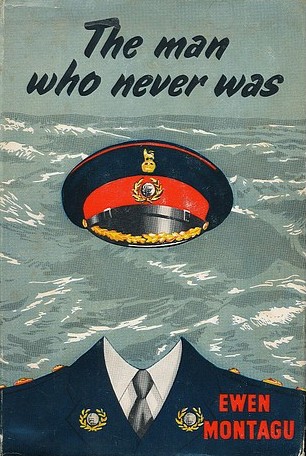 The Man Who Never Was by Ewen Montagu, 4/5
This is the definitive and first-hand account of a real-life wartime deception that bears more similarity to a fictional spy/thriller story than to reality. During WWII, the author was in charge of a scheme to float a corpse bearing falsified military papers off the coast of Spain, in an attempt to trick the Germans into diverting resources from the impending Allied invasion of Sicily. The narrative is simply-told and well-illustrated with numerous photos.
[Why I read it: the retro design on the spine caught my eye at the thrift store and I was somewhat familiar with the historical event the book describes so I bought it for my brother’s library.]
The Four Adventures of Richard Hannay
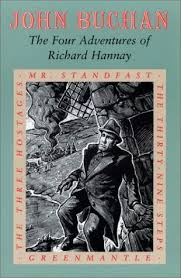 The Four Adventures of Richard Hannay: The Thirty-Nine Steps, Greenmantle, Mr. Standfast and The Three Hostages by John Buchan, 4/5
I have long considered The Thirty-Nine Steps, Buchan’s first (and shortest) Hannay novel, to be good clean fun. It is a thrilling spy tale that is elegantly implausible and crisply confident, standing up well to multiple re-readings. Of the following three novels, I thought The Three Hostages to be closest in style and would give both it and the first story a solid 5/5.
The two middle novels fall off somewhat – both are sprawling stories, full of dry details and unnecessary tangents, while the second suffers from its ham-fisted treatment of the romantic subplot (for which failings I would rate them 3/5). Still, it was fun to become better acquainted with self-deprecating, ex-mining engineer Richard Hannay, part-time spy and full-time war hero.
[Why I read it: it got on my radar when I saw my brother reading it, especially since I was already a fan of the first novel.]
Wordstruck
 Wordstruck: A Memoir by Robert MacNeil, 2/5
MacNeil is obviously a highly successful and intelligent man (to judge from his Wikipedia article and contributions to The Story of English) but this memoir is very dull and would, I think, be of little interest to anyone not actually related to him. Perhaps it suffers from too much humility in the presentation or perhaps it’s just that people who write more exciting memoirs tend to lie a lot.
[Why I read it: it was a present from my mom and I liked MacNeil’s work in The Story of English].
King Solomon’s Mines
 King Solomon’s Mines by H. Rider Haggard, 4/5
An exciting adventure story that’s written with an abundance of wit and charm, though unfortunately suffering from an equal abundance of nonchalant 19th century racism.
[Why I read it: my brother read me a couple hilarious excerpts from it.]
Steal This Computer Book 2
 Steal This Computer Book 2: What They Won’t Tell You About the Internet by Wallace Wang, 1/5
This 2001 version is hopelessly outdated and consists mostly of very generic info and URLs. The little of interest it has to offer is purely archival – references to and screenshots of old-school websites and software. Wang seems to lack the qualifications necessary to write a truly informative book or to live up to his self-styling as a sort of tourist guide to the hacking subculture. His muddled philosophising on politics/ethics does not camouflage what is a blatant attempt to capitalise on the pop-culture appeal of hacking.
My favourite quote from the book is this gem: “…assume that any strange music coming from your computer is from a virus” (227).
[Why I read it: the title caught my eye in the thrift store.]
 OmniRambles