
Category: Book Reviews
Comic Epitaphs
 Comic Epitaphs From the Very Best Old Graveyards, gathered and published by Peter Pauper Press, 2/5
A lame and lazy collection of gravestone sentiments (mostly expressing glee at the death of nagging wives) that are unhelpfully guaranteed in the intro to be “genuine,” “suspect,” or “frankly contrived.”
[Why I read it: caught my eye in the thrift store, but turned out to be an almost complete waste of three dollars and ninety-nine cents. Oh well, swings and roundabouts…]
xkcd: volume 0
 xkcd: volume 0 by Randall Munroe, 3/5
XKCD is my favourite webcomic–I visit the homepage several times a week to check for updates and, despite having a liberal-arts degree, I usually understand enough to get a good laugh (or two, because: alt text). However, this collection of some of Munroe’s favourite strips reflects a mind that is both keener and dirtier than my own. I did not understand much of it, and much that I did understand was pretty R-rated. But I’m not complaining; the best part of buying this book is that it supports the webcomic.
[Why I read it: I was given it as a gift (being basically the only present I hinted for last holidays).]
Dracula
 Dracula by Bram Stoker, 5/5
I expected this famous Gothic horror novel to be trashy and cheap, in the fun, readable way that characterizes (in my experience) even the lowest-quality literary output of the late 19th century. Though the characters lack depth and the book displays both offhanded sexism and instances of laughable sentimentality, it is much better written and more fun to read than I anticipated. The creation and build-up of suspense is handled skillfully and the plot is satisfying, with a good payoff. Stoker’s technique of telling the story through the diaries and letters of multiple characters generally works well, though he does not settle into a good rhythm in shifting between characters until Chapter 5. This chapter, with its abrupt switch from the excitement of the first four chapters, to comparatively boring and unconnected content from different characters’ points of view, marks the only dip in the book’s action. Dracula is definitely a page-turner: with only 50 pages left to read, I was equally excited to find out how the story would end and sad that it would soon be over.
Just a little research indicates the nausea-inducing amount of literary criticism this novel has been subjected to, with tortured psychological and sexual interpretations that are, to my mind, equal parts bull and shit. My reading of the book for pure enjoyment (surely the cause for which it was written), hinted at no undertones, overtones or, in fact, tones of any kind that would merit the overblown speculations that have been painstakingly read into the text by various scholars.
A note about this edition: the introduction, by Brooke Allen, provides a blow-by-blow synopsis of the book’s plot, a surprisingly common “sin” that I find both annoying (because SPOILERS!) and disrespectful to the author’s work.
[Why I read it: it’s one of those classics (like Shelley’s Frankenstein) that I have always meant to read. When I saw it on the shelf at the thrift store, I knew the time was right.]
Project Planning, Scheduling, and Control
 Project Planning, Scheduling, and Control: A Hands-On Guide to Bringing Projects in On Time and On Budget (Third Edition) by James P. Lewis, 4/5
This straight-forward book provides a lot of common sense advice and widely-applicable guidelines for project management. It is easy to understand, even for someone with no experience in the subject (such as myself). Since I was reading more for recreational purposes than practical, I would have enjoyed more anecdotes; the author obviously has a lot of experience and probably some wild stories to tell, but generally refrains from giving too-specific scenarios that would encourage his readers to focus on details and miss out on the larger concepts.
Probably the most interesting thing I got from this book is Lewis’ definition of the concept of “Control”:
Control is exercised by comparing where you are to where you are supposed to be so that corrective action can be taken when there is a deviation from target (526).
If there is no plan, there can, by definition, be no control. This is a concept that I sort of came to on my own, through teaching my brother writing (you don’t know anything about control until you try to get a kid to write a paper), but I hadn’t really put it into words.
Another interesting concept is the difference between closed-ended and open-ended problems. According to Lewis, closed-ended problems have only one possible solution, are past-oriented and benefit from an analytical, left-brained approach. Open-ended problems, on the other hand, have more than one possible solution, are future-oriented, and respond best to a right-brained, synthetic approach (123). This might seem very obvious to some people, but it just wasn’t on my radar. Reading about the two types of problem made me realise that I tend to treat everything in my life like a closed-ended problem.
I would recommend this book to anyone considering project management as a career; Lewis speaks frankly about the responsibilities and challenges inherent to the work, as well as the type of person who might find success in it. I am not that type of person, apparently, since Lewis advises not to get into the career if you tend to think “Projects would be okay if you could just get people to be logical!” (35), a cry that is basically the theme song of all my social interactions…
My only complaint about the book is the large amount of space it wastes with huge, pointless illustrations of the odious “clip art + direct quote from the text” variety. Also, I would be interested to read a more recent, updated version.
[Why I read it: Dad borrowed it from a bookshelf at his work and brought it home for me to read.]
Storm Front
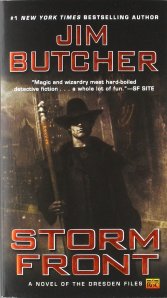 Storm Front: A Novel of the Dresden Files by Jim Butcher, 3/5
A delightful overload of classically cheesy clichés, straight from the detective fiction bible, was the only thing that made this book readable to me. I enjoyed the supernatural take on the whole private eye thing, and Butcher included some imaginative touches, but most of it felt pretty generic. Far more interesting than the plot was the [ultimately unanswered] question “Is Butcher purposefully mocking the detective fiction genre, or does he actually have a bona fide degree, carved in cheese, from the Nancy Drew School of Writing?”
While enjoyable, I don’t really feel any compulsion to read the rest of the books in the series.
[Why I read it: I thought the TV show looked interesting, but my books-before-movies rule required me to first give the books a try.]
Jam
 Jam by Yahtzee Croshaw, 4/5
I was tempted to give this book full marks just for the sheer audacity and originality of its jampocalyptic plot, but ultimately felt the whole affair a bit unsatisfying at the conclusion. I think this was because Croshaw introduced too much new stuff near the end of the book. This would probably have been less jarring if the rest of the book had not been so tightly focused on a more limited collection of characters and locations, leading the ending to feel a bit like it belonged to a different story. Also, I felt that, by the end, Croshaw had subtly crossed the line from mocking clichés to falling back on them. That said, it was still very entertaining, witty and “novel” in every sense of the word.
[Why I read it: I enjoy Croshaw’s sense of humour, having become familiar with it through watching his weekly game reviews and reading his first novel, Mogworld.]
The Voyage of the Beagle
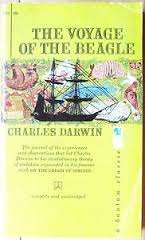 The Voyage of the Beagle by Charles Darwin, 5/5
This account of Darwin’s 5-year journey around the world is armchair traveling at its finest–every page offering the reader a shameless escape to foreign landscapes and civilisations. The author’s scientific observations are communicated in prose that is both sensible and sensitive. The occasional dry sections are more than compensated for by the few places where Darwin allows himself a poetical description or insightful commentary beyond what is strictly necessary or scientifically relevant.
In much the same way that reading the Seven Pillars of Wisdom completely shattered my unfavourable preconceptions of T.E. Lawrence, this book changed my opinion of Charles Darwin. As a Christian with deeply skeptical tendencies (especially inflamed by scientists’ general attitude of infallibility), I’ve always had an ominous, hazy view of Darwin as some sort of Antichrist of Science. The Darwin of this book was not so. Not only was he a total badass, braving extreme weather, forbidding terrain and a multitude of terrifying insects that I would not feel comfortable viewing in a zoo, much less in my sleeping bag; he was also open to the spiritual aspects of human existence and respectful (even approving) of Christianity. He shows a childlike eagerness to “fill up the wide gaps of knowledge” so obvious to his questioning mind, and a thoughtful humility when identifying any “inaccurate and superficial hypotheses” he might have created in travel-induced haste and enthusiasm. While the book’s focus is mostly on geology, zoology and botany, Darwin does provide information about the human component of his trip, displaying compassion toward the less-fortunate and a marvelling thankfulness toward the helpful. All of which leads me to feel great respect for him, both as a man and a scientist.
A note on the book edition (Bantam Classic, 1958): it is sparsely illustrated and altogether missing a map of any kind. I found myself in the unusual position of needing a map and not finding one, instead of the more usual scenario: seeing an unnecessary map at the beginning of the book and then feeling guilty through the rest for not referring back to it even once. Given the geographical nature of the content and Darwin’s penchant for referring to unfamiliar animals by their Latin names only, I would suggest reading a heavily annotated version of this book, accompanied by as many illustrations and maps as possible.
[Why I read it: saw it in the thrift store for 99¢ and decided it might be a relatively painless way to challenge my preconceptions about Darwin. I hoped it would focus more on travel observations (which it did) than on complicated scientific theories that might put me in the unenviable situation of doubting, but not being knowledgeable enough to refute.]
When Did You See Her Last?
 When Did You See Her Last? by Lemony Snicket, 4/5
Like the first book in the series, Who Could That Be At This Hour?, this is very funny and quotable, but not very memorable as far as plot is concerned.
[Why I read it: I love Snicket’s snide sense of humour and the book was handy, since the kids had already ordered it from the library.]
Welsh Legends and Folk-Tales
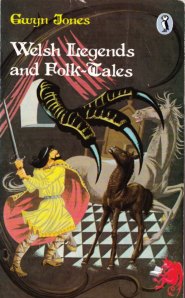 Welsh Legends and Folk-Tales, retold by Gwyn Jones, 5/5
These retellings are lively and witty, without pretension or rambling, and perfectly suited for reading aloud. It was especially interesting to read stories about King Arthur told from a Welsh perspective.
N.B. The Welsh pronunciation guide is rather unfortunately located at the back of the book, where you will encounter it after some 250 pages of incorrect mental pronunciation of names such as Blodeuwedd and Lleu Llaw Gyffes.
There are charming pen and ink illustrations by Joan Kiddell-Monroe at the beginning of each chapter. Also, fans of vintage C.S. Lewis and Tolkien books will undoubtedly recognise the name of illustrator Pauline Baynes, who did the cover art for this edition.
When I bought the book, I knew nothing about the author besides that, judging from the first name, there was a good chance she was Welsh. It turns out HE was Welsh and, in fact, a renowned scholar, writer, and translator of the Mabinogion (a collection of mediaeval Welsh myths). Gwyn Jones’ Wikipedia article is somewhat deficient, but I did find an interesting entry about him in Drout’s J.R.R. Tolkien Encyclopedia.
[Why I read it: I’m interested in lesser-known mythologies (especially those of the British Isles), so I picked this up at the thrift store for 99¢. The book felt like your average junky paperback and I was unfamiliar with the author, but seeing Pauline Baynes credited on the back cover really sold it to me, giving the book some class and authenticity.]
Ender’s Game
 Ender’s Game by Orson Scott Card, 5/5
The storyline is excellent, the characters interesting, the setting detailed and the writing skilled, but what has always struck me most favourably about this book is Card’s abnormally well-developed theories on the psychology of leadership and the natural, believable ways these theories are embodied in the characters he creates. The actions and motivations of the characters do not seem artificial or forced–Card avoids the contrived, stilted interactions and scenarios that many less skilled writers resort to when attempting to be “psychological.”
[Why I read it: I wanted a refresher of the book before submitting myself to the shallow spectacle, the hollow shell of any meaningful narrative, that will be, if current trends in the film industry are any indication, the movie version. I am not seeing it solely to complain, however (though that could surely be fun)–my brother is writing a short paper comparing the book to the movie and, since I teach him writing, I want to understand his thought process.]
 OmniRambles