
Category: Book Reviews
Lady of the Mansion
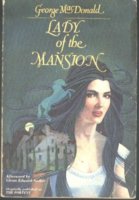 Lady of the Mansion (originally published as The Portent) by George MacDonald, 4/5
This short novel is beautifully written and imaginative. Without the happy ending tacked on as a concession to popular taste, it almost felt like a story-within-a-story from Macdonald’s Phantastes.
[Why I read it: I’m not usually a fan of Macdonald’s novels, but I saw this in the thrift store and was enticed by the laudatory reviews on the back cover.]
Night Watch
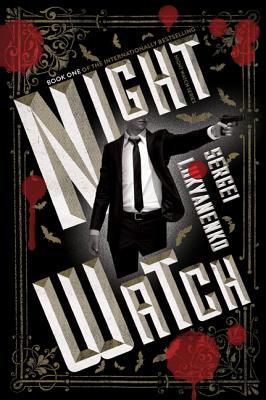 Night Watch by Sergei Lukyanenko, translated by Andrew Bromfield, 4/5
The three stories in this book are set in a fantasy version of Moscow that is home to both humans and the supernatural “Other” (magicians, vampires, healers and shape-shifters). Each Other chooses to be affiliated with either Light or Dark, living a life of benevolence or selfishness. The main character, Anton Gorodetsky, is a member of the Night Watch, a police-like entity composed of Light Others that monitors the behaviour of Dark Others, while the Dark Others in the Day Watch keep an eye on the Light.
Rather than pit the Light and Dark against each other in a cliched portrayal of the battle between Good and Evil, author Lukyanenko portrays the two Watches as functioning cooperatively, each side making concessions to the other in order to avoid an apocalyptic battle that would wipe out humankind (which is not in the interests of either side). Neither the benevolent actions of the Light Others or the malevolent actions of the Dark Others are unregulated–if one is allowed a kind action, the other is allowed a cruel one; balance is the key. Ultimately, the prevalence of one side or the other is determined by Humanity’s preference (an aspect of the story that seems weak–I hope it is elaborated on later in the series).
Lukyanenko explores the moral issues that arise in this counter-intuitive scenario, skillfully exploiting its dramatic potential. I appreciate how the author lets his characters’ interactions with the environment reveal how the fantasy world operates, rather than explaining everything in painful detail or using forced dialogue. The downside of this approach, and the fact that some nuances might be lost in the translation, is that a few parts of the stories are difficult to understand. Thankfully, the novel’s Wikipedia article provides very helpful summaries, which I referred to periodically in order to clarify some plot details.
I have to mention Gregg Kulick’s cover design for this HarperCollins edition–one of the most beautiful modern covers I’ve ever come across. If it were available as a poster, I’d be tempted.
[Why I read it: the confusing Russian films loosely based on this series did not inspire me to pursue it further, and it wasn’t until I recognised it in the i09.com list “10 Book Series So Addictive, You Never Want Them to End,” that I thought I’d give it a try. Part of the attraction was the claim that the series had a good ending, though I guess that point is moot now that a new book will be released in May.]
Grave Peril
 Grave Peril: A Novel of the Dresden Files by Jim Butcher, 2/5
This seems trashier than the previous novels and its vampire theme, though predating Twilight and the ensuing vampire craze, feels tiresome and unoriginal.
The Mabinogi
 The Maginogi and Other Medieval Welsh Tales, translated and edited by Patrick K. Ford, 5/5
This scholarly translation is serious without being stuffy, making a great companion to Gwyn Jones’ more charming and humorous version.
Fool Moon
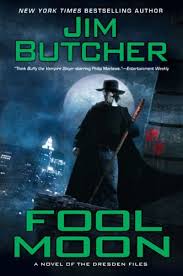 Fool Moon: A Novel of the Dresden Files by Jim Butcher, 3/5
I had not planned to read any more of the Dresden Files series after finding its first book, Storm Front, to be rather underwhelming. But I changed my mind after coming across a substantial number of comments and forum posts from fans who admitted the shortcomings of the earliest books and provided heartening assurances that the quality does nothing but improve as the series progresses. An unusual claim in this age of mindless sequels, but one that makes sense: if some authors explode onto the scene with First Novels of stunning perfection, many more must follow a flawed first offering with steady growth as a writer. Partly because I thought it would be fun to witness Butcher’s potential maturation as a writer and partly because I find the series’ premise appealing and enjoyed the TV show, I thought it would be fun to check out the second book.
While I did not feel that Fool Moon merited a higher rating of a whole number, it did seem more confident and less cheesy than the first book, even containing a passage or two that made me stop to appreciate a novel, well-communicated idea (all of which bodes well for the rest of the series). I could have happily done without the awkward sex scene and adult content sprinkled throughout in the drab, obligatory way that characterises both the modern novel and the movie desperate for a PG-13 rating. Perhaps that raciness is what characterises a “guilty pleasure” for others, but I would have felt guilty enough for reading a popular paranormal thriller when there is so much “serious” literature piled up by my bed.
Gilgamesh
 Gilgamesh: Translated from the Sîn-leqi-unninnī version by John Gardner and John Maier, 5/5
There are the remains of a very fine poem about this work, but I was surprised by just how few remains there are. Of course, it is incredible that any bits of clay tablet at all survived the three millennia since their creation; but, perhaps because it is most often referred to as the “epic” of Gilgamesh, I expected a poem of Homeric proportions and sentiment, not ellipses and single-word fragments. Thankfully, the Johns supplement with generous portions of an Old Babylonian version [“Old Babylonian” is actually a technical term, not a humorous, tautological understatement], inserted along with editorial notes after each column of translated material. These editorial notes are often as long or longer than each section of the poem text itself, which makes them equally informative and annoying. This duality typifies the book, whose scholarly focus and layout in many ways sacrifices the poem’s impact and appeal as a work of literature. It is a very good resource and supplement, but I look forward to finding a less academic version of the tale that allows the story to take precedence.
For me, the most striking sensation while reading Gilgamesh was a surprising sense of familiarity. I felt that primal connection to the story that typifies much mythology to me–a recognition, on perhaps the most basic level I can identify, of the human condition and spirit. There was also a decidedly less primal sense of familiarity due to the work’s similarity, in part, to other works of literature, such as the Bible, Homer’s Odyssey, Dante’s Inferno and Tolkien’s Lord of the Rings.
[Why I read it: I have come across references to Gilgamesh for years, but always feared it would be too obscure for me to understand. However, a friend’s positive mention of it in her own book was the final motivation I needed.]
Update: So, my attempt to read a couple less-academic versions did not work out well; both Derrek Hines’ and Stephen Mitchell’s adaptations are horrifying. Yes, I wanted to read something less technical that focused on the story, but both authors lack the skills to make a legitimate translation, so they have settled for a sort of do-your-own-thing approach that produces works of very questionable value, to my mind. I almost gagged at Hines’ use of the pun “mummy’s boy” in the second line of the poem. But at least he doesn’t have the balls to claim, as Mitchell does, that “I like to think that they [SÎn-lēqi-unninni and his Old Babylonian predecessors] would have approved” (66). For the record, Mitchell’s main qualification to add, adapt and change other people’s translations is, according to the book’s cover, his “widely known…ability to make ancient masterpieces thrillingly new.” No thank you.
What’s the Worst That Could Happen?
 What’s the Worst That Could Happen? by Donald E. Westlake, 3/5
At its best, this book reminds me of P.G. Wodehouse: witty, fun and improbable. At its worst, it is more reminiscent of John Mortimer’s Forever Rumpole: portraying criminality as cute and victimless (even admirable, if directed against a bigger criminal), and suffering from a lightweight plot. I would hesitate to recommend the book to non-adults because of some innuendos and because there are so many books to read that are much better.
[Why I read it: I Stumbled across a list of “50 novels to read when you need a good laugh” that included this among several books that I really like.]
Quiet
 Quiet: The Power of Introverts in a World That Can’t Stop Talking by Susan Cain, 5/5
As a somewhat stereotypical introvert, it’s hard to view this book objectively: how can I resist the charm of a well-written description of the introverted personality’s inherent strengths, along with an expose of the myriad ways introverts are under-appreciated and disadvantaged in modern culture? To be fair, the complexity of the topic requires a twin book, championing an opposing viewpoint, but as far as provoking thought, discussion, providing encouragement to the less-than-bold and making some very interesting points, this book is well rewarding.
Though it sometimes feels that Cain unfairly pits the strengths of introversion against the weaknesses of extroversion, the author generally achieves a well-researched approach to the topic, appropriate to her background and expertise. I appreciate that she restrains herself to a more observational, journalistic point of view, instead of succumbing to the allure of pop science pomposity.
There were several times during the book when I felt a sense of “What? Other people feel like that and do those things too? And that’s considered introversion, not some psychological problem?” It is encouraging to hear that there are other people in the world who reserve their small talk for deep relationships, find shallow social conversations to be unbearably boring, don’t feel connected to the crowd hype at events, would rather hear a teacher’s lecture than fellow students’ ignorant opinions (aired under the guise of “class participation”), would rather be independent than either leader or follower, feel two-faced for acting extroverted in some scenarios, sometimes don’t feel like socializing even with close friends, or feel that people who talk a lot often don’t have much to say.
One of the most helpful ideas I got out of this book was that it’s ok for the same person to have introverted or extroverted reactions to different scenarios: just because I feel reserved and unsocial in one scenario doesn’t mean that I am a faker or insincere for acting outgoing and high-energy in another. According to Cain, finding something you feel strongly enough about (such as a job, idea, or relationship) to make it bearable to sometimes act extroverted, is a positive thing and often a sign of a “core personal project” (209). “Free Trait Theory” gives people the freedom to sometimes act out of character when it is useful to do so, without feeling guilty about the inconsistency (209).
[Why I read it: saw it in a selection of recommended books at the library]
House, M.D. vs. Reality
 House, M.D. vs. Reality: Solving the Puzzles of TV’s Smartest Doctor by Andrew Holtz, 2/5
There is not a single original idea in this tedious book, which is written without wit or authority and manages to suck all the life out of an interesting topic. Holtz, a health journalist with no medical credentials, is good at performing interviews and Googling for relevant documents, but lacks the expertise to add anything of value to the topic or even present his “research” in a unique or remotely engaging way. The main content of the book is paragraphs of direct quotes (often several paragraphs on one page), mindless paraphrasing and TV episode synopses. I almost didn’t even make it through.
[Why I read it: came across it while browsing in the library.]
Shakspere’s Sonnets
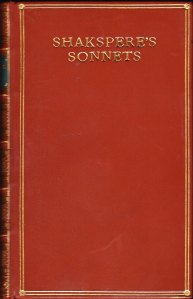 The Sonnets of William Shakspere, edited by Edward Dowden, 5/5
*a note on spelling: according to Wikipedia, "Shakspere" was the preferred spelling in the late 18th through early 19th centuries.
In general, these sonnets are inventive, passionate and beautiful, using vivid metaphors to make new the old topic of love. They are difficult enough to reward a second or third reading (and a quick look at the editorial notes) but not so opaque as to be frustrating.
Though I had never read the entire set of sonnets before, they had strong connotations to me as the epitome of romantic poetry, of fuzzy-around-the-edges, pastoral scenes; Willoughby reading aloud to Marianne, hopelessly romantic young girls in white sun dresses pining over small leather-bound editions or receiving love letters full of ink blots and badly paraphrased plagiarisms. That sort of thing. So, I was extremely surprised to discover that almost all of the sonnets were written from one dude to another. In context, even “Shall I compare thee to a summer’s day” (Sonnet 18) was most definitely not written for/about a woman. It’s not like I thought Shakespeare in Love was made by the History Channel, but I did kind of assume that Shakespeare was a hit with the ladies and now I’m almost as confused about his sexuality as he seemed to be.
While I found the “procreation sonnets” to be quite creepy (who writes 17 poems insisting that a male friend is robbing the world if he doesn’t pass on all his fantastic [and presumably inheritable] traits to offspring, asap?), there were many others that I loved. My favourite has to be Sonnet 116:
Let me not to the marriage of true minds
Admit impediments. Love is not love
Which alters when it alteration finds,
Or bends with the remover to remove:
O, no! it is an ever-fixed mark,
That looks on tempests and is never shaken;
It is the star to every wandering bark,
Whose worth’s unknown, although his height be taken.
Love’s not Time’s fool, though rosy lips and cheeks
Within his bending sickle’s compass come;
Love alters not with his brief hours and weeks,
But bears it out even to the edge of doom.
If this be error and upon me proved,
I never writ, nor no man ever loved.
I wish I could find more information about this book edition. All I know is that it was bound in 1933 by renowned bookbinding firm Sangorski & Sutcliffe, for the department store Marshall Field and Company. Sangorski & Sutcliffe are famous for their elaborate, jewel-encrusted book bindings, such as the famous edition of The Rubáiyát of Omar Khayyám that was lost with the Titanic, though I suspect cheaper, less sumptuous bindings such as mine helped the company survive the Great Depression.


[Why I read it: still on a quest to read all of Shakespeare’s works and couldn’t resist picking up this beautiful book for a few dollars at the thrift store.]
 OmniRambles