
Category: Book Reviews
Six Easy Pieces
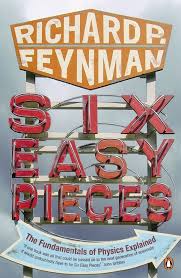 Six Easy Pieces: The Fundamentals of Physics Explained by Richard P. Feynman, 5/5
This book contains six accessible, non-technical lectures from Feynman’s famous Caltech physics course:
1. Atoms in Motion
2. Basic Physics
3. The Relation of Physics to Other Sciences
4. Conservation of Energy
5. The Theory of Gravitation
6. Quantum Behavior
Feynman’s genius, contagious enthusiasm, conversational tone, ability to simplify concepts without dumbing them down, and knack for creating memorable explanations, combine to form a book that allows non-geniuses like myself an intoxicating glimpse into the dazzling world of physics.
[Why I read it: I admit I’m a bit addicted to having my mind blown by theoretical and quantum physics. Also, I had previously developed a minor crush on Feynman during a lecture by my college physics teacher, who had an even bigger crush on him. So when I came across this book in Hay-on-Wye, it was a no-brainer to buy it.]
Escape Artist
 Escape Artist: True Stories of People Who Turned Their Obsessions into Professions by Joshua Piven, 4/5
This refreshing book tells the stories of ten people who rejected the financial security of traditional careers in favour of less-profitable occupations that made them feel happy and fulfilled instead. I enjoyed reading about the chance circumstances, accepted and rejected opportunities, and unpredictable chains of events that ushered these people into occupations they probably couldn’t have planned for and might not even have imagined. I appreciate that Piven doesn’t romanticize these stories, attempt to create some sort of cheesy blueprint for success from them, or devalue the majority of people who are willing to spend half their lives working a normal, 9-5 job.
[Why I read it: I came across it while browsing the library and the topic is relevant to me.]
Think on Your Feet
 Think on Your Feet: Presenting Your Ideas with Clarity, Brevity and Impact by Keith Spicer, 3/5
This slim workbook focuses on ten mnemonics to aid organization and presentation of ideas in public speaking and Q&A situations. I think the method is more a systematized deconstruction of common-sense processes than anything too groundbreaking. While it is fun to identify uses of the different categorizations (in terms of time, place, aspects, images, cause-effect, changing perspectives, extremes, advantages, opposites/contrasts and storytelling), I think most people who possess rudimentary organization skills would find them to be extraneous, as a logical system of organization would more likely emerge from their topic organically. However, people who are unfamiliar with basic essay writing techniques such as the idea of having a concise thesis and supporting points connected by transitions, or people who have to contrive a speech at short notice on an unfamiliar topic, might find this book to be very helpful.
[Why I read it: my dad attended a work seminar on the topic and brought the book home.]
Stories of Romance from the Age of Chivalry
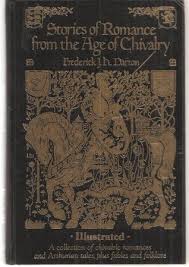 Stories of Romance from the Age of Chivalry by Frederick J.H. Darton, 3/5
Darton’s sensible prose was a strange but welcome introduction to the literary genre of chivalric romance. All of the stories were new to me (except “Sir Gawain and the Green Knight”), extracted in their essence from the rambling excesses of medieval French and English poetry. Usually, I despise prose adaptations of verse, especially verse that has already been translated to English, but in this case, I think the stories survive the ordeal and I probably wouldn’t have encountered them at all in their original form.
The author seems to have no qualifications whatsoever on the subject of the book, but also no scholarly pretensions. While the amateur nature of the whole affair bothers me, it is arguably true that similarly inexpert retellings of these stories is how they have survived and flourished for hundreds of years.
The numerous pen and ink illustrations by Arthur G. Walker (better known for his sculptures) are delightful.
[Why I read it: I’ve loved Arthurian tales since I was a child and this caught my eye in the thrift store because of the shiny gold cover design.]
101 Things I Learned in Law School
 101 Things I Learned in Law School by Vibeke Norgaard Martin with Matthew Frederick, 4/5
There is a great variety of “things” in this book, including definitions of legal terms, descriptions of famous court cases, discussion of concepts (both practical and theoretical), relevant quotes, differences in law practice between U.S. states and general advice for lawyers. By the end, I was wishing it covered 1001 things, not just 101.
The tone of the book is simple and straightforward without appearing dumbed-down. I’m not sure if any actual lawyers or law students would find it very enlightening, but it is perfect for someone who has a casual interest in the topic and/or enjoys watching legal dramas on TV. The illustrations are fun and keep the book light.
[Why I read it: came across it while browsing in the library. Law is an interesting topic to me, though I don’t think I could ever pursue it seriously because of Thing #2: “Lawyers must be honest, but they don’t have to be truthful.” The whole setup–two sides fighting to win–seems so wrong compared to the ideal: one side fighting to discover the truth.]
The Art of War
 The Art of War by Antoine Henri Jomini, translated by Capt. G. H. Mendell and Lieut. W. P. Craighill, 4/5
I’m sure people who know things could have a spirited discussion about the merits of Jomini’s theories, especially vs. those of his contemporary, Clausewitz. Sadly, I am not one of those people, having but a feeble grasp of the workings of war and having read Clausewitz’s On War too long ago to remember much. But judging merely from the viewpoint of style, I found Jomini much preferable. His writing is concise, cogent, and reasonably readable. He seems more confident than Clausewitz, less defensive and more interested in proving theories right or wrong instead of proving himself right and others wrong. (Though he isn’t above the occasional bitchy remark, such as referring to “General Clausewitz, whose logic is frequently defective…”).
Without a map of Europe on hand, and lacking a detailed knowledge of Napoleon’s campaigns, I probably absorbed about 10% of this book’s intended effect. Because I got lost in the historical parts, my favourite sections were the practical ones, with nitty-gritty details, specific scenarios and diagrams (such as the entertaining chapter on “Different Orders of Battle”). Jomini’s ideas are easily boiled down into compact sentences and I believe this one summarizes the basic logic behind the entire work: “Every maxim relating to war will be good if it indicates the employment of the greatest portion of the means of action at the decisive moment and place” (295).
[Why I read it: I found it in a box of my brother’s books and set it aside to read later. Many years later. No doubt, he has given it up for lost and will be surprised to be reunited with it soon.]
The Ocean at the End of the Lane
 The Ocean at the End of the Lane by Neil Gaiman, 3/5
This slim novel is an entertaining read (disturbing at times), but the storyline felt uncomfortably familiar, like a mash-up of The Princess and Curdie, a Miyazaki film and some Doctor Who episodes, with villains from Harry Potter and Lord of the Rings thrown in for good measure. I understand that there are only a few basic themes and archetypes that comprise most fantasy, but Gaiman’s story did not help me experience them in any way that seemed new or noteworthy, tending instead more toward the cliche and pat. Perhaps it merely betrays its origins as a short story, or perhaps I am sated with excellent fantasy, or perhaps I was just in the wrong mood–there are many reasons why I will give this famous author another try.
[Why I read it: My friend, Alison, enjoyed it and brought to my attention that I haven’t read anything by Gaiman yet (except his collaboration with Terry Pratchett: Good Omens).]
The Conan Doyle Stories
 The Conan Doyle Stories by Sir Arthur Conan Doyle, 5/5
While comparing my large book of Sherlock Holmes stories with my sister’s even larger book of Sherlock Holmes stories, I was recently disillusioned to discover that my edition was less comprehensive than I’d previously believed. So, when I saw the name of Conan Doyle emblazoned across the expansive spine of a ludicrously large book in Belle Books, Hay-on-Wye, I pounced eagerly. Strangely, the famous detective’s name was nowhere to be found inside.
A few months ago, if you were to ask me what Sir Arthur Conan Doyle had written, I would have replied Sherlock Holmes (of course) and some novel I’d dimly heard about but never read, called The Forgotten Land or something (actually, I just checked and it’s The Lost World). I would have been completely ignorant of the 76 short stories contained in this 1200-page book, which is approximately the size and weight of a cinder block (and just as unwieldly). Thrilled with my discovery, I vowed to fit it into my suitcase for the long trip home, no matter how many articles of clothing had to be sacrificed to make room.
Generally, I am not a big fan of the short story format; I resent the energy it takes to completely reset my brain for each new plot which, by the time it has spooled up to anything of interest, has inevitably neared its conclusion. But, delightfully, these stories all seemed to waste little time at the beginning and generally lasted just long enough to keep my attention. I found them to be skillfully written and impressive in their variety, ranging in genre from horror to humour to history. Iconic characters such as the great detective are nowhere to be found, but there is plenty to amuse, while some twists and turns kept me guessing right until the denouement.
[Why I read it: I was looking for books to bring on a recent, cross country road trip and this was in my to-read pile. It is so large as to seem an impractical travel companion, but while contemplating its vastness, I cracked it open and read this glorious sentence:
All this disquisition upon superstition leads me up to the fact that Mr. Manson, our second mate, saw a ghost last night–or, at least, says he did, which of course is the same thing.
I brought the book along without further hesitation.]
The Cider House Rules
 The Cider House Rules by John Irving, 2/5
The experience of reading my second John Irving book could not be more different than the first. Whereas I approached his A Prayer for Owen Meany with suspicion that changed to surprised delight, the glowing reviews and popularity of The Cider House Rules ill-prepared me for an unenjoyable story that left me feeling dirty and unsatisfied. There is no questioning Irving’s talent as a writer, but I found the book’s case for abortion to be repellently illogical and lazy, while the characters were mostly unlikeable and the adult content was disgusting (and, in my opinion, artistically unjustified).
[Why I read it: It’s famous, I enjoyed Irving’s Owen Meany, and a very likeable, intelligent person I met in Wales named it as one of his favourite novels.]
The Day the World Came to Town
 The Day the World Came to Town: 9/11 in Gander, Newfoundland by Jim Defede, 3/5
This story of a small town that stepped up to take care of over 6000 passengers and crew of flights diverted due to the terrorist attacks of 9/11 is competently written, but I did not find it particularly engaging or affecting. If approached at all cynically, it could even have a slightly mercenary feel, as if a small-time news reporter was trying to make it big by telling someone else’s story.
[Why I read it: I came across the book’s Amazon page through work and saw that it had ridiculously positive reviews.]
 OmniRambles