
Tagged: novel
The Big Door Prize

The Big Door Prize: A Novel by M. O. Walsh, 2/5
When the TV show based on this novel committed the crime of a season-ending cliffhanger, followed by permanent cancellation, I hoped to find the closure and answers I wanted so desperately by reading the book. Unfortunately, there is so little similarity between the two that it actually raised more questions than it answered, such as why on earth would the show writers keep the same weirdly unrelated title when they were planning to change almost everything else about the story? I am not exaggerating–saying the show is based on this book is the equivalent of creating a sci-fi series about a time-traveling jeweler and saying it’s based on Lord of the Rings.
Now, this cannot be a fair review of the novel because I admittedly spent the first half of it struggling to re-picture all the characters, and the rest trying to reconcile the vast differences between the charming TV series I had enjoyed and the bleak, depressing, comparatively unimaginative plot of the novel.
SPOILERS AHEAD
So how does the story actually end? Well, I read a lot of Reddit threads on the topic and was surprised that practically no one provided a detailed answer to this question, possibly because the answer is not revealed until the last few pages of a book that is almost unbearably dull in comparison to the show. In the novel, it is revealed that the obnoxious town photographer, Bruce “Deuce” Newman (the character on whom the show’s “Giorgio” is loosely based), created the DNAMIX (Morpho) machine as part of an art project to capture images of all the townspeople and use them to create a giant mosaic of Cherilyn (Cass), with which he hoped to win her love by displaying it at the town’s bicentennial celebration. At first, he entertained himself by writing specific “potentials” for people, but eventually he just set it to random. The book ends with him moving on from his obsession with Cherilyn, who renews her relationship with her husband, Douglas Hubbard (Dusty). In a less-uplifting subplot, Trina fails in her attempt to frame Jacob as a school shooter in punishment for sexual abuse resulting from his now-dead twin brother’s abandonment of her at a drunken high school party.
Why I read it: to get closure for the cancelled TV show based on the novel.
Save the Cat! Writes a Novel

Save the Cat! Writes a Novel: The Last Book on Novel Writing You’ll Ever Need by Jessica Brody, 4/5
Inspired by Blake Snyder’s “Save the Cat!” formula for screenwriting, author Jessica Brody breaks down the 15 basic plot points necessary for each of the 10 genres into which all stories can be categorized. Numerous examples and detailed breakdowns of famous novels are provided, making this a convincing, if somewhat tedious read.
Do I think it is necessary to follow a formula while writing a novel? Of course not. Does it steal the magic a bit to identify the unexpectedly unvaried elements that so many stories have in common? Yes, it does. But I can imagine that this handbook could be a lifesaver for a new or struggling author, or anyone looking to troubleshoot plot/pacing issues.
Why I read it: it was on a list of recommended resources for writers on my Instagram feed.
House of Leaves
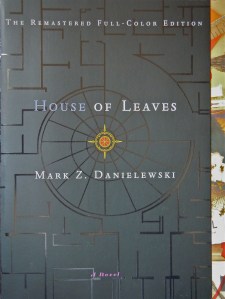 House of Leaves: A Novel by Mark Z. Danielewski, 4/5
This book is so bizarre that I’m tempted to refer to it as this “book,” as if quotation marks will somehow convey its reality- and genre-bending strangeness. Its core is an incredibly inventive transcription of a fictional documentary film, wrapped in layers of contrived academic interpretations which are communicated via endless footnotes and interspersed with the stream-of-consciousness ramblings of an unreliable narrator, all while periodically diverting to tedious appendices. This mental obstacle course of a book ranges in tone from academic analysis to B-horror and it’s not much of an exaggeration to say it manages to check off nearly every know narrative technique.
The more I tried to analyze and understand House of Leaves, the more useless it felt, as if a “point” did not exist outside of attempts to explain it. By confounding literary (and non-literary) genres and techniques, the author creates his own layered reality, a house in which a reader can easily become lost and confused while trying to determine what actually exists both inside and outside of the leaves (pages) of the book. The whole experience stimulated me to re-consider how my perceptions and expectations shape my sense of reality, and to acknowledge the extent to which interpretation can create meaning instead of just conveying it. All-in-all, reading this book was a uniquely frustrating and rewarding experience.
Why I read it: my sister, Anna, was recommended it by a friend and passed it along to me with a somewhat ambivalent review.
 OmniRambles