
Tagged: book review
The Heart is a Lonely Hunter
The Heart is a Lonely Hunter by Carson McCullers, 2/5
As with most modern literature, I didn’t “get” this and am having a hard time even finding reasons to justify the value of its existence. The book was unfocussed at best, as well as being dark and depressing. Some scenes resonated with me, but most of it left me wondering how McCullers could possibly have been motivated to finish writing it, or, once finished, imagine that anyone would be interested in reading it.
The Ode Less Travelled
The Ode Less Travelled: Unlocking the Poet Within by Stephen Fry, 5/5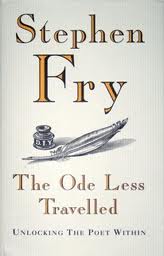
This book is delightfully informative – it is impossible to be unaffected by Fry’s passion for poetry and gentle, self-deprecating humour. Because I procrastinated on many of the 20 challenging poetry exercises Fry poses in this book, it took me about half a year to complete. As a result of this, I am still basking in the self-satisfaction of successful completion. NB: There are several rude/adult innuendos in the book, so I wouldn’t recommend it for young people in its entirety.
The Hunger Games
The Hunger Games by Suzanne Collins, 3/5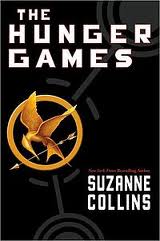
Skillful writing and an engrossing plot do not change the fact that this book is about children being forced to kill each other for other people’s entertainment. Collins tries to weasel out of this by framing the games as political oppression by an evil government, but the main focus throughout is on the entertainment aspect – people wanting the games to be exciting, wanting to see the violence, making bets on the winners, sponsoring the participants. This begs the question, if the culture that bets on gladiatorial games involving children is so evil, what does that make the culture that enjoys reading books about the same topic?
After the Funeral
After the Funeral (A Hercule Poirot Mystery) by Agatha Christie, 2/5
This book is fun, but not substantial, being short and populated with two-dimensional characters. The twist at the end was entertaining, but I did not feel that it was very skillfully supported by the preceding plot development. The whole thing gave me the impression that Agatha Christie had, by this time in her career, settled into a trustworthy and unique, if somewhat mundane and formulaic, writing style. I would be interested to read some of her earlier works.
The Wit’s Dictionary
The Wit’s Dictionary by Colin Bowles, 2/5
Some funny stuff scattered through a lot of unfunny stuff. Also, very Australian, crass and surprisingly anti-Christian. I would suggest reading Ambrose Bierce’s The Devil’s Dictionary and giving this book a pass.
Black Hawk Down
Black Hawk Down by Mark Bowden, 5/5
I think this is a masterpiece of war journalism for several reasons. Firstly, Bowden treats his sources with respect and courtesy instead of manipulating and abusing them for the sake of furthering his own career. This is not as common an attitude as I would wish and expect. Secondly, it is clear that the accuracy of his portrayal is Bowden’s main concern. He wastes no time searching for a sensational “angle” and doesn’t create unnecessary drama. Thirdly, Bowden clearly recognizes the limits of his own expertise, refraining from sweeping allegations and extrapolations with regard to political and military strategy. He is intelligent enough to avoid turning an admittedly controversial story into a personal soapbox. Fourthly, the book is scrupulously well cited, with an annotated bibliography and detailed information provided on the sources.
How to Disappear
How to Disappear: Erase Your Digital Footprint, Leave False Trails, and Vanish Without a Trace by Frank M. Ahearn with Eileen C. Horan, 2/5
Sometimes I get the strong feeling that I would hate a particular person if I ever met them. Frank Ahearn is one of those people. Just do a Google Image Search for his name and you’ll see what I mean from the pictures. He comes across as a low-class, egocentric, sleazy scumball, bent on glamorizing a career that seemed to consist mostly of lying to people over the telephone in order to obtain personal info to be sold to whatever shady employer happened to have the cash. It is no credit to him that he finally got out of the skip-tracer career because his morally reprehensible methods became illegal (or at least, more punishable). The book provides some good info and entertaining stories, but lots of the info is commonsense and repetitive and it is all couched in an unbearably bullshit style.
50 big ideas you really need to know
50 big ideas you really need to know by Ben Dupre, 2/5
These short essays on a variety of topics, ranging from philosophy to physics, were too surfacey and simplistic for me. I did not like the format of the book; it was very disjointed, with distracting quotations and random boxes of text floating around. I appreciate that Dupre manages to write from a relatively impartial viewpoint on controversial topics, though he did come across as pro-Communism, which is repellant to me. I was a little confused by his essays on conservatism and liberalism until I realised that he’s English and this book is only published in the UK. That explains many of the slight differences in perspective throughout.
Atlas Shrugged
Atlas Shrugged by Ayn Rand, 4/5
Rand’s writing is skilled, insightful, and compelling, but the argument for her personal philosophy of objectivism is not convincing. The fact that objectivism works for the heroes in the world she creates is more a tribute to her skill as a novelist than her prowess as a philosopher. One scene in particular drives home the unreality of the reality she creates: the heroine, Dagny, in an airplane with four gorgeous, intelligent, dominant men, with three of whom she has had incredibly serious, ostensibly meaningful, emotional and sexual relationships, who all still love her, respect each other and get along in brotherly harmony. Nothing in my experience and observation of humanity makes me consider this a remotely possible or even desirable scenario. The intellectual unsoundness of Rand’s philosophy becomes obvious in the 55-page monologue near the end of the book. Her persistent use of straw man fallacies reveals that she lacks a basic understanding of the psychology of religion and of philosophies other than her own. However, her cold artistry, perception of raw human psychology, and the epic characters that populate a dystopian future, result in a massive novel that is both a pleasure and a challenge to read.
P.S. XKCD just did an excellent comic about Rand. The mouseover is the best part.
Primetime Propaganda
Primetime Propaganda: The True Hollywood Story of how The Left Took Over Your TV by Ben Shapiro, 3/5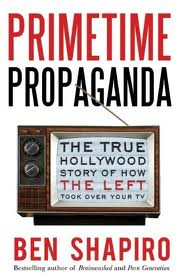
Shapiro makes the well-documented and compelling case that virtually everyone involved in the TV industry is outspokenly liberal, proud to push their agendas through the powerful medium of TV, while shutting out and shutting down any conservatives who might be foolhardy enough to attempt to join the industry. The tone is uneven throughout, but Shapiro generally manages to be respectful and rational, though he does make some generalizations/statements about liberals that made me angry on their behalf. While Shapiro’s main points are undoubtedly true, I felt like he was really reaching when it came to specific TV shows and specific instances of liberalism.
 OmniRambles