
Tagged: book review
The Turn of the Screw
The Turn of the Screw and Other Short Novels by Henry James, 3/5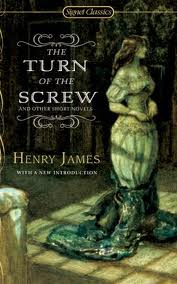
The six short novels in this collection were written over a span of 25 years (1878-1903) and the distinct progression in style and quality is startling. The first two stories, An International Episode and Daisy Miller: A Study, are notably pointless, with a relentless use of national stereotypes and leaden, tedious dialogue that is even more pathetic for so obviously aspiring to the heights of Oscar Wilde.
The Aspern Papers is much more interesting, with its portrayal of human manipulation and rationalisation. Unfortunately, an unsatisfying climax and denouement left me resentful of being tricked into thinking there was going to be much of a story.
I feel that The Altar of the Dead is the first good piece in the book – fascinating, suspenseful and deeply psychological, with just enough story to hold it together. The Beast in the Jungle is very similar in style and was probably my favourite work in the book.
Reading The Turn of the Screw was the whole point of my Henry James expedition and it was worthwhile, if unsatisfying. A Gothic thriller, many aspects of it reminded me of Jane Eyre and I could picture Northanger Abbey‘s Catherine Morland enjoying it rather more than I did. James’ devious ambiguity and slow build-up of suspense left me annoyed but grudgingly admiring.
I should also mention Fred Kaplan’s exasperating introduction to the book, which provided numerous spoilers while insisting on laboured homosexual interpretations of even the most innocuous points of the stories.
Cutting for Stone
Cutting for Stone by Abraham Verghese, 4/5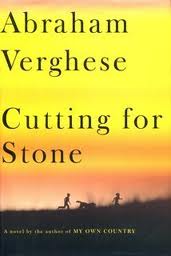
Despite my friend Alison’s positive recommendation of ages ago, I approached Cutting for Stone somewhat warily because I was unfamiliar with the author, not particularly interested in the topic (a sort of medical-themed coming of age tale, set in Ethiopia) and found the hardback sizeable enough to likely kill me if I fell asleep and dropped it on myself while reading in bed. However, these reservations quickly faded as I became interested in the dramatic scenarios and characters involved in them. I enjoyed the sense of trust I could place in Verghese’s real-life medical expertise, which was showcased often in his portrayal of the experiences of Marion Stone, who uncovers the twisted histories of his nurse/nun mother and brilliant but antisocial surgeon-father, while growing into his medical heritage and discovering what it means to live, love and work.
This book has its profound moments and emotional scenes – a well-crafted story that is communicated with a straightforward writing style that makes its 530+ pages fly by. Some people would undoubtedly find it to deserve a 5/5 rating, but my enjoyment of it (and indeed, my ability to recommend it) was marred by the sordidness of some of the more sexual scenes, the inevitable inclusion of which is one of the reasons I generally don’t tend to enjoy coming of age stories. Call me oversensitive or prudish, but if I wouldn’t want to know it about my best friend, I probably don’t want to know it about a fictional character either. Still, an impressive and meaningful read.
Who Could That Be At This Hour?
Who Could That Be At This Hour? by Lemony Snicket, 4/5
This book is so witty and fun that it took me quite a while to realize that it basically has no plot.
Master Shots
Master Shots (2nd edition) and Master Shots Vol 2 by Christopher Kenworthy, 5/5
Between them, these two books cover 200 camera shots, providing descriptions, diagrams and screen captures from famous movies. Kenworthy’s efficient and unpretentious style makes these books uniquely informative. He explains the hows and whys behind camera techniques in plain language, revealing some very interesting cinematographic nuances that I would never have noticed or guessed on my own.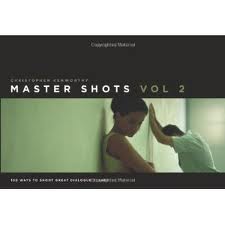
For example, in Master Shots Chapter 6.4 Kenworthy points out that “keeping the camera in place creates the sensation of the character walking into the new scene; if you dolly backward, the actor doesn’t feel like he’s moving into the scene so much as passing through.” Or, during a chase scene, he suggests using a long lens to make the goal appear nearer, whilst also more unattainable since the hero makes less apparent progress towards it during the shot (26). These are just two examples of the kind of fascinating insight provided by these excellent books. Reading them has made me a better movie-watcher and if I ever need to make a film, I will read them again in order to be a better movie-maker.
The Little Prince
The Little Prince by Antoine de Saint-Exupéry, trans. by Richard Howard, 5/5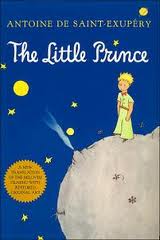
This beautiful story offers a gentle, insightful commentary on life and love. Gilded with good humor and charm, I think that this is a rare case of a very popular book actually living up to its reputation.
Film After Film
Film After Film: Or, What Became of 21st Century Cinema? by J. Hoberman, 1/5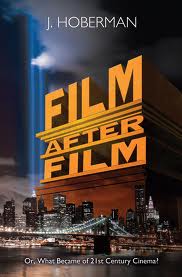
Oh, a book about movies written by a film critic! I thought. I watch films critically and write. And I read books. How perfect. So I grabbed it off the new-arrivals shelf at the library. It almost felt like my professional duty to read this book, since it is on a topic about which I often inflict my own thoughts on others and nothing encourages infliction-worthy thoughts more than continuing education.
After a couple chapters, my main impression was What does the word “indexicality” mean and why is the author using it on nearly every other page? Without internet at the time, my only recourse was to point this impression out loudly and often over the course of several pages, while receiving no sympathy from my nearby siblings. Once reunited with the internet, I discovered that “indexicality” means a sizeable Wikipedia page worth of very large words, but paradoxically, seems to mean less the more you read about it. Which, conveniently, is also one of the main problems with this book.
I only made it to page 60. It is one thing to wade through difficult text in order to understand complex concepts but quite a less pleasant thing to gradually start to suspect that the concepts are mostly bollocks and your time has been wasted. I believe that Hoberman’s ideal audience is not rewarded by the comprehension of any great ideas, but merely by the appealing frame their thick, hipster glasses make around the words on the page and the sweet sweet joy of recognizing in print the names of all those dreadful indie films they pretended to “get.”
Perhaps it seems that I am just bitter and Film After Film is too advanced for me to understand. That could be true. But if being smarter means using the phrase “neo-retro primitivism” without irony (23) and considering WALL-E to be “the twenty-first century’s quintessential motion picture to date” (40), then so be it.
~~
That was a natural ending for this review, but I just can’t send this book back to the library without quoting Hoberman’s [unintentionally] hilarious explanation of the deep meaning behind the zombie film genre. He claims that “Perhaps the problematic distinction between dead and undead allegorizes, among other things, the ambiguous relation between analog and digital image-making” (31). HAHA! That is… that is just… I have no words…
Tuck Everlasting
Tuck Everlasting by Natalie Babbitt, 5/5
This outstanding children’s novel was an object lesson for me in not judging a book by its cover. Not just the cover, actually, but by a whole web of preconceptions and unreasonably unpleasant connotations. For example, I’d only heard of the associated movie, so I immediately thought of the book as a lame spin-off, which idea the cheesy movie-poster-style book cover rather supported. Also, I thought the movie had something to do with Shakespeare (“Tuck” reminded me of “Puck,” ok?), which made me think of Shakespeare in Love which I disliked quite a bit, though I can’t remember exactly why. The book cover reminded me of The Notebook, which I haven’t actually seen, but hate violently for some reason. Soooo, the only thing going for this book at the start was Mom’s somewhat self-conscious recommendation (I have been known to shred without mercy, on occasion, so I’m glad she was brave enough to suggest I read this book at all).
All of that to explain just how amazing Tuck Everlasting had to be in order to overcome my considerable bias. It is unique, deep, touching, clever and well-written from the first sentence to the last. Despite its shortness, there is a mythic quality to the story and its archetypal characters. In fact, it was so good that I hold out little hope for the movie, which will probably be awful compared to the book. Definitely awful. Possibly even horrid.
The Abolition of Man
 The Abolition of Man or Reflections on education with special reference to the teaching of English in the upper forms of schools by C.S. Lewis, 5/5
I mistakenly thought I’d already read everything by C.S. Lewis, so I was both surprised and delighted when Samuel came home for Thanksgiving break with a book by Lewis that I’d never even heard of before. Luckily, it is very short (a series of three college lectures) and I was able to finish reading it before the break ended.
The first chapter is somewhat snarky and rambling, but The Abolition of Man soon settles down to a fascinating analysis of the relationship between science and Tao, the innate, traditional values that give human existence its meaning and humanness. The shortness of the book meant that it was less in-depth (though also, more difficult) than I would have wished. In fact, the very conciseness of some of the points makes it easy to miss their importance and paradigm-changing nature. For example:
“…But you cannot go on ‘explaining away’ for ever: you will find that you have explained explanation itself away. You cannot go on ‘seeing through’ things for ever. The whole point of seeing through something is to see something through it. It is good that the window should be transparent, because the street or garden beyond it is opaque. How if you saw through the garden too? It is no use trying to ‘see through’ first principles. If you see through everything, then everything is transparent. But a wholly transparent world is an invisible world. To ‘see through’ all things is the same as not to see (81).”
Wind, Sand and Stars
Wind, Sand and Stars by Antoine de Saint-Exupéry, trans. by Lewis Galantiére, 4/5
The stories in this book, based on Saint-Exupéry’s experiences as an airmail pilot and member of the French Air Force, are beautifully told – the product of a poetic soul. His bravery, adventures, eloquent love of the desert and romantic point of view remind me of a sort of French version of T.E. Lawrence. While the book is very enjoyable and quotable (occasionally even enlightening), Saint-Exupéry’s patronizing post-modernism results in a lack of intellectual/philosophical depth that makes itself increasingly felt as the book unfolds.
Marathon
Marathon: You Can Do It! by Jeff Galloway, 3/5
This guide, which applies Galloway’s signature run/walk method to marathon training, is clearly the product of much expertise and experience on the part of the author, addressing a wide variety of helpful topics. While it wasn’t entirely convincing (I still really hate the idea of interrupting my runs with walk breaks), the concepts made sense and if I ever become injured or dissatisfied with my training progress, Galloway’s method is likely one of the first I would consider adopting.
Unfortunately, some serious flaws as a book affect the quality and utility of Marathon: You Can Do It! The first half contains multiple appearances of several identical or nearly identical sentences and paragraphs, making the text bloated and frustrating to read. Also, there is a notable lack of helpful diagrams and photos to illustrate key concepts (though the few charts that appear are good). This is a book that deserves to be updated and proofread by an editor who has eyes.
 OmniRambles