
Category: Reviews
Gringos
Gringos, by Charles Portis, 3/5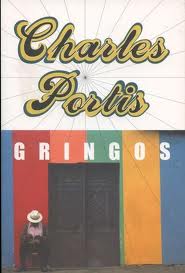
Gringos relates the random adventures and misadventures of American Jimmy Burns, a trucker, bounty hunter and expert in (and ex-looter of) Mayan artifacts, as his life in Mexico is complicated by a stalker, kidnapers, criminals, cult followers, archaeologists, and ufo theorists. I would rate my enjoyment of this book between Portis’ The Dog of the South and Masters of Atlantis, though Jimmy is by far my favourite character from the three books.
Masters of Atlantis
Masters of Atlantis by Charles Portis, 5/5
Imagine a vast ocean of liquid sarcasm completely evaporating and leaving a shoebox worth of bone-dry, crumbly humour and you will get an idea of this book’s style. Masters of Atlantis follows the rise and devolution of the fictional Gnomon Society (the last bastion of Atlantean wisdom), with its narcissistic leaders, shady sidekicks and delusional followers. This book is a remarkably sophisticated and clear-eyed portrayal of humankind’s temptations, weaknesses and failings, presented with lots of sarcastic, dry, deadpan wit.
Bronte: poems
Bronte: Poems, Everyman’s Library Pocket Poets, 3/5
Bronte’s poetry aesthetic is perfectly demonstrated by these lines: “And as I gazed on the cheerless sky / Sad thoughts rose in my mind” (245). There were a few that I absolutely loved, such as “What Use is it to Slumber Here?” and “No Coward Soul is Mine” and “Lines,” but the majority gave me a sense of unease, as if I was reading someone’s diary behind their back. Lots of these poems did not seem of publishable quality, and indeed, I do not believe Bronte meant for most of them to be published.
The Dog of the South
The Dog of the South: A Novel by Charles Portis, 2/5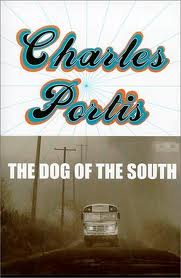
By all accounts, this book is hilarious, but I did not find it to be so. Perhaps I did not take to it because it is in that rare category: dry American humour. The main character is frighteningly unemotional (think Meursault from Camus’ The Stranger) and this, combined with the first person narrative and crazy cast of supporting characters, gives the book a depressingly surreal feel. I lost interest halfway through and just skimmed through the rest.
Moonwalking with Einstein
Moonwalking with Einstein: The Art and Science of Remembering Everything by Joshua Foer, 2/5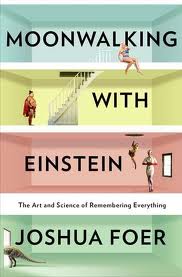
This book was not nearly as interesting as the title made me hope it would be. There wasn’t much of practical use in it and it was written in a dry, unengaging, unlikable style. It struck me as a nice magazine article that had been fleshed out with lots of predictable rabbit trails and speculation. A little research revealed that this is exactly what it is; the author is a freelance journalist and this is his only book, for which he received $1.2 million in advance. The book’s background really shows – it feels written for profit, not passion.
The Gun Seller
The Gun Seller by Hugh Laurie, 4/5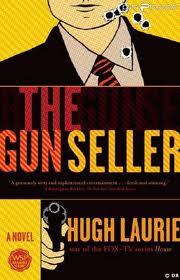
This book is action-packed and relentlessly witty.
True Grit
True Grit by Charles Portis, 4/5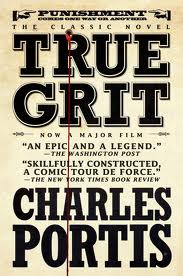
This short novel had only been published for one year before John Wayne appeared in a film version of it in 1969. Except for the ending, the book reads like a script for the movie, offering just a little more information and character depth than you can get from watching the film. I enjoyed reading it very much and am looking forward to reading more books written by Portis.
Wit
Wit: Humorous Quotations from Woody Allen to Oscar Wilde, Des MacHale, 4/5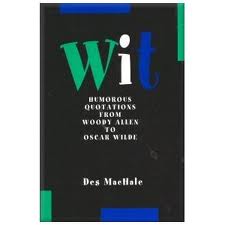
I needed some light reading after all that Spinoza and this book was perfect. I was impressed that there were so many quotes that I hadn’t seen in other compilations before. I laughed so hard at a couple of them that it brought tears to my eyes and I was afraid I’d wake up the sleeping kids. One of my favourites was “never buy a portable TV from a man who’s out of breath.”
The Essential Spinoza
The Essential Spinoza: Ethics and Related Writings, edited by Michael L. Morgan, 5/5
Writing in an uncompromisingly mathematical style, Spinoza undertakes to dismantle all conceptions and preconceptions about God, life, the universe and everything, painstakingly rebuilding his philosophy from a logical progression of definitions, axioms, propositions, proofs and corollaries and resulting in the most intellectually challenging work I have ever read. While there was much that I did not understand, there was also much that found immediate application to my own comprehension of God, religion, and existence. I was taken right out of my head by Spinoza’s approach to everything that matters to humans – it was like seeing through a one-way mirror after a lifetime of being on the reflective side.
Star Wars: Death Troopers
Star Wars: Death Troopers by Joe Schreiber, 2/5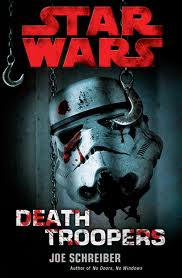
Think Star Wars meets Resident Evil and, flashing instantaneously and inevitably through your mind, will occur the setting, characters, plot and even specific scenes of Death Troopers. There are reasons the sci-fi, space exploration, Star Wars, zombie, and horror cliches are so popular and entertaining, and these same reasons are what make Death Troopers slightly more fun to read than could otherwise be reasonably assumed. It is, if not a great work of fiction, at least an interesting and entertaining example of commercialism and cliches in action. If the Star Wars franchise and its drooling fans didn’t exist, neither would this book, and I, for one, wouldn’t miss it.
 OmniRambles