
Category: Reviews
Tao Te Ching
Tao Te Ching by Lao Tzu, 3/5
This work presents an interesting worldview that focuses on survival: advising people to avoid action, desire, ambition, confrontation and intellectualism. The tone is bleak, but fascinating, and it offers some very good insights into human behavior. While shorter than Confucius’ Analects, it is also less accessible. Much of the content is obscure and very difficult to understand, however, an enjoyable aura of ancientness surrounds even the unintelligible bits.
The Hidden Hand
The Hidden Hand by E.D.E.N. Southworth, 3/5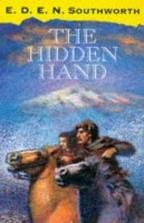
This book has many attributes of 19th century literature that I dislike, such as an overly moralistic and preachy tone, an improbably tidy plot/ending, and annoying martyr-like characters. I was also put off by Southworth’s overuse of italics and exclamation points. That said, it is still a fun and entertaining read. I think I would have enjoyed it more if I got to read it from a vintage version, instead of a chintzy, modern reprint with a dreadful painting on the cover.
The Courage to Be
The Courage to Be by Paul Tillich, 2/5
This dense and esoteric analysis of the ontological aspects of courage, specifically as it relates to existentialism didn’t really hit its stride until the last chapter. The language barrier (Tillich’s native language was German) caused awkward sentence structure, rendering a difficult topic even more inaccessible. Tillich made a few interesting points, cushioned in too much guesswork and psychobabble for my taste. I especially disagreed with his viewpoint on modern art. The introduction is noteworthy in that it is the worst I have ever encountered. In it, its author, Peter Gomes, quoted the last sentence of Tillich’s book not once but twice! To me, this is the pinnacle of inept disrespect. The last sentence of a book is something you earn and fully understand through reading the entire work. It is not meant to be excerpted in order to ennoble a pathetically written intro. Besides this travesty, the introduction was also disgustingly slavish in its reverence for Tillich. Gomes admits that he remembered nothing about the book but its title from reading it the first time, yet he is so inflated with self-importance at getting to write the intro that he makes a total bollocks of it.
The Hippocratic Myth
The Hippocratic Myth: Why Doctors are Under Pressure to Ration Care, Practice Politics, and Compromise Their Promise to Heal by M. Gregg Bloche, 2/5
Bloche’s writing style is so dense and awkward that I quickly lost interest. I ended up skimming through most of the book, unwilling to put in the effort to decipher each sentence. Some parts were thought-provoking, but I did not consider it to be the controversial, ground-breaking expose that Bloche seemed to hope it would be.
Reaper Man
Reaper Man by Terry Pratchett, 5/5
I read this book for my soul. It is meaningful, deep and rib-shakingly hilarious – everything I love about Terry Pratchett’s writing.
How to Read Literature Like a Professor
How to Read Literature Like a Professor by Thomas C. Foster, 2/5
Author E.B. White once said: “Humor can be dissected, as a frog can, but the thing dies in the process and the innards are discouraging to any but the pure scientific mind.” Substitute “literature” for “humor” in that quote and you will understand the reason why I disliked this book. I felt that Foster’s strained analytical style efficiently robbed the mystery, joy and suspension of disbelief from almost every literary example he gave. If he was a theater or film critic, he would probably spend a lot of time analyzing the wallpaper on the fourth wall. Knowing that “there’s only one story…every story you’ve ever read or heard or watched is part of it” (32) and then searching for traces from the “canon of literature” in every other work does not enrich my reading experience, but dampens it. Yes, damp as if it was rained on and if you read page 75, you’ll learn that “It’s never just rain” and you’ll be able to read deeply into why I supposedly chose that particular word. A lot of the book was spent in defining symbols and themes as “whatever you think they mean,” which is frustratingly unhelpful. Also, from his comments, Foster seems to view Freud favorably, which I find revolting.
Update: I Stumbled on this perfect illustration of the book.
The Book Thief
The Book Thief by Markus Zusak, 3/5
It took me about 200 pages to get comfortable with Zusak’s style. At first, I found it painfully and tediously artsy, like reading a never-ending poem in free-verse. The multitude of clumsy kennings grated on my nerves, as did the overly-studied randomness. However, there were some powerful parts and near the end, I admit, I cried. I felt angry because I do not like sad stories, but I guess I shouldn’t have been surprised that a story about a German orphan girl and a Jewish fugitive during WWII, narrated by Death, was more of a roller-coaster of emotions than a carousel of merriment.
101 Quantum Questions
101 Quantum Questions: What You Need to Know About the World You Can’t See by Kenneth W. Ford, 3/5
I’m not going to lie – this book lost me a few times (most notably, at “quantum numbers”). However, there were still a few “AHA!” moments, where staggering truths about quantum physics created little explosions in my brain. Overall, the book was moderately accessible, but not as entertaining or beginner friendly as other books about quantum physics, such as Marcus Chown’s “The Matchbox that Ate a Forty-Ton Truck.”
Stan Lee’s How to Draw Comics
Stan Lee’s How to Draw Comics by Stan Lee, 2/5
This is a good book for looking at pictures, but is not practically helpful at all. The prose is written in an annoying style (lots of unfunny jokes and rabbit trails) and instruction is along the lines of “look, human bodies are made of cylinders and squares…now draw some of your own.”
The Parents’ Guide to Psychological First Aid
The Parents’ Guide to Psychological First Aid, eds. Gerald P. Koocher and Annette M. La Greca, 3/5
This book does a good job of appealing to a wide spectrum of parenting/life styles without alienating anyone. Most of its contents are commonsense, but I guess commonsense isn’t that common, to judge from my observations of modern parenting.
 OmniRambles