
Category: Reviews
The Brothers Karamazov
The Brothers Karamazov by Fyodor Dostoevsky, translated by Constance Garnett, 2/5
After an extremely positive experience with War and Peace, I approached this other piece of famous Russian literature with enthusiasm. I was disappointed. There was only one likeable character in the book and even he was annoyingly sacharinne and preachy. I’m talking about 729 pages of really unlikeable characters: hysterical, screaming, dirty, secretive, malicious, crying, dramatic men and women, all of whom I found impossible to connect with. Dostoevsky’s use of foreshadowing was extremely clumsy and the narrator’s voice was distracting. The “main event” didn’t happen until page 415 and there was about enough storyline and events of interest to sustain a novel of half the length. However, reading other people’s reviews of the book, I found at least one criticizing the translation, so perhaps I would have enjoyed a different translation more.
The Renaissance Soul
The Renaissance Soul: Life Design for People with Too Many Passions to Pick Just One, by Margaret Lobenstine, 2/5
Lobenstine’s positive attitude toward people who are unwilling to settle down to one career was refreshing and she told several inspiring success stories. However, the book failed to convince me that success as a multi-talented person relies on anything other than your standard hard work and good opportunities that can’t be planned for. The cynical side of me is quick to point out that any career and life coach who has had over 5,000 clients, as Lobenstine has, is bound to come up with enough success stories for a book. Also, it felt very circular to take career advice from someone whose career is giving out advice.
The Quotable Runner
The Quotable Runner: Great Moments of Wisdom, Inspiration, Wrongheadedness, and Humor, edited by Mark Will-Weber, 3/5
I like the format of this book – each section is prefaced by a well-written and interesting/inspirational running anecdote. To me, most of the value of this book comes from the fact that Weber did his own primary source research, instead of just gathering quotes from other compilations.
The Zombie Combat Manual
The Zombie Combat Manual: A Guide to Fighting the Living Dead, 3/5
I feel much better about the coming zombie apocalypse after reading this deadly serious, disturbingly authoritative survival guide.
A People’s History of the United States
A People’s History of the United States: 1492 – Present by Howard Zinn, 3/5
A People’s History looks at the U.S.A.’s track record of human rights and the less-than-admirable motivations behind many important government and corporate policies. This is the most admittedly biased and aggressively depressing book I have ever enjoyed. While I would prefer to read a logical, unbiased, rigourously truthful history book, I suspect that no such thing exists, in which case, I appreciate Zinn’s efforts to provide a counterweight to the highly sanitized, equally biased, and deceptively simplistic versions of history that are so prevalent.
I appreciated Zinn’s copious primary source quotations, however, the general lack of citation left me feeling unsettled, helpless and manipulated. In my opinion, the scholarly quality of the book dropped off noticeably in the last quarter of the book (starting at the 19th chapter), where the author started to make laughably illogical and inconsistent statements of political bias, taking a tone that is not apparent earlier in the book and creates a particularly depressing air. For example, he first calls traditional family structure “that most subtle and complex of prisons” (514), but later decries “family disarray” (563). While outspokenly anti-Capitalist, he fails to point out a single country that does socialism right, by his standards. Similarly, he is anti-Republican, but disapproves of all the major Democratic politicians he mentions (explaining their failures in a rather weasley way – by blaming their actions on them trying to please the Republicans). Despite these annoyances, I found much to agree with in the book and hopefully was able to use it to gain a more realistic and unbiased view of our history.
A Place for Truth
A Place for Truth: Leading Thinkers Explore Life’s Hardest Questions, edited by Dallas Willard, 4/5
This book contains selected lectures from the Veritas Forum, a discussion platform set up in 1992 by a group of Christians at Harvard. I particularly enjoyed the first half of the book – the lectures addressing truth, faith and science. It is encouraging to be reminded that live Christianity not only withstands intellectualism, but welcomes it, and that a Christian scientist is not a contradiction of terms. It was also see comforting to see that, despite the largely media-driven polarisation of our world on the topic of religion and the active antagonism of a few haters on both sides, civil discussions between Christians and non-Christians are possible.
The Ancient Guide to Modern Life
The Ancient Guide to Modern Life by Natalie Haynes, 3/5
Perhaps I developed too-high expectations of this book when I learned that the author is a stand-up comedian who read classics at Cambridge. At any rate, I was not very impressed with the book. Haynes doesn’t bother citing sources for many of her claims, which is an unconvincing way to go about dispelling myths about the ancient Greeks and Romans, as she claims to do. The humor throughout the book is inconsistent – some parts are deadly serious and preachy, others are silly. There were some things of interest, though, and Haynes is obviously passionate about the classics, which is somewhat contagious. I guess I’m not disappointed that I read the book, but I’m disappointed in the book itself.
An interesting side note: Haynes thanks her friend Joss Whedon in the acknowledgments, which is pretty awesome.
Snuff
Snuff by Terry Pratchett, 5/5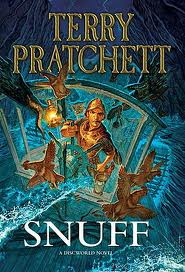
Pratchett’s latest is brilliantly hilarious, as always.
Seventeenth Century Poetry
Seventeenth Century Poetry: The Schools of Donne and Johnson edited by Hugh Kenner, 5/5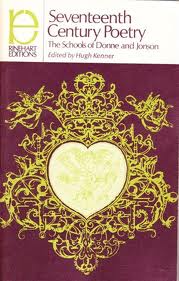
I thought reading this book would be a chore, but it turned out to be a rare delight. The hardest part about reading it was not having anyone around to share the poems with, especially George Herbert’s (he was my favorite). Just enough editorial markings and biographical information are included to make this accessible while still challenging. I was surprised to find that a few of the poems are so racy/innuendo-filled that they make the Song of Solomon look like a book of the Bible.
Horseradish
Horseradish: Bitter Truths You Can’t Avoid by Lemony Snicket, 5/5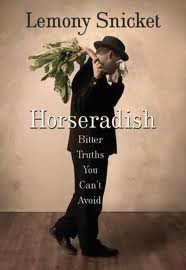
This is a random and hilarious collection of Lemony Snicket quotes that I highly recommend for the discerning and dangerously sarcastic reader.
 OmniRambles