
Category: Reviews
Stonehenge Decoded
Stonehenge Decoded by Gerald S. Hawkins, 2/5
I give this only 2/5 because it takes Hawkins well over half the book to finally introduce his point – that Stonehenge aligns with many important positions of the sun and moon and can predict eclipses. This is the oldest example of a good magazine article making a bad book that I have come across. However, Hawkins does provide a nice technical description of Stonehenge and his astronomical findings are impressive, though difficult to understand.
You Could Look it Up
You Could Look it Up by William Safire, 3/5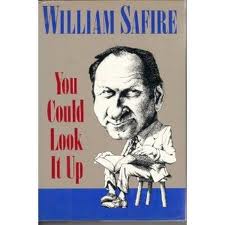
A fun collection of articles/reader responses to stimulate the inner, nitpicking grammar nazi.
The Tenant of Wildfell Hall
The Tenant of Wildfell Hall by Anne Bronte, 4/5
This is a proper Victorian romance, full of melodrama, moralizing and mores (made to be broken by spunky heroines). It reads a bit like the diary of a teenager whose sole literary diet consists of Jane Eyre and Jane Austen. The conversations are a little too elaborate, the characters a little too saintly (or otherwise, devilish) and the ending a little too tidy. These qualities lend it a kind of charm, which along with flashes of surprising wit, make this a hard book to put down
Surprised by Joy
Surprised by Joy: The Shape of My Early Life by C.S. Lewis, 5/5
Finding out that a couple fellow altos in choir are atheists made me want to rerereread Lewis’ compelling description of his philosophical journey from childhood, through atheism to Christianity. So much of what he says resonates with me and I always find it incredibly encouraging that such an intellectually uncompromising, well-read person would eventually find all signs pointing to God. I don’t love the book just because it supports my own religious convictions, though; I admire Lewis’ frank, disarming writing style and analytical approach to life.
Sun Tzu Was a Sissy
Sun Tzu Was a Sissy: Conquer Your Enemies, Promote Your Friends, and Wage the Real Art of War by Stanley Bing, 2/5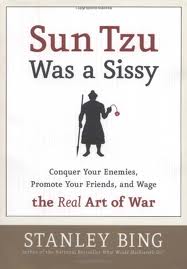
This is the kind of barely entertaining, slightly offensive rubbish that makes me marvel at the publishing standards of our age.
A Prayer for Owen Meany
A Prayer for Owen Meany by John Irving, 5/5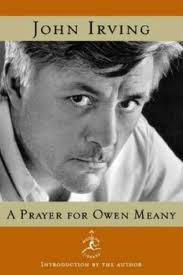
This novel is about the life of the diminutive, brilliant, earnest, prophetic, strangely-voiced, otherworldly Owen Meany, as seen through the eyes of his best friend. Reading this book was the most surprising literary experience I’ve had since enjoying War and Peace. I got it out of the library at the same time as The Heart is a Lonely Hunter and unreasonably expected it to be similarly horrid. However, unlike most modern authors I’ve experienced, Irving didn’t waste my time and leave me feeling dirty and insulted. The writing was so good, the characters so strangely believable, and the situations so oddly beautiful that the whole endeavor seemed inspired.
Jane Eyre (2011)
 This version of Jane Eyre, preceded by at least 10 other movie/TV adaptations, does not build on its rich literary and filmic heritage, but is instead a limp, insipid, soulless, uninspiring husk of a movie. It is so bland and anaemic that providing detailed criticism feels a bit like punching a supermodel in the face with a hamburger.
Every aspect of the film is stifled by an overwhelming sense of apathy; instead of chemistry between actors, there are gaping black holes that suck up all the dialogue and energy. Fassbender delivers his lines in a peculiarly preoccupied way – as if he literally isn’t being paid enough to make him care and might have been illegally double-parked during filming. The screenwriter apparently decided that all the best and most dramatic scenes in the book had had their fair share of attention in previous films, so they were left out, replaced by bespoke episodes of almost painfully poor dialogue that did little to develop the characters or propel the plot. The film is only recognizable as a pale shadow of the original story. To replicate it, I would give a sleep-walking director three colors, a bored cameraman and a script composed by the grandmother of someone who had once had the story of Jane Eyre told to them while they were busy getting stoned.
Eclipsing all these failings is the unforgivable fact that the movie bored me. There was no passion, no emotional connection, not even the smug sense of superiority that comes from hating a movie for really inconsequential, snobby reasons. If you feel that you simply must watch this film, your best plan of action would probably be to make yourself a bowl of popcorn and then eat it while waving the DVD cover rapidly in front of your face for an hour. You can then throw up into the empty popcorn bowl, having had a slightly more interesting and inspiring experience than watching the actual movie.
Of course, if you are at all interested in the story, you should see the A&E version with Timothy Dalton. This version is nice because it doesn’t make you want to throw up (among other reasons).
Mr. Parker Pyne, Detective
Mr. Parker Pyne, Detective by Agatha Christie, 3/5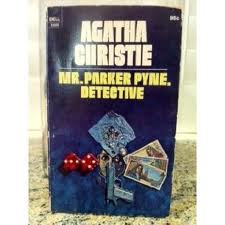
A collection of reasonably entertaining short stories.
The Power of One
The Power of One by Bryce Courtenay, 3/5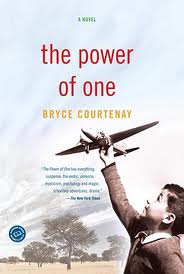
After an unpromising start (mostly consisting of a five-year-old boy thinking about his penis), this book presented a fairly interesting middle section before fizzling out with an anti-climatic, disappointingly shallow ending. Music played a large part in the story, so it was annoying that Courtenay didn’t bother to to have a knowledgeable proof-reader fix some of the blatantly incorrect, laughably ignorant things he wrote on the topic. This lack of skill made me doubt his credibility on other aspects of the story, such as boxing and South African history/politics. I could see some people enjoying the book, but I found it off-putting and ultimately, disappointing.
Three Men in a Boat and Three Men on the Bummel
Three Men in a Boat and Three Men on the Bummel by Jerome K. Jerome, 4/5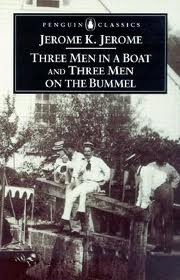
These two short novels provide much cause for hilarity, presenting rambling anecdotes in a charming, homely style. There isn’t much character development or plot, but Jerome’s wit is consistent and contagious.
 OmniRambles