
Category: Book Reviews
The Power of One
The Power of One by Bryce Courtenay, 3/5
After an unpromising start (mostly consisting of a five-year-old boy thinking about his penis), this book presented a fairly interesting middle section before fizzling out with an anti-climatic, disappointingly shallow ending. Music played a large part in the story, so it was annoying that Courtenay didn’t bother to to have a knowledgeable proof-reader fix some of the blatantly incorrect, laughably ignorant things he wrote on the topic. This lack of skill made me doubt his credibility on other aspects of the story, such as boxing and South African history/politics. I could see some people enjoying the book, but I found it off-putting and ultimately, disappointing.
Three Men in a Boat and Three Men on the Bummel
Three Men in a Boat and Three Men on the Bummel by Jerome K. Jerome, 4/5
These two short novels provide much cause for hilarity, presenting rambling anecdotes in a charming, homely style. There isn’t much character development or plot, but Jerome’s wit is consistent and contagious.
The Wit & Wisdom of the Founding Fathers
The Wit & Wisdom of the Founding Fathers edited by Paul M. Zall, 2/5
This unsubstantial book is mostly composed of selections from previously published works (some even by the same editor). A considerable number of the “quotes” are actually anecdotes about the founding fathers, not by them. Many other quotes are actually just the founding fathers rephrasing other people’s stories and sayings. This small book is a low-quality money-making enterprise of the gift shop variety.
To Say Nothing of the Dog
To Say Nothing of the Dog by Connie Willis, 3/5
This is written in a charming style, reminiscent of P.G. Wodehouse and Jasper Fforde, but by the end, plot issues left me wondering what the point was.
The Complete Short Stories of Ambrose Bierce
The Complete Short Stories of Ambrose Bierce, compiled by Ernest Jerome Hopkins, 3/5
In this compilation, Bierce’s stories have been roughly categorized into horror, war and tall tales, though there is some overlap. I feel that the horror stories are decent, but inferior to the work of H.P. Lovecraft (admittedly the only other horror writer I know), being less imaginative and more cliched. I liked best “The Applicant” and “The Man and the Snake.” The war stories were more original and interesting, which is not surprising, since Bierce had first-hand experience fighting in the Civil War. My favorites were “An Occurrence at Owl Creek Bridge,” “A Horseman in the Sky” and “Three and One are One.” It was in his tall tales that the bitter sarcasm for which Bierce is so famous really shone. Of these, “The Captain of the ‘Camel'” and “The Man Overboard” are perhaps the wittiest, jam-packed with the clever humor that is scattered, one sentence at a time, through the rest of the stories.
Northwest Passage
Northwest Passage by Kenneth Roberts, 4/5
This book took me completely by surprise. I expected it to be a dry and boring account of some sort of exploration expedition. It turned out to be an extremely well-written, engrossing historical fiction about the exploits of Robert Rogers, leader of Rogers’ Rangers, told through the eyes of artist Langdon Towne. The novel is divided into two parts and I was disappointed to find that Book II did not demonstrate the same wit and unstrained style as Book I (if it had, I would have given the novel 5/5).
Tutankhamun
Tutankhamun: The Untold Story by Thomas Hoving, 3/5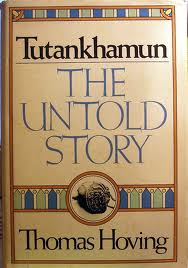
Hoving presents an entertaining, if sometimes tedious, expose of the conflict, drama, lies and secrecy surrounding the discovery and exploration of King Tut’s tomb.
The Heart is a Lonely Hunter
The Heart is a Lonely Hunter by Carson McCullers, 2/5
As with most modern literature, I didn’t “get” this and am having a hard time even finding reasons to justify the value of its existence. The book was unfocussed at best, as well as being dark and depressing. Some scenes resonated with me, but most of it left me wondering how McCullers could possibly have been motivated to finish writing it, or, once finished, imagine that anyone would be interested in reading it.
The Ode Less Travelled
The Ode Less Travelled: Unlocking the Poet Within by Stephen Fry, 5/5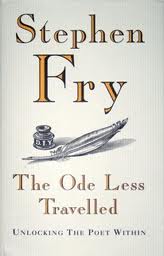
This book is delightfully informative – it is impossible to be unaffected by Fry’s passion for poetry and gentle, self-deprecating humour. Because I procrastinated on many of the 20 challenging poetry exercises Fry poses in this book, it took me about half a year to complete. As a result of this, I am still basking in the self-satisfaction of successful completion. NB: There are several rude/adult innuendos in the book, so I wouldn’t recommend it for young people in its entirety.
The Hunger Games
The Hunger Games by Suzanne Collins, 3/5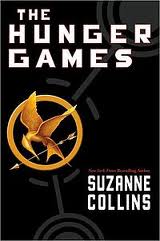
Skillful writing and an engrossing plot do not change the fact that this book is about children being forced to kill each other for other people’s entertainment. Collins tries to weasel out of this by framing the games as political oppression by an evil government, but the main focus throughout is on the entertainment aspect – people wanting the games to be exciting, wanting to see the violence, making bets on the winners, sponsoring the participants. This begs the question, if the culture that bets on gladiatorial games involving children is so evil, what does that make the culture that enjoys reading books about the same topic?
 OmniRambles