
Category: Book Reviews
The Old Man and the Sea
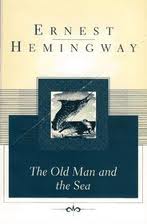 The Old Man and the Sea by Ernest Hemingway, 3/5
This short novel is deceptively simple…I assume. At face value, it seemed to me a rather straightforward and bland story, pleasingly written but almost completely innocuous. Perhaps other people feel some sort of immediate personal connection to this book, but I felt that the characters were archetypal, the plot slow-moving and the moments of profundity scarce. During the middle section, I started to grow annoyed that the sole narrative voice was the Old Man talking to himself.
Reading it wasn’t a bad experience and I didn’t hate it, but the main question I’m left with is why is this so famous? Did everyone have to read it in school because it’s important, or is it important because everyone read it in school? I just feel like I missed the point somehow. I guess it’s off to the Wikipedia article to see what the deal is.
Leonardo’s Lost Princess
 Leonardo’s Lost Princess: One Man’s Quest to Authenticate an Unknown Portrait by Leonardo da Vinci by Peter Silverman with Catherine Whitney, 4/5
This short book tells an exciting true story and provides a little insight into the world of art collecting and authentication. For me, the best part was getting some perspective on how art connoisseurs view art. Reading various analyses of the portrait in question, which called attention to the tiniest of details and were written in terms so passionate as to verge on poetic, was literally eye-opening. By the end of the book, what had at first seemed to me an attractive, but not terribly fascinating, piece of art seemed worthy of more extended contemplation and I very much enjoyed the heightened sensitivity I felt to this portrait’s great beauty and demonstration of artistic skill.
My only complaint is a petty one – I wish the book’s cover didn’t look so very much like a cheap historical romance novel. I felt kind of embarrassed reading it in public.

The Sacred Search
 The Sacred Search: What if it’s not about who you marry, but why? by Gary Thomas, 2/5
If only this book’s contents lived up to the promise of its subtitle. Unfortunately, the author focuses less on the “why” and more on outlining a convoluted set of criteria with which to judge the “who.” This criteria is self-defeatingly simplistic – a Christian couple could check all the right boxes and still end up miserable or alternatively, could meet almost none of the criteria and still have a good marriage. By preaching to the low-hanging fruit – people who haven’t yet considered the possibility of applying Christian principles, common sense and thoughtfulness to their search for marital bliss – Thomas dilutes his message to an almost unbearably obvious and formulaic level.
The book’s main problem is illustrated by the chapter devoted to helping the reader rate, on a scale of 1-10, six specific character aspects of potential spouses (here’s a hint – you’d better hope for a cumulative score of 45 or higher) (143). It is a mystery to me how Thomas expects people so clueless that they need to be told to look for a spouse who has high scores in areas like “knows how to communicate” and “resolves conflict in a healthy way” to be capable of making accurate assessments or gaining any value from this exercise.
Less importantly, but still notably, Thomas is one of the most awkward authors I have ever encountered. Many of the things he writes are unintentionally (I assume) offensive and insulting. He suggests that, since “most people never use the degree they get from college,” it is reasonable to make finding a spouse there “one of the top goals.” He actually compares it to an unemployed person visiting a job fair (78). In a later chapter, he encourages people to play private eye on their intended, using techniques to uncover their past such as asking sly questions, looking at old photo albums, subtly questioning the person’s family and friends, and observing how they pray, since “someone might succeed in lying to you, but it’s a little trickier to present a false front to God” (179-182). The only strategy he suggests for girls who want to be noticed more is to cook, claiming that guys will “figure out who put the food on the table” (79). According to Thomas, someone who only reads the Bible during church will have “negligible” spiritual growth and will “never be spiritually wiser than he or she already is” (127). I’m not trying to nitpick unfairly – there were pages and pages of other equally embarrassing examples that I could have chosen from.
I respect Thomas’s effort to encourage people who are in love to approach marriage in a thoughtful way that is consistent with their religious beliefs and, as far as very general principles and study questions are concerned, his writing has some value. However, I believe that a lot more value could be had from this book by tearing off the front cover, cutting out a rectangle around the subtitle, handwriting the text of Matthew 6:33 on the back of the rectangle and using it as a bookmark for Book III, Chapter 6 (Christian Marriage), in C.S. Lewis’s Mere Christianity.
Orlando Bloom Has Ruined Everything
 Orlando Bloom Has Ruined Everything: A Foxtrot Collection by Bill Amend, 4/5
This small collection of very funny comics is loosely based on the topic of popular culture ruining fanboyism. It really resonated with me, given the recent, rampant and painfully mainstream popularity of Doctor Who, Sherlock Holmes, The Hobbit, MMA and geekdom in general.
Thinking, Fast and Slow
 Thinking, Fast and Slow by Daniel Kahneman, 5/5
Writing in a style that is almost preternaturally coherent, practical and unpretentious, Kahneman examines the workings of the human mind in terms of System 1 (fast, intuitive, automatic) and System 2 (slow, effortful, rational, analytical). He uses many entertaining examples and experiments to reveal inconsistencies, fallacies and irrationalities in human heuristics, such as:
~What You See Is All There Is (85): automatically assuming that whatever info you have immediate access to is all the relevant info there is.
~Law of Small Numbers (112): underestimating adequate sample sizes by relying on intuition.
~Bias of Confidence Over Doubt (113): a natural tendency towards overconfidence, not doubt.
~Cause and Chance (114): incorrectly identifying random sequences as causal patterns.
~Anchors (119): being unconsciously influenced by irrelevant numbers.
~Availability (129): being influenced by the ease with which specific instances/examples come to mind.
~Representativeness (149): ignoring base rates in favor of merely assessing how well something’s description fits a sterotype.
~Less is More (156): judging a more specific/complicated conjunction of events as more probable than a simpler event. For example, thinking it is more probable that Linda is a “feminist bank teller” than a “bank teller.”
~Regression to the Mean (175): extreme values are likely to be followed by less extreme values that are closer to the mean.
~Hindsight Bias (202): misremembering one’s past beliefs/thoughts in order to make them consistent with how events actually turned out.
~Illusion of Validity/Skill (209): believing in the validity of one’s faulty heuristics, despite proof of the opposite.
~Intuitions vs. Formulas (222): when uncertainty and unpredictability create “low-validity environments,” simple algorithms are more accurate than “expert” intuitions.
~Expert Intuition (240): intuitive judgment is reliable when it is the result of receiving immediate feedback during prolonged practice in a regular environment.
~Outside View (245): evaluating individual cases in light of existing statistics for similar cases.

^^^ …happened to me almost every chapter. Seriously, this book is like a manual for the human brain and should be handed out as required reading to all human users.
ChiRunning
 ChiRunning: A Revolutionary Approach to Effortless, Injury-Free Running by Danny and Katherine Dreyer, 3/5
The only way to properly review this book would be to commit some time to learning the “ChiRunning” techniques it outlines. However, since I have never experienced a running injury and am currently both lazy and pleased with my gradually-improving running skills, a proper review is unlikely to happen.
At any rate, the book is reasonably streamlined (though it does contain too many droolingly positive testimonials) and gives a clear presentation of the info. Dreyer did not convince me that there is such a thing as “chi,” but many of his claims seem commonsense enough to be true. His naturalistic, holistic approach does not seem too trendy or gimmicky and the tone of the book is sincere.
Further research into ChiRunning techniques will definitely be my first recourse if I ever stop enjoying running or get an injury, but for now, I will likely just watch a few of the related video guides and keep what I’ve managed to glean of the techniques in the back of my mind. Of course, if I see magical improvements in performance, I will be back here with updates and a higher rating.
There is a God
 There is a God: How the world’s most notorious atheist changed his mind by Antony Flew with Roy Abraham Varghese, 2/5
This book succeeds in a purely biographical sense, but is weak in the area of apologetics which, in this case, mostly consist of lengthy quotes from sources that Flew found convincing, strung together with stilted prose. Given the depth of the subject and the limited length of the book, Flew was unable to give the numerous quotations the individual context they needed in order to be convincing, so I found myself continually questioning the true validity of his points. While I trust his expertise as a philosopher, I simply could not understand most of his philosophy-related references and, since I don’t trust him as a scientist, his numerous science-related claims seemed dubious.
Ultimately, reading this book just made me realise (not for the first time) what a true genius C.S. Lewis was.
The Aeneid
 The Aeneid by Virgil, trans. by Robert Fitzgerald, 5/5
This book would not have sat by my bed, unread, for so long if I had known that it was a spin-off of the Iliad, which I adore. Because I expected The Aeneid to be dry and boring (if even comprehensible), it was a fantastic surprise to suddenly encounter the familiar story of the fall of Troy, told from the perspective of Aeneas, who was inside the city at the time. It only got better from there, with many epic wartime vignettes and memorable characters such as the tragic Dido and the courageous but despicable Turnus.
It’s been a while since I read Homer’s Iliad, but in comparison, Virgil’s style seems less remote and detached, with a more personal tone and conscious attempts to affect the reader emotionally. However, this could just be a reflection of the translation, which did seem a little too modern for my taste (at one point, a character even yells “bring it on,” a phrase that I would be surprised to learn has roots in Latin). This edition does have a useful glossary of people and place names but it would be greatly improved by added pronunciation guides and a foreword providing some historical context.
The Age of Magnificence
 The Age of Magnificence: Memoirs of the Court of Louis XIV by the Duc de Saint-Simon, selected, ed. and trans. by Sanche de Gramont, 4/5
If these memoirs are at all accurate, there never were more despicable, inbred, petty, spoiled, childish, disgusting excuses for humankind than those (the writer not excepted) that clotted the courts of Louis XIV in the early 1700s.
I’ll leave you with two excerpts so you’ll know I’m not exaggerating.
Portrait of the Grand Prieur:
…In debauchery, he had an advantage over his brother in that he was fond of both fur and feather [note: I have no idea what that means, but it sure doesn’t sound good]. Every night for the last thirty years he had been carried to bed dead drunk, and he was faithful to this custom until he died (103)…
Portrait of the Princess d’Harcourt:
…She was also a glutton, and those who invited her to meals despaired because she wanted to relieve herself as soon as she arose from table, but often did not have the time, so that she let fall behind her a train of filth (112)…
Rise and Fall of the Mustache
 Rise and Fall of the Mustache and Other Hawkeyetems by Robert J. Burdette, 1/5
Ah, the old saying is correct – you truly can’t judge a book by its cover (or its deliciously intriguing title). Luckily, I bought this one solely for its beauty, so I wasn’t too disappointed to find it filled with the most tediously mawkish writings I have ever suffered through. Well, technically not “through,” since I only read the first 150 pages before stopping to reconsider the meaning of life and the value of time.
 OmniRambles