
Tagged: poetry
Mots D’Heaures: Gousses, Rames
 Mots d’Heaures: Gousses, Rames: The d’Antin Manuscript edited and annotated by Luis d’Antin Van Rooten, 5/5
This might be the strangest and most ingenious premise for a book I have ever seen–even after reading it, I still don’t really see how it’s possible. It is a collection of poems written in French that, when read aloud, sound like Mother Goose rhymes being read in English with a thick French accent. The author supplies entertaining footnotes that attempt, with varying degrees of success, to make sense of the “original” French.
Here’s an example for “Little Bo Peep”:
Little Bo Peep
has lost her sheep
and doesn’t know where to find them;
leave them alone and they will come home
wagging their tails behind them.
Lille beau pipe
Ocelot serre chypre
En douzaine aux verres tuf indemne
Livre de melons un dé huile qu’aux mômes
Eau à guigne d’air telle baie indemne.
Why I read it: My friend, Alison (whose own book, Entropy Academy, is soon to be released), gave this book to me while I was taking a French language class. Hearing the verses read aloud in her English accent was a hilariously bizarre experience.
N.B. There is a German version of this concept called Mörder Guss Reims.
Odes
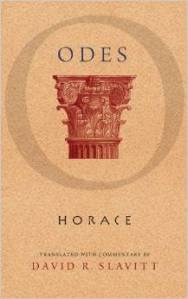 Odes by Horace, translated with commentary by David R. Slavitt, 2/5
Slavitt sets himself a Herculean task–translating the Latin Odes of eminent Roman poet Horace with a view to recreating for modern readers a similar reading experience to the one that the poems might have offered ancient audiences, who enjoyed a different language, different range of knowledge, and different sensibilities.
The commentary Slavitt provides for each ode, clarifying difficult parts of the text and explaining what he added in or left out, is both helpful and horrifying: helpful in that it provides insight into the intricate art of translation, horrifying in its revelation of some of the liberties he takes with the text. It set my teeth on edge when Slavitt inserted the anachronistic “cougar” (an older woman who chases younger men) into one of the odes, explaining that “Had such a convenient concinnity of terms been available to Horace, I am sure he’d have used it” (134). Or when he describes a “murder” of crows, using the word because it’s “one I have always liked” (130). Or when he invents unwarranted poetic additions simply to increase the “linguistic density” of the poem (113).
I admire Slavitt’s stated goal very much, but felt that many of the liberties he took with the text were unscholarly, unjustified and disrespectful to the original works. After all, it boils down to this: Horace was one of Rome’s leading poets. Who is David R. Slavitt? I would have had absolutely no problem with this book if Slavitt had just fully indulged himself and created a work titled Odes by David R. Slavitt, inspired by Horace.
In addition to my dislike of Slavitt’s approach to translation, I also did not much enjoy the resulting poems themselves. This is not a reflection of their quality or value, just the fact that I failed to experience a connection with them. Poetry has always seemed to me a very personal thing–you never know what is going to resonate, when, and with whom. Overall, however, I did not find the odes to be very beautiful or thought-provoking, they generally did not demonstrate pleasing word choices and metres, and they did not make me look at things in new or different ways (all aspects common to poetry I enjoy).
[Why I read it: I think I just stumbled across it while browsing in the library and thought it looked interesting.]
Grooks 1–5
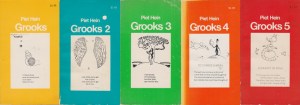 Grooks 1–5 by Piet Hein, with the assistance of Jens Arup, 5/5
Poetry doesn’t come more witty, concise and hilarious than the gems found in this collection, which contains just a small sample of the over 7000 “grooks” written by Danish polymath Piet Hein.
Here are a couple of my favourite examples from the first book:
Consolation Grook
Losing one glove
is certainly painful,
but nothing
compared to the pain
of losing one,
throwing away the other,
and finding
the first one again.
The Road to Wisdom
The road to wisdom? — Well, it’s plain
and simple to express:
Err
and err
and err again
but less
and less
and less.
Sadly, these books are long out of print and, since little information is available about the different versions that were published in Denmark, Canada and the U.S., it is a confusing task to try to assemble a matching set. I settled for Doubleday editions from the mid-1960s to early-1970s and was able to buy the books individually from AbeBooks (relying on ISBNs, not cover images, which were often missing or incorrect).
[Why I read it: the first three books were a random find at the thriftstore and I passed them along to my brother after enjoying them. Years later, I happened to be visiting him and saw these books on the shelf. They were so funny a second time that I decided to buy a complete set for myself.]
The gallery below contains large images of the front covers, so you can get a feel better feel for the artwork and style of poetry:
-
- No ISBN printed in book (sold as: 9780385041409)
-
- ISBN: 0-385-04144-6 (sold as: 9780385041447)
-
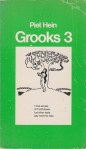
- No ISBN printed in book (sold as: 9780385057578)
-
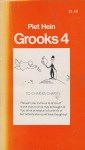
- ISBN: 0-385-00659-4 (sold as: 9780385006590)
-

- ISBN: 0-385-02985-3 (sold as: 9780385029858)
Gilgamesh
 Gilgamesh: Translated from the Sîn-leqi-unninnī version by John Gardner and John Maier, 5/5
There are the remains of a very fine poem about this work, but I was surprised by just how few remains there are. Of course, it is incredible that any bits of clay tablet at all survived the three millennia since their creation; but, perhaps because it is most often referred to as the “epic” of Gilgamesh, I expected a poem of Homeric proportions and sentiment, not ellipses and single-word fragments. Thankfully, the Johns supplement with generous portions of an Old Babylonian version [“Old Babylonian” is actually a technical term, not a humorous, tautological understatement], inserted along with editorial notes after each column of translated material. These editorial notes are often as long or longer than each section of the poem text itself, which makes them equally informative and annoying. This duality typifies the book, whose scholarly focus and layout in many ways sacrifices the poem’s impact and appeal as a work of literature. It is a very good resource and supplement, but I look forward to finding a less academic version of the tale that allows the story to take precedence.
For me, the most striking sensation while reading Gilgamesh was a surprising sense of familiarity. I felt that primal connection to the story that typifies much mythology to me–a recognition, on perhaps the most basic level I can identify, of the human condition and spirit. There was also a decidedly less primal sense of familiarity due to the work’s similarity, in part, to other works of literature, such as the Bible, Homer’s Odyssey, Dante’s Inferno and Tolkien’s Lord of the Rings.
[Why I read it: I have come across references to Gilgamesh for years, but always feared it would be too obscure for me to understand. However, a friend’s positive mention of it in her own book was the final motivation I needed.]
Update: So, my attempt to read a couple less-academic versions did not work out well; both Derrek Hines’ and Stephen Mitchell’s adaptations are horrifying. Yes, I wanted to read something less technical that focused on the story, but both authors lack the skills to make a legitimate translation, so they have settled for a sort of do-your-own-thing approach that produces works of very questionable value, to my mind. I almost gagged at Hines’ use of the pun “mummy’s boy” in the second line of the poem. But at least he doesn’t have the balls to claim, as Mitchell does, that “I like to think that they [SÎn-lēqi-unninni and his Old Babylonian predecessors] would have approved” (66). For the record, Mitchell’s main qualification to add, adapt and change other people’s translations is, according to the book’s cover, his “widely known…ability to make ancient masterpieces thrillingly new.” No thank you.
Shakspere’s Sonnets
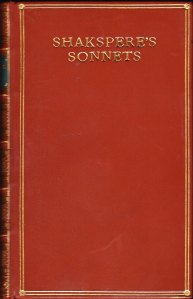 The Sonnets of William Shakspere, edited by Edward Dowden, 5/5
*a note on spelling: according to Wikipedia, "Shakspere" was the preferred spelling in the late 18th through early 19th centuries.
In general, these sonnets are inventive, passionate and beautiful, using vivid metaphors to make new the old topic of love. They are difficult enough to reward a second or third reading (and a quick look at the editorial notes) but not so opaque as to be frustrating.
Though I had never read the entire set of sonnets before, they had strong connotations to me as the epitome of romantic poetry, of fuzzy-around-the-edges, pastoral scenes; Willoughby reading aloud to Marianne, hopelessly romantic young girls in white sun dresses pining over small leather-bound editions or receiving love letters full of ink blots and badly paraphrased plagiarisms. That sort of thing. So, I was extremely surprised to discover that almost all of the sonnets were written from one dude to another. In context, even “Shall I compare thee to a summer’s day” (Sonnet 18) was most definitely not written for/about a woman. It’s not like I thought Shakespeare in Love was made by the History Channel, but I did kind of assume that Shakespeare was a hit with the ladies and now I’m almost as confused about his sexuality as he seemed to be.
While I found the “procreation sonnets” to be quite creepy (who writes 17 poems insisting that a male friend is robbing the world if he doesn’t pass on all his fantastic [and presumably inheritable] traits to offspring, asap?), there were many others that I loved. My favourite has to be Sonnet 116:
Let me not to the marriage of true minds
Admit impediments. Love is not love
Which alters when it alteration finds,
Or bends with the remover to remove:
O, no! it is an ever-fixed mark,
That looks on tempests and is never shaken;
It is the star to every wandering bark,
Whose worth’s unknown, although his height be taken.
Love’s not Time’s fool, though rosy lips and cheeks
Within his bending sickle’s compass come;
Love alters not with his brief hours and weeks,
But bears it out even to the edge of doom.
If this be error and upon me proved,
I never writ, nor no man ever loved.
I wish I could find more information about this book edition. All I know is that it was bound in 1933 by renowned bookbinding firm Sangorski & Sutcliffe, for the department store Marshall Field and Company. Sangorski & Sutcliffe are famous for their elaborate, jewel-encrusted book bindings, such as the famous edition of The Rubáiyát of Omar Khayyám that was lost with the Titanic, though I suspect cheaper, less sumptuous bindings such as mine helped the company survive the Great Depression.


[Why I read it: still on a quest to read all of Shakespeare’s works and couldn’t resist picking up this beautiful book for a few dollars at the thrift store.]
The Poems of Dylan Thomas
 The Poems of Dylan Thomas, edited by Daniel Jones, 2/5
Dylan Thomas has opened my eyes to the subtleties inherent to the act of reading. For example, I used to think that I enjoyed reading. I now know better–what I actually enjoy is understanding what I read. Things I would enjoy reading more than the poems of Dylan Thomas include bathroom graffiti, YouTube comments, Wikipedia citations, heck, even dictionaries (complete ones–not any that Thomas has already mangled with scissors and glue, in search of inspiration).
I would have saved myself a lot of boredom and frustration had I only read the end notes first, where Jones excretes this particularly repellent drivel on the topic of Thomas’ notoriously indecipherable poem “Altarwise by owl-light”:
…the poem, in spite of its length, sustains a single metaphor, and it would be vain to seek in it logic, narration or message in the usual sense of these words, though they are all present metaphorically. Comprehension here is irrelevant, and to ‘translate’ the poetry into other words, to ‘interpret’ it in other thoughts, would be like straightening out the contours of a drawing and demonstrating its significance by measuring the result in inches (263).
I’ll tell you what else is present (and not metaphorically either)–bullshit. Now, I don’t go around art galleries with a tape measure, but after reading straight through 191 of Thomas’ poems, I’d be more than willing to demonstrate the significance of his drinking problem by calculating the number of beers he must have drunk in order to compose such intoxicated, nonsensical ramblings.
Don’t believe me? Please review Exhibit A–two 10-line excerpts from the book:
Excerpt 1
Because the pleasure-bird whistles after the hot wires,
Shall the blind horse sing sweeter?
Convenient bird and beast lie lodged to suffer
The supper and knives of a mood.
In the sniffed and poured snow on the tip of the tongue of the year
That clouts the spittle like bubbles with broken rooms,
An enamoured man alone by the twigs of his eyes, two fires,
Camped in the drug-white shower of nerves and food,
Savours the lick of the times through a deadly wood of hair
In a wind that plucked a goose…
Excerpt 2
His striped and noon maned tribe striding to holocaust,
Always good luck, praised the finned in the feather,
Grave men, near death who see with blinding sight
And the hewn coils of his trade perceives
Too proud to die, broken and blind he died.
And the gestures of unageing love
Flower, flower the people’s fusion,
And tells the page the empty ill.
There can be few tears left: Electra wept
Believe, believe and be saved, we cry, who have no faith…
One of these excerpts is from a single poem, the other is comprised of ten lines, drawn at random from ten different poems (with the ending punctuation changed on a few of the lines for “flow”). I’ll tell you which is which at the end of this post, just in case you wish to go back and give all that lovely metaphorical logic, narration and message another read-through before making your guess.
After two weeks of slogging, word by painful word, through the morass that is Thomas’ oeuvre, I feel entitled to rage, rage against the dying of my brain cells. However, I do realise that I am constitutionally unsuited to enjoy modern poetry. It took ten years for me to learn to appreciate unrhymed poetry and five more years to learn to enjoy some of it. Small wonder that I found little to like in this collection. The reason I did not give this book my lowest rating is because of my own aforementioned shortcomings with regard to modern poetry, the fact that I didn’t understand most of the book (so it’s difficult to give a reasoned opinion of it) and most importantly, that I did come across a few genuinely beautiful poems and ideas, glittering like gems amongst the ravings.
[Why I read it: since I am teaching myself Welsh and hope to visit Wales next year, I kept coming across references in my reading to Thomas, Wales’ most famous and celebrated poet.]
By the way, the first excerpt is unaltered, the second excerpt is random. Did you figure it out on your own? Leave a comment!

I thought this quote from Thomas’ short poem “The Clown in the Moon” admirably suited this photograph I took a few years ago.
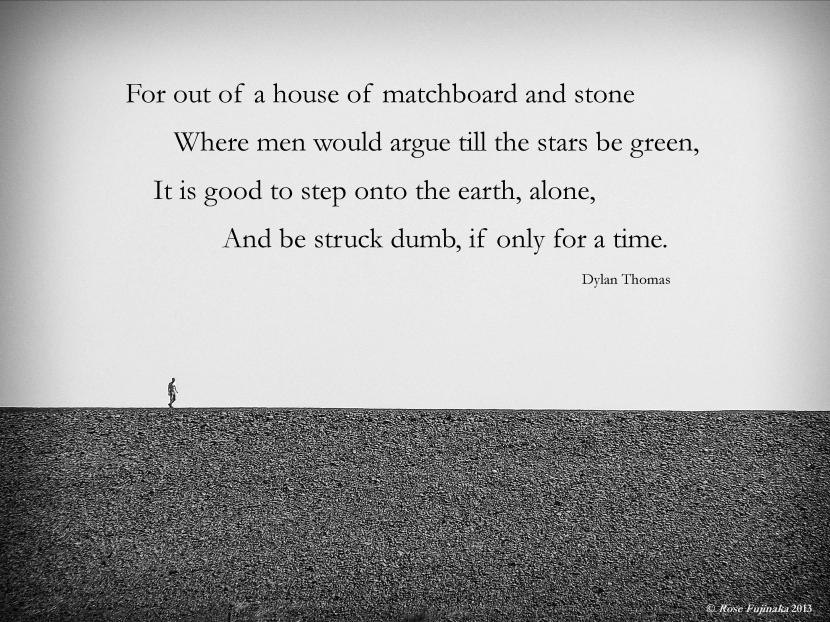
Another quote set to one of my photographs, this time from the poem “Out of a War of Wits.”

Quote from “Youth Calls to Age.” Photo taken at Cape Flattery.

From “The Ploughman’s Gone.”
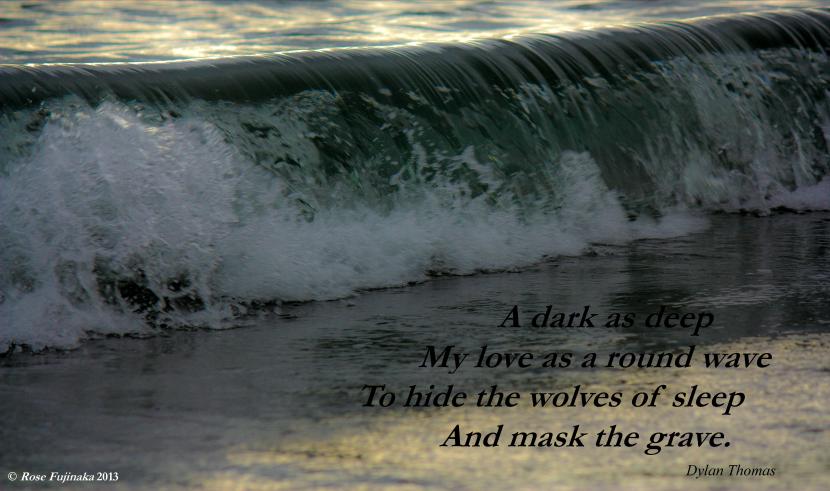
From the unimaginatively-titled “Poem.”

From “Being But Men.”
Christmas Poems
Inspired by Alison Bernhoft.
On a Dubious Tradition
For any mass of mistletoe
The answer still is “no, no, no.”
Strategy
Since stockings yield such limited loot
This year I’ll hang a red jumpsuit.
Strategy II
I left three dozen cookies for Santa’s midnight snack –
He might be coming down but he’s sure not going back.
Twice a Year
Some people only go to church on Easter and on Christmas
It’s easy to forget that’s not the only time God’s with us.
Low Res(olution)
Some folk’s resolutions are quite grand in scale
But despite best intentions, they’re most doomed to fail.
My own resolution is somewhat more terse:
Don’t. Get. Worse.
 OmniRambles