
Tagged: fiction
Mulliner Nights
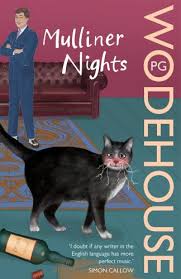 Mulliner Nights by P.G. Wodehouse, 5/5
This book is just as hilarious as the other two in the series, Meet Mr Mulliner and Mr Mulliner Speaking (and indeed, anything else by P.G. Wodehouse).
[Why I read it: Sadly, this is the last Mulliner book I had left to read. However, it always seems that a new Wodehouse book turns up just when I thought I’d read them all. How rare to find a quality writer who is also prolific!]
Mr Mulliner Speaking
 Mr Mulliner Speaking by P.G. Wodehouse, 5/5
There are few books that make me laugh out loud and want to inflict excerpts on anyone who happens to be nearby as much as the Mulliner series of short stories do. How delightful that there’s more to P.G. Wodehouse than Jeeves and Wooster…
[Why I read it: distracted by the numerous Jeeves and Wooster novels, I somehow neglected the Mulliner series (Meet Mr Mulliner, Mr Mulliner Speaking, and Mulliner Nights) until now!]
The Long Walk
 The Long Walk: The True Story of a Trek to Freedom by Slavomir Rawicz, 1/5
I enjoyed reading this book immensely–the epic tale of Rawicz’s imprisonment, transfer to a Siberian prison camp, subsequent escape with six comrades and 4,000-mile hike to freedom was fascinating, touching and inspiring. When I sat down to write this review, I easily chose a rating of 5/5. However, curious about the fate of the book’s protagonists (which was left strangely unaddressed by the author), I did some light researching about the story and was horrified to discover that it is almost certainly untrue!
Now, I am a very suspicious, cynical person in general, but this caught me off guard; I was already familiar with the story, the book had been recommended by a family friend, and there is even a commendatory quote on the cover from historian Stephen Ambrose! That said, as soon as some doubt was cast on the story’s authenticity, I did recognise several warning signs that had simply not registered while reading the book. For example, many of the scenarios described did not seem physically possible to survive (particularly the number of days in a row spent hiking without any food, the crossing of the Gobi desert without any means of transporting water, and the hike over the Himalayas with no proper climbing gear). The aid rendered by the camp commandant’s wife and the female co-escapee they acquired along the way seemed more the stuff of novels than real life. Also, Rawicz’s descriptions of his comrades and their relationships with each other were shallow and cliched–not at all what you’d expect from a group of men who spent 18 months traveling and suffering together. His immediate rejoining of the Polish army upon release from a Calcutta hospital seemed unbelievable, as does the fact that he was never in further contact with his fellow escapees.
It is also not encouraging that the story was first “discovered,” then ghost-written, by Daily Mail journalist Ronald Downing, whose reputation is only better than his employer’s in that it is nonexistent. The BBC provides a very convincing argument for the story’s untruthfulness, as does Rawciz’s Wikipedia article. An article by explorer Mikael Strandberg gives a good summary of the doubts surrounding the book’s authenticity and he concludes in an update that “the story is inspiring, but it isn’t true.” The kindest opinion possible, held by researcher Zbigniew Stanczyk, is that Rawicz conflated several true escape stories into one, with the intent of gaining publicity for fellow sufferers of Stalinist gulags. Personally, I sensed nothing in Rawicz’s account to merit giving him the benefit of the doubt to such an extent.
Thus, a mass of probable untruths transformed a 5/5 book to a 1/5 for me and I regret the time I spent reading it. I will not even attempt the other book that was lent me (As Far As My Feet Will Carry Me by Cornelius Rost, aka Clemens Forell), which seems to suffer from the same issues.
[Why I read it: it was lent to our family by a friend of our inlaws.]
Framley Parsonage
 Framley Parsonage by Anthony Trollope, 3/5
This serial novel’s slow development and sappy, rushed ending evince few of the qualities that made me love the first and second books in the Barchester series. There is plenty of potential in Framley Parsonage‘s several storylines, the most important of which portrays a vicar’s uncharacteristic pecuniary indiscretions and their aftermath. The reader is also given insight into the romancing of the vicar’s sister by the local lord (much to his mother’s horror), the unfortunate Mr. Sowerby’s self-inflicted decline into poverty, and, less interestingly, metaphorised commentary on the political machinations of the day. Fun characters from previous books, such as Barchester’s most eligible spinster–the fabulously wealthy and unromantic Martha Dunstable, Mr. and Mrs. Arabin, and the off-putting Grantly and Proudie families raise this novel above the previous one in my estimation. But, despite the introduction’s depiction of an astoundingly popular, respected work of literature, I felt that Framley Parsonage was pretty standard 19th-century fare that certainly diminished my excitement to finish the series.
[Why I read it: I enjoyed the first two books in the series (The Warden and Barchester Towers) so much that I’m determined to read the remaining four books.]
Meet Mr Mulliner
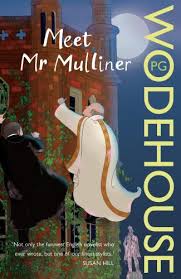 Meet Mr Mulliner by P.G. Wodehouse, 5/5
These short stories are chock-full of the inimitable wit that is the Wodehouse trademark. Meet Mr Mulliner is the first in the series, which includes Mr Mulliner Speaking and Mulliner Nights.
[Why I read it: I’m always a fan of Wodehouse and have a particular fondness for these stories because of the hilarious Wodehouse Playhouse dramatizations.]
Love’s Labour’s Lost
 Love’s Labour’s Lost by William Shakespeare, 4/5
Armed only with the ambiguous aid of some humourless footnotes and crusty endnotes, I could sense a veritable jet stream of jokes, puns and witticism blowing right over my head. How I missed my customary “cheater’s edition,” with its modern English translations on each facing page! Unfortunately for me and my limited understanding of Elizabethan English, the play is more dialogue- than plot-driven and, though the premise is cute and there were many funny moments, I often found myself quoting one movie-watcher’s insightful comment on A Midsummer Night’s Dream (1999): “I can’t understand a damn word they are saying…”
[Why I read it: One day last week, I had an hour to kill while waiting for a ride. Imagine my horror when I looked in my backpack and found myself bookless (French homework obviously doesn’t count). Like a literary knight in shining armour, my sister produced her personal copy of Love’s Labour’s Lost, thus banishing my unhappy state.]
The Alchemist
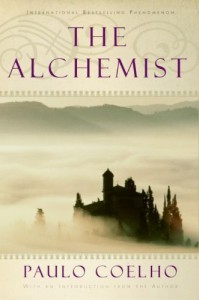 The Alchemist by Paulo Coelho, 2/5
This relentlessly aphoristic story of spiritual self-discovery derives its limited appeal, in my opinion, from a competent use of archetypal characters and scenarios. However, Coelho’s seeming ambition to attain full-on Guru status results in a narrative that is less a stream from the fount of wisdom than a diarrhea-like flow of half-digested, context-less fragments borrowed from every major religion, with no regard for consistency or original meaning. The result is the sort of appealingly spiritual drivel that sounds like nonsense to most people with strong religious beliefs, but that omnists and artistic atheists would call beautiful and “like soooooo deep, you know?”
Several similes involving bovine manure come easily to mind, but perhaps it is more apt to think of The Alchemist as a sort of amateur symphony composed of tiny, jumbled-up fragments of very famous, very beautiful music from the span of thousands of years. Connoisseurs and practicers of music, recognising the butchery of varying sources, would likely find the result to be unoriginal, baffling and a ridiculous mockery of true Music. Everyone else would likely think the symphony was the most profound thing they’d ever heard.
[Why I read it: the author was unrecommended to me by a friend, who thought I might hate Coelho enough to write an amusingly vitriolic review. I’m afraid that, this time, we’ll both have to settle for mild disdain instead…]
Doctor Thorne
 Doctor Thorne by Anthony Trollope, 2/5
I was equally surprised and disappointed by this novel, which almost completely lacks the charm, wit and originality of the first two books in the series. An anorexic plot, weak characterization, and constant harping on the now largely-irrelevant topic of marrying below one’s station make this a tedious read and one I was glad to see the end of. My enthusiasm to read the rest of the Chronicles of Barchester series has been dampened but, in light of the first two books’ excellence, I hold out hope that the fourth will not be a waste of time.
[Why I read it: I’m reading through the series, which starts with The Warden.]
Laughing Gas
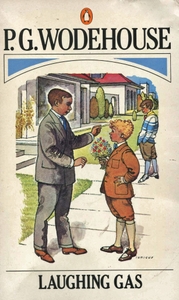 Laughing Gas by P.G. Wodehouse, 5/5
Definitely the most bizarre Wodehouse story I’ve encountered, this tale of an English Earl who inadvertently swaps bodies with a Hollywood child star during a routine tooth extraction is told with a rate of quips and quibbles quaint per paragraph that your average author would be thrilled to achieve per chapter.
[Why I read it: Wodehouse is one of my favourite authors, so I was pleased to find a title I didn’t recognize in the rather impressive selection of Wodehouse books at Michael’s Books in Bellingham, WA.]
Blood Rites
 Blood Rites by Jim Butcher, 3/5
An abundance of one-line groaners and an entertaining plot make this a fun read (albeit not one I’m proud to be seen with in public).
[Why I read it: this series is a guilty pleasure and gives my brain a welcome break from more serious literature.]
 OmniRambles