
Tagged: book review
A Place for Truth
A Place for Truth: Leading Thinkers Explore Life’s Hardest Questions, edited by Dallas Willard, 4/5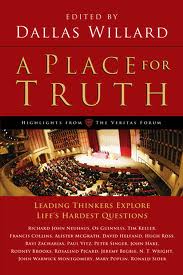
This book contains selected lectures from the Veritas Forum, a discussion platform set up in 1992 by a group of Christians at Harvard. I particularly enjoyed the first half of the book – the lectures addressing truth, faith and science. It is encouraging to be reminded that live Christianity not only withstands intellectualism, but welcomes it, and that a Christian scientist is not a contradiction of terms. It was also see comforting to see that, despite the largely media-driven polarisation of our world on the topic of religion and the active antagonism of a few haters on both sides, civil discussions between Christians and non-Christians are possible.
The Ancient Guide to Modern Life
The Ancient Guide to Modern Life by Natalie Haynes, 3/5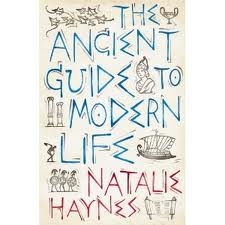
Perhaps I developed too-high expectations of this book when I learned that the author is a stand-up comedian who read classics at Cambridge. At any rate, I was not very impressed with the book. Haynes doesn’t bother citing sources for many of her claims, which is an unconvincing way to go about dispelling myths about the ancient Greeks and Romans, as she claims to do. The humor throughout the book is inconsistent – some parts are deadly serious and preachy, others are silly. There were some things of interest, though, and Haynes is obviously passionate about the classics, which is somewhat contagious. I guess I’m not disappointed that I read the book, but I’m disappointed in the book itself.
An interesting side note: Haynes thanks her friend Joss Whedon in the acknowledgments, which is pretty awesome.
Snuff
Snuff by Terry Pratchett, 5/5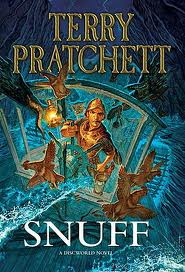
Pratchett’s latest is brilliantly hilarious, as always.
Seventeenth Century Poetry
Seventeenth Century Poetry: The Schools of Donne and Johnson edited by Hugh Kenner, 5/5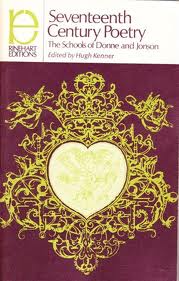
I thought reading this book would be a chore, but it turned out to be a rare delight. The hardest part about reading it was not having anyone around to share the poems with, especially George Herbert’s (he was my favorite). Just enough editorial markings and biographical information are included to make this accessible while still challenging. I was surprised to find that a few of the poems are so racy/innuendo-filled that they make the Song of Solomon look like a book of the Bible.
Horseradish
Horseradish: Bitter Truths You Can’t Avoid by Lemony Snicket, 5/5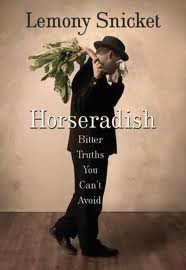
This is a random and hilarious collection of Lemony Snicket quotes that I highly recommend for the discerning and dangerously sarcastic reader.
Tao Te Ching
Tao Te Ching by Lao Tzu, 3/5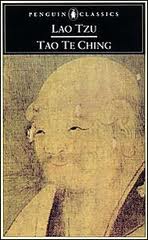
This work presents an interesting worldview that focuses on survival: advising people to avoid action, desire, ambition, confrontation and intellectualism. The tone is bleak, but fascinating, and it offers some very good insights into human behavior. While shorter than Confucius’ Analects, it is also less accessible. Much of the content is obscure and very difficult to understand, however, an enjoyable aura of ancientness surrounds even the unintelligible bits.
The Hidden Hand
The Hidden Hand by E.D.E.N. Southworth, 3/5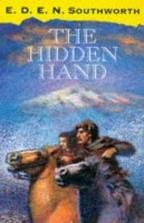
This book has many attributes of 19th century literature that I dislike, such as an overly moralistic and preachy tone, an improbably tidy plot/ending, and annoying martyr-like characters. I was also put off by Southworth’s overuse of italics and exclamation points. That said, it is still a fun and entertaining read. I think I would have enjoyed it more if I got to read it from a vintage version, instead of a chintzy, modern reprint with a dreadful painting on the cover.
The Courage to Be
The Courage to Be by Paul Tillich, 2/5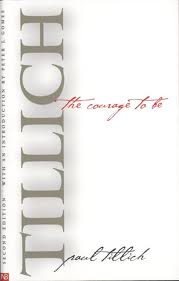
This dense and esoteric analysis of the ontological aspects of courage, specifically as it relates to existentialism didn’t really hit its stride until the last chapter. The language barrier (Tillich’s native language was German) caused awkward sentence structure, rendering a difficult topic even more inaccessible. Tillich made a few interesting points, cushioned in too much guesswork and psychobabble for my taste. I especially disagreed with his viewpoint on modern art. The introduction is noteworthy in that it is the worst I have ever encountered. In it, its author, Peter Gomes, quoted the last sentence of Tillich’s book not once but twice! To me, this is the pinnacle of inept disrespect. The last sentence of a book is something you earn and fully understand through reading the entire work. It is not meant to be excerpted in order to ennoble a pathetically written intro. Besides this travesty, the introduction was also disgustingly slavish in its reverence for Tillich. Gomes admits that he remembered nothing about the book but its title from reading it the first time, yet he is so inflated with self-importance at getting to write the intro that he makes a total bollocks of it.
The Hippocratic Myth
The Hippocratic Myth: Why Doctors are Under Pressure to Ration Care, Practice Politics, and Compromise Their Promise to Heal by M. Gregg Bloche, 2/5
Bloche’s writing style is so dense and awkward that I quickly lost interest. I ended up skimming through most of the book, unwilling to put in the effort to decipher each sentence. Some parts were thought-provoking, but I did not consider it to be the controversial, ground-breaking expose that Bloche seemed to hope it would be.
Reaper Man
Reaper Man by Terry Pratchett, 5/5
I read this book for my soul. It is meaningful, deep and rib-shakingly hilarious – everything I love about Terry Pratchett’s writing.
 OmniRambles