Othello

Othello by William Shakespeare, 4/5

Well, this is pretty depressing.  In Hamlet and Macbeth the villains at least have some redeeming humanity, but Iago is pure evil and his motivation is not well-enough established to make it believable to me.  Also, Othello is an idiot.  Besides that, it is very exciting and I enjoyed it.

Seven Pillars of Wisdom

Seven Pillars of Wisdom: A Triumph by T.E. Lawrence, 4/5
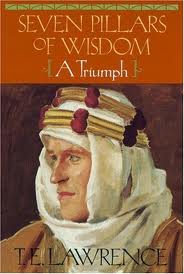
It’s a good thing I like being surprised, because this book first revealed, then blasted all the misconceptions of “Lawrence of Arabia” I’d somehow accumulated, picturing him as an England-hating, obnoxiously gay, stuck-up poser, whose main rebellious achievements were dressing in robes, getting impossibly tanned and prancing around on a camel.  This impression was absolutely wrong and I finished the book with an opposite opinion, inspired by Lawrence’s toughness and unique mixture of confidence and self-deprecation.  Somehow, he managed to live honorably while torn between loyalty to England and determination to keep her lightly-made promises to the Arab people.  He valued intellectualism over all merely physical concerns, but a poetic nature, sense of humor and keen observational insights into humanity made him human and keep the book from being a dry military treatise.  It reads more like an adventure story than anything and I was never bored, pretty amazing for a book about one of the few remaining topics that holds no interest for me – Middle Eastern culture and politics.

Guards! Guards!

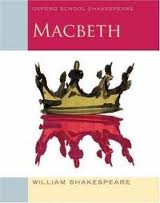
Macbeth

Macbeth by William Shakespeare, 5/5

This is much less substantial than Hamlet and the characters are less complex, but it is still enjoyable, with many memorable passages.  I was surprised to learn that Shakespeare didn’t invent the story, but adapted it from Holinshed’s The Chronicles of Scotland.  I appreciated that this edition (Oxford University Press) included the source version of the story at the end.

Reel Justice

Reel Justice: The Courtroom Goes to the Movies by Paul Bergman and Michael Asimow, 3/5

The authors spend more time recapping movies, making lame puns and giving spoilers than actually analyzing the legal aspects of the films.

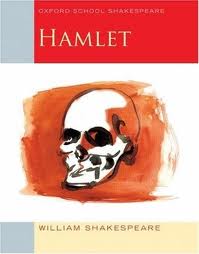
Hamlet

Hamlet by William Shakespeare, 5/5

In the past, I had viewed Shakespeare’s works with disinterest, bordering on distaste.  Then, I Stumbled upon (literally – using the StumbleUpon toolbar) the Royal Shakespeare Company’s performance of Hamlet, starring David Tennant and Patrick Stewart.  Since I adore Tennant as Doctor Who and recognized Stewart from Star Trek, I decided to give the film a try.  The following three hours were pure transport; I fell in love.  The depth of emotion portrayed and the connection I felt with the characters was completely unexpected.  There are not many works of literature that I approach from the movie end, but in some cases, an affective film portrayal is the perfect inspiration to dive into gnarly or otherwise off-putting writings.  After watching the film version twice, I was more than ready to read the work for myself.  I very much enjoyed it, however I spent a lot of time reading the margin notes in order to understand the difficult vocabulary.  A second time, I will read less technically and focus more on the poetry, wit and wordplay, which are everywhere evident.

Thirty Phone Booths to Boston

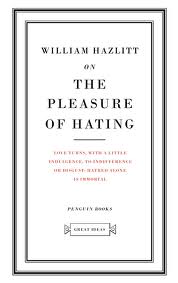
On the Pleasure of Hating

On the Pleasure of Hating by William Hazlitt, 1/5

I started this book by accident, somehow confusing the author with the more frequently-quoted Walter Pater.  Of the six essays it contains, the last (for which the collection is named) seemed to me most interesting and unique.  It comments on the perceived propensity of humankind towards evil and the negative, but I was most interested by its cynical description of friendship.  The rest of the essays come across as editorials written by a well-read man of medium intellect, something that would appear in magazines of the day (1820s), but has little lasting value to offer.  Perhaps this explains the comment on Wikipedia that “his [Hazlitt’s] work is little read and mostly out of print,” somewhat at odds with the previous assertion that Hazlitt is “now considered one of the great critics and essayists of the English language.”

Now I Walk on Death Row

Now I Walk on Death Row by Dale S. Recinella, 3/5

This is the slightly depressing true story of a top-class Wall Street finance lawyer who gives up his career in order to minister to prisoners on death row.  What I found sad about the book was how guilty he felt about being rich (I don’t understand that, maybe it’s a rich person thing) and how his Catholic church seemed to challenge a vibrant relationship with God by its strict religious hierarchy and position between God and man.  The whole affair seemed more motivated by guilt, fear and shame than by peace, thankfulness and love for God.  That said, Recinella is a good storyteller and I devoured the book in one evening.

Stonehenge Decoded

Stonehenge Decoded by Gerald S. Hawkins, 2/5

I give this only 2/5 because it takes Hawkins well over half the book to finally introduce his point – that Stonehenge aligns with many important positions of the sun and moon and can predict eclipses.  This is the oldest example of a good magazine article making a bad book that I have come across.  However, Hawkins does provide a nice technical description of Stonehenge and his astronomical findings are impressive, though difficult to understand.