Mind Hunter

mind hunterMind Hunter: Inside the FBI’s Elite Serial Crime Unit by John Douglas and Mark Olshaker, 4/5

This account of former F.B.I. special agent John Douglas’ involvement in the development of criminal profiling is fascinating, if [understandably] sensationalistic.  It is rare for a book of this ilk to display satisfactory substance, so I was surprised to find that Douglas obviously had more successful cases in his repertoire than room to include them.  He uses numerous examples to demonstrate the power of profiling to predict criminal characteristics and develop clever strategies for their capture and conviction.

Prior to reading this, my only exposure to behavioral science and criminal profiling was watching some 174 episodes of Criminal Minds, so I was curious to see how “real life” would compare.  Shockingly, many of the stories told in this book are even more unbelievably dramatic and impressive than those written for TV.  Much of the vocabulary and basic ideas present in the TV show seem to be authentic, though it was interesting to learn that profiling is used frequently to help convict criminals, not just capture them (the focus of the show).

Something that came up several times in the book was Douglas’ positive opinion of the death penalty, criticism of the parole system and doubt that certain criminals can ever be rehabilitated.  These are certainly not politically correct opinions nowadays but, whatever the moral/ethical issues, it is impossible to not take seriously the point of view of someone who has witnessed human depravity and violence on a scale thankfully not experienced by the vast majority of opinion-holders.

I was moved and inspired by Douglas’ concluding comments on the subject of the problem of violent crime in the U.S.  He thinks that the most effective solution will be a grassroots one, since “crime is a moral problem…it can only be resolved on a moral level” (374).  It is a powerful observation that “in all my years of research and dealing with violent offenders, I’ve never yet come across one who came from what I would consider a good background and functional, supportive family unit” (375).  Finally, I couldn’t help thinking of 1 Corinthians 13 (and indeed, the whole message of the gospel) when Douglas states that “what I truly believe is that along with more money and police and prisons, what we most need more of is love.  This is not being simplistic; it’s at the very heart of the issue” (375).

Selected Stories of Philip K. Dick

selected stories of Philip K DickSelected Stories of Philip K. Dick, 5/5

When I found out that the movies Blade Runner, Total Recall, Minority Report, Paycheck, Next, and The Adjustment Bureau were all based on the writings of one man, I was metaphorically gobsmacked.  When I reached the final line of the first short story in this collection, Beyond Lies the Wub, I was literally gobsmacked.  These twisty, dystopian sci-fi plots are like nothing else I’ve encountered in literature.  Dick is a genre-definer with an unorthodox mind and I am definitely going to read more of his work.

N.B. Most of these stories are completely clean.  The only ones I wouldn’t feel comfortable recommending to young people are “A Game of Unchance,” “We Can Remember it for You Wholesale,” “Faith of our Fathers,” and “A Little Something for Us Tempunauts.”

The Unlikely Pilgrimage of Harold Fry

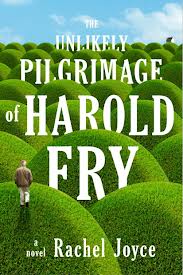
unlikely pilgrimageThe Unlikely Pilgrimage of Harold Fry: A Novel by Rachel Joyce, 3/5

At the beginning of this book, Harold Fry is exactly the kind of old person I am terrified of becoming: boring and bored, belittled by his spouse, a stranger in his own house, living a life utterly without purpose and meaning.  Fortunately for the reader, this all begins to change when Harold walks off one day to mail a letter to a dying friend, and just keeps walking.

I like the premise of this book, though the outworking of it seemed somewhat contrived and even gimmicky at times.  Perhaps it was just the mood I was in (feeling overdosed with modern literature, which has never been my favourite genre), or perhaps it was the fact that this is the second “first novel” by a new author that I’ve read this month, but I sensed a self-consciousness and bleakness about the writing style which did not appeal to me.  While it was not an unpleasant experience to read, this book did not find a home in my head and I shall probably forget all about it in about a month.

The Tempest

The Tempest by William Shakespeare, 3/5the tempest

This seemed much shorter, shallower and preachier than the other Shakespeare plays I’ve read and I didn’t feel much of a connection with any of the characters.  Given the straightforwardness of the plot, I could see this making a much better theater experience than a reading one.

Mr. Penumbra’s 24-hour Bookstore: A Novel

mr penumbraMr. Penumbra’s 24-hour Bookstore: A Novel by Robin Sloan, 4/5

This book is like a cookiecutter shark: it’s exciting, difficult to put down once picked up and it glows in the dark (thus automatically raising its score by an entire point).  The story is suspenseful, creative and entertaining, but the plot curve is weighted heavily towards the beginning, building tension up to an inevitably unsatisfying climax that takes place a mere 10 pages from the end of the book.  No one had to tell me that this is Sloan’s first novel, but fortunately, its weaknesses seem to stem more from a lack of experience than a lack of skill.

Mr. Penumbra’s 24-hour Bookstore is noteworthy for being the most “modern” in tone of any novel I have ever read.  For example, one of the characters works at Google and a fictionalised version of the company plays a huge role in the story.  Topics that I am unfamiliar coming across in works of fiction, such as e-book piracy, computer programming and role-playing games, surprised me at every turn.  There was even a reference to the webcomic xkcd.

Overall, Sloan does a great job of creating a believably current alternate reality but I suspect this book will not age gracefully.  Who knows, though, perhaps I am wrong and in twenty years time it will have gained an added aura of nostalgia.

Runner’s World Complete Book of Running

runner's worldRunner’s World Complete Book of Running: Everything You Need to Know to Run for Fun, Fitness, and Competition by Amby Burfoot, 4/5

This is an encouraging book, with lots of advice for beginning to intermediate runners (like myself) – basically, anyone who hasn’t yet settled on a rigorous training program.  Several concise, entertaining articles are provided on the following topics:
1. Beginning Running
2. Nutrition
3. Injury Prevention
4. Women’s Running
5. Building Strength, Endurance, and Speed
6. The Mental Side of Running
7. Cross-training
8. The Marathon.

One of the main themes of the book is training smart as opposed to just training hard.  The authors point out that, in conjunction with a good training program, lowering weekly mileage can actually be beneficial to performance.  There is also a lot of emphasis on taking an appropriate number of rest/recovery days.  These ideas and the training concept of “Yasso 800s” (which I am looking forward to trying out soon) are the most important things I got from this book.

I would suggest reading the newest version, since several aspects of this 1997 version feel a bit outdated.

Christmas Poems

Inspired by Alison Bernhoft.

On a Dubious Tradition
For any mass of mistletoe
The answer still is “no, no, no.”

Strategy
Since stockings yield such limited loot
This year I’ll hang a red jumpsuit.

Strategy II
I left three dozen cookies for Santa’s midnight snack –
He might be coming down but he’s sure not going back.

Twice a Year
Some people only go to church on Easter and on Christmas
It’s easy to forget that’s not the only time God’s with us.

Eugene Onegin

Eugene Onegin and Other Poems by Alexander Pushkin, trans. by Charles Johnston, 3/5eugene onegin

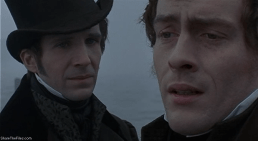
This piece of literature ended up on my to-read list in a rather roundabout way.  I was first motivated to watch the Ralph Fiennes/Liv Tyler movie version, Onegin, after encountering beautiful screenshots from the film used to illustrate camera techniques in the book Master Shots.  The movie was captivating and I became curious about the novel-length poem behind it.

Top hats, duels, snowy landscapes, capes, 19th century shirt sleeves...this movie has it all...

Top hats, duels, snowy landscapes…this movie has it all…

It is difficult to talk about the story without completely spoiling it; I am certain that knowing the ending would have diminished my enjoyment of the movie greatly, in which case I might not have even bothered to read the poem.  Themes are safe to mention, I suppose, and Pushkin examines a variety of them, including love, flirtation, death, ennui, infatuation, the meaning of life, and the power of social norms.  It’s not the cheeriest fare to start with and the treatment is very…Russian.

The Johnston translation is impressive, somehow managing to preserve the original rhyme scheme, but I still sensed something lost in translation.  Though some stanzas were touching, witty and insightful, a great many more were difficult to understand and felt completely disconnected from the main story arc.  Given the rambly plot, I was unsurprised to later find out that Onegin was originally published in serial form over a span of some 8 years.  I found it challenging to connect with the characters and a lot of what I did get out of it was likely thanks to having seen the movie already.  This worked out well for me but, because of the overwhelming visual power of the film, I would be tempted to recommend reading the novel first, if possible.

I also read the two additional poems in this collection, “Onegin’s Journey” and “The Bronze Horseman,” but they failed to interest me in the slightest and I shall leave their reviewal to a more appreciative reader than I.

Mystic River

Mystic River by Dennis Lehane, 3/5mystic river

I hope Clint Eastwood is considered a “great mind,” because I only found out that he directed a film based on this book after reading it and thinking That felt exactly like a crime/drama/thriller movie starring Sean Penn (ok, maybe not that specific).   It is very well written and dramatic, but I would have enjoyed it more if it wasn’t so R-rated.  On thinking it over, I guess I have different (more sensitive) standards for books than for movies, which is a new and interesting realisation.

Low Res(olution)