
Category: Reviews
Ghostwritten
Ghostwritten by David Mitchell, 3/5
Sadly, this book is not written by British comedian David Mitchell, but by a less funny and much less sarcastic man of the same name. Nevertheless, I persevered in my reading because these very personal stories, narrated from the viewpoint of nine different individuals, are well-written, with a voyeuristic appeal. I admire how Mitchell gently weaves the accounts together, letting the reader discover the characters and events in common between them, instead of belaboring the connections. The main reason I didn’t give this book a higher rating is that I am unable to understand what the point of the whole thing is (and it’s not just that I’m too thick to “get” it – other reviewers seem equally unenlightened and even the book jacket was very vague in its description). The novel has the effect of a garment, beautifully embroidered and carefully sewn together, that cannot be worn because its random openings and panels don’t fit the human body.
Hamlet (2000)

aaaaaaaaaaaaaaaAAAAAAAAAAAAAAAA!!! Almereyda’s Hamlet (“starring” Ethan Hawke) is one of the most atrocious films I have ever seen! How in the name of all that is holy did this movie win awards and get mixed reviews? Don’t even get me started on its portrayal of the play, which is heart-wrenchingly, mind-crushingly deficient. No, my complaints are much less subjective.
For example, someone forgot to inform the actors that Shakespeare left spaces between the words, so mostofthelinessoundlikethisbutdeliveredwayfasterthanyou’rereadingrightnow. The cameraman seemed to be using his elbows to maneuver the camera. The b-roll footage appeared to be lifted from an entirely different movie by an editor with ADD. Right at the beginning, there is a speech dubbed over video of an actor who is obviously forming completely different words with his mouth. The visuals were cluttered, the sets sloppy, the shot compositions senseless and the staging horrendous (examples: action cramped awkwardly into the half of the frame that isn’t being taken up by a curtain, dialogue where one person’s head completely blocks the view of the other person’s… I could go on, but I don’t have 72 minutes like the director of this hideous film did).
But the most original, startling, thought-provoking performance of all was from that boom mic, yes an entire boom mic, that reflected boldly off a window and right into my narrowed, unbelieving, pained eyes. In the director’s inept hands, the characters’ [usually tragic] deaths were mercy killings that finally released both them and me from the textbook enactment of film gaffes that is Almereyda’s Hamlet.
The Third Eye
The Third Eye: The Renowned Story of One Man’s Spiritual Journey on the Road to Self-Awareness by T. Lobsang Rampa, 1/5
I quit. The author’s forward to the second edition, with its fishy protestations of innocence and honesty made me suspicious initially. 26 pages containing bizarre descriptions of Tibetan culture later, I finally Wikipedia-d the book and learned that T. Lobsang Rampa is actually Cryil Henry Hoskin, a very British, very crazy man who must have suffered an immensely boring life before becoming the host of a Tibetan monk’s spirit. I could think up more scathing things to say, but really, a man who has had a book dictated to him by his Siamese cat (Living with the Lama) obviously needs no further comment.
Words Like Loaded Pistols
Words Like Loaded Pistols: Rhetoric from Aristotle to Obama by Sam Leith, 4/5
Leith achieves a great balance with this book – he’s entertaining without being insulting, academic without being dry and analytical without being annoying. Where other writers might exhaustively dissect a piece of rhetoric at the cost of common sense and the reader’s patience (see How to Read Literature Like a Professor), Leith keeps his analyses to-the-point and useful. Less importantly, I enjoyed the English pop culture references – it was fun to see mentions of TV shows and celebrities that I love, but don’t get to share with anyone here.
Mind Reader
Mind Reader: Unlocking the Power of Your Mind to Get What You Want by Lior Suchard, 2/5
This book is pointless B.S. that somehow manages to be very entertaining.
F My Life World Tour
F My Life World Tour: Life’s Crappiest Moments from Around the Globe by Maxime Valette, Guillaume Passaglia and Didier Geudj, 3/5
Basically just like the website, but with more adult content (I thought). I think that the community-contributed nature of the content suits the website more than the book format.
Because Sometimes You Just Gotta Draw a Cover With Your Left Hand
Because Sometimes You Just Gotta Draw a Cover With Your Left Hand: A Pearls Before Swine Collection by Stephan, Pastis, 2/5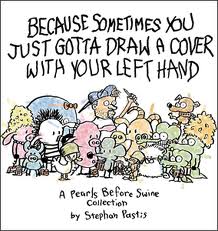
The Introduction was funnier than all the cartoons combined. Too much of the humour consisted of self-referential jokes about the jokes themselves. Also, there were too many “tributes” to other cartoonists and their creations. This is the kind of humor that is great in small doses from a very original, talented creator. Otherwise, it just seems a little derivative and desperate.
The Confession
The Confession by John Grisham, 2/5
This novel is a political page-turner that examines the death penalty, criminal procedure and race relations, but it is written in a lurid, non-fiction style that comes across preachy and manipulative. I would much rather read a thought-provoking, intellectually honest, true account instead of one where the author uses fictional scenarios to push real-world political agendas.
The Gulag Archipelago
The Gulag Archipelago: 1918 – 1956 by Aleksandr I. Solzhenitsyn, authorized abridgement with a new introduction by Edward E. Ericson, Jr., 4/5
Only post-apocalyptic fantasy novels could come close to the otherworldly horror that Solzhenitsyn writes about. This is the kind of work that inspires both thankfulness and watchfulness in the reader – there is something chilling but deeply relatable about the outrageous, disbelieving silence that surrounded the ongoing atrocity of the Russian prison camps. Despite the language barrier, grim subject matter and frequent use of sarcasm, the whole work is suffused with gentleness, humanity, depth and insight, the product of a spirit made beautiful through the tempering of much suffering. I feel the need to read the complete, 3-volume work, since the abridgment felt awkward and cut out an extremely impactful section that I remembered from a previous encounter with a different version of the book, leading me to wonder what else has been sacrificed to the short attention span of the Westerner.
The Apollo Adventure
The Apollo Adventure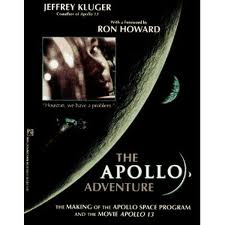 : The Making of the Apollo Space Program and the Movie Apollo 13 by Jeffrey Kluger, 3/5
I expected this book to focus on the Apollo 13 incident and the making of the movie, so I was disappointed that Kluger spent most of it discussing less interesting (though undeniably historical) Apollo missions. There was an absolute minimum of entertaining anecdotes sprinkled throughout, and hardly any insightful info about the making of the movie. I felt that, in an honest attempt to avoid retreading ground already covered in his book Apollo 13, Kluger stoops to using filler material and milking the franchise.
 OmniRambles