
Category: Book Reviews
Tracking the Chupacabra
Tracking the Chupacabra by Benjamin Radford, 3/5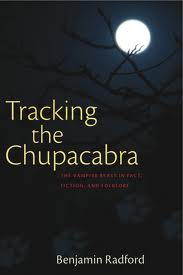
Basically, Chupacabras don’t exist, but I wish they did so they could drain the blood of all the incredibly stupid people who believe that they do.
Party Confidential
Party Confidential: new etiquette for fabulous entertaining by Lara Shriftman and Elizabeth Harrison, 3/5
Most of this was common-sense stuff along the lines of “don’t get drunk” and “compliment the food, especially if it’s homemade.” However, it did provide a couple interesting tidbits of info (such as that “fashionably” late is 15 minutes) and an interesting peep into the A-list party style. Regardless, I still say that parties suck.
The Pacific
The Pacific by Hugh Ambrose, 1/5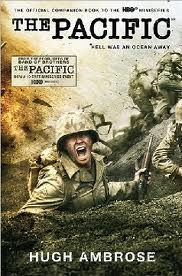
Some stories demand to be told, while others merely tolerate the telling. Unfortunately, most of this book seems to belong to the latter category. Ambrose’s attempt to follow his historian father’s success (who was involved with Band of Brothers and Saving Private Ryan, among other projects) comes off as extremely dry, forced and disjointed. Instead of weaving together the individual stories of WWII marines in a meaningful way, he jumps jarringly from one short scene to another, preventing the reader from developing any cohesive overall impressions. One small, but exceedingly annoying, example of Ambrose’s unpolished writing style is his inordinate fondness of the phrase “dribs and drabs,” which appears distractingly several times throughout the book. He is also exceptionally bad at incorporating quotes into his writing, an unfortunate failing for a research writer to have. The most interesting content, regarding Medal of Honor recipient “Manilla” John Basilone, is hardly original, as this celebrated soldier was already famous and his exploits well-documented. Combine all this with descriptions of military tactics that read like cooking instructions to the world’s most boring recipe and you have proof that historical and writing skills are not hereditary.
Hark! A Vagrant
Hark! A Vagrant by Kate Beaton, 2/5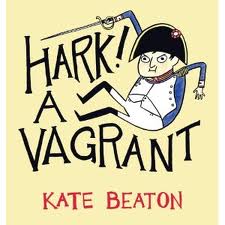
A couple of these comics were funny, but most were not.
The Story of Britain’s Best Buildings
The Story of Britain’s Best Buildings by Dan Cruickshank, 3/5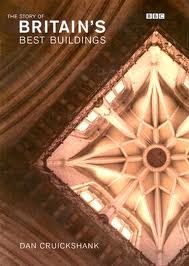
The commentary was generally tolerable and I appreciated the fact that all the photos were taken especially for this book (though it needed more photos). However, the first chapter was filled with some of the most unmitigated bullshit I have ever read. In the absence of reliable historical records about ancient Durham Cathedral, Cruickshank resorts to absolutely ridiculous architectural guesswork, making all sorts of strangely specific assertions about different aspects of the building. For example, he describes a certain point in the cathedral as “the physical centre of the building and, in the analogy of the cathedral as Christ’s body, it marks the heart, the omphalos or navel that draws sustenance and sacred power from above.” So what is it, the heart or the navel? Could it perhaps be just the center of the building, which is an inevitable and not always wildly symbolic part of every single building ever made in the history of ever? Here is another paragraph whose utter bullshittiness has to be read to be believed. Keep in mind, this commentary is on a plain pillar with a simple chevron pattern carved into it.
“A simple analysis of the columns offers another answer. The pattern is formed by 12 bands on each column, and each band has eight points, four pointing up and four pointing down. The key or prime number here is four because eight and 12 evolve from four, and four is the number of the square. In fact, the chevrons on this pattern can easily be explained in relation to the square. Take a square and then place a second square on top of it but rotated 45 degrees and you have an octagram or eight-pointed star. Turn alternate points up and down and you have one of the chevron bands on the column. This pattern seems, then, also to be proclaiming the importance of the square in the design of Durham – this time in the form of an eight-pointed star. The column, based on the circle, and the chevron, based on the square, are in combination perhaps another exercise in squaring the circle.”
Now if only Cruickshank would do an exercise in taking his head out of his own ass.
Three Months in the Southern States
Three Months in the Southern States: April-June, 1863 by Lt. Col. Arthur James Lyon Fremantle, 3/5
Fremantle undoubtedly deserves the title “Most Hardcore Tourist” of 1863. An Englishman living in Gibraltar, he read about the war and thought it sounded like a jolly good time to go explore the South. During his adventures, on which he met such historical figures as Jeff Davis and Generals Lee and Longstreet, he kept a daily diary. The result is an interesting, if not convincingly unbiased, glimpse into the world of the Confederacy. It is remarkable that Fremantle started his journey with a pro-Union attitude, but was quickly won over by the gentlemanly behaviour of the Confederates he met and the apparent contentedness of most of the slaves. While the account is fascinating, it is no masterpiece of literature; Fremantle’s genius is more social than literary. Though the writing is somewhat prosaic and the vocabulary limited, it still a valuable work that startlingly humanizes some of our most historic figures and events.
A Respectable Army
A Respectable Army: The Military Origins of the Republic, 1763-1789 by James Kirby Martin and Mark Edward Lender, 4/5
This book presents an engaging and not overly esoteric overview of George Washington’s army during the American Revolution. It challenges the popular myth that all of the colonists participated equally, eagerly and selflessly to achieve independence, pointing out that the people who bore the brunt of the conflict were the poor and displaced in society. I was surprised to learn that the colonists were rabidly anti standing-army, depending on the militia and the idea of the citizen-soldier (a romantic notion that produced lots of short-lived emotion but little dependable action). Because of this, the Continental Army was looked down upon and abused by both politicians and populace. War strategy and specific battles were worked tastefully into the text, providing interest without obscuring the bigger picture. Without presenting any ground-breaking claims or research, this book manages to be very informative, interesting and well-written.
Zombie Spaceship Wasteland
Zombie Spaceship Wasteland: A Book by Patton Oswalt, 2/5
For some reason, I thought this was going to be a novel. It turned out to be a collection of anecdotes by a stand-up comedian. My favorite bit was the section containing hilarious descriptions of wines. Overall, there were some funny and imaginative word choices, but Oswalt’s humor in general struck me as forced, depressing and full of cultural references I didn’t understand (especially about books and music).
The Winding Road
The Winding Road by W. Edmund Hood and Ung Ho Chang, 2/5
I read this tiny, self-published book in one sitting. It was more compelling than the atrocious cover led me to expect (how are there still people who think cheesy, colored fonts, huge blocks of text and poorly Photoshopped images are ok?). The book tells the story of Ung Ho Chang, a South-Korean who survived war-torn post-WWII Korea and the Korean war to end up a U.S. citizen. The idea I found most thought-provoking was the fact that this man, a war refugee, army officer, spy, POW, and fireman got a job as a maintenance worker in a Top Food store in Seattle when he arrived in the U.S. It just goes to show that one can never know what someone else has gone through and even the most ordinary and unadmirable-appearing people might have a fascinating and impressive history.
How to Raise a Puppy You Can Live With
How to Raise a Puppy You Can Live With by Clarice Rutherford & David H. Neil, 3/5
There are many similarities between this book and Cesar Millan’s, but this one is shorter and more efficient at communication. I like Rutherford’s common-sense, straightforward approach to puppy training.
 OmniRambles